
AI-powered simulations are revolutionizing scientific discovery by letting you rapidly explore complex systems and test hypotheses with high accuracy. They help you analyze massive datasets, uncover hidden patterns, and predict outcomes, saving time and resources. These tools also allow you to safely model dangerous or unreachable scenarios, improving safety and understanding. As AI models adapt and learn from new data, research becomes more precise and efficient. Keep exploring to see how these innovations can accelerate your discoveries.
Key Takeaways
- AI-powered simulations accelerate hypothesis testing and reduce costs by creating virtual models of complex systems.
- They analyze large datasets to uncover hidden patterns, improving insights in drug discovery and materials science.
- Simulations safely model dangerous or unobservable phenomena, aiding climate projections and astrophysical research.
- Continuous learning enhances simulation accuracy over time, supporting iterative scientific model development.
- Integrating AI simulations transforms research into a faster, more efficient process, enabling quicker breakthroughs and resource optimization.

Have you ever wondered how artificial intelligence is transforming the way we make scientific breakthroughs? It’s fascinating to see how AI-powered simulations are revolutionizing research across multiple disciplines. Instead of relying solely on traditional experiments, you can now harness AI to create virtual models that mimic complex systems, saving both time and resources. These simulations allow you to test hypotheses quickly, explore countless variables, and predict outcomes with remarkable accuracy. This accelerates the discovery process, enabling you to identify promising avenues before committing to costly laboratory work.
AI simulations accelerate research by allowing quick hypothesis testing and resource savings across scientific disciplines.
By integrating AI with simulation technology, you gain the ability to analyze enormous datasets that would be nearly impossible for humans to process manually. You can uncover hidden patterns, correlations, and insights that might otherwise go unnoticed. For instance, in drug discovery, AI-driven simulations help you understand how molecules interact, predict their effectiveness, and even suggest new compounds to test. This not only shortens development cycles but also increases the likelihood of finding effective treatments faster. Similarly, in materials science, you can simulate how different materials respond under various conditions, guiding you toward innovations in renewable energy, electronics, or structural engineering.
AI also empowers you to model phenomena that are difficult or dangerous to observe directly. In climate science, for example, you can run detailed simulations to project future scenarios, helping policymakers make informed decisions. In astrophysics, AI models help you simulate cosmic events or analyze data from telescopes, expanding our understanding of the universe. The ability to run these virtual experiments means you’re not limited by physical constraints or ethical considerations, giving you the freedom to explore hypotheses thoroughly and safely.
Furthermore, AI-enhanced simulation tools continuously learn from new data, improving their accuracy over time. This adaptive learning means your models become more reliable, enabling you to make better predictions and refine your research strategies. As you incorporate AI into your workflow, you’re no longer just observing natural phenomena—you’re actively shaping and accelerating the discovery process. This synergy between AI and simulation is transforming scientific research into a more efficient, precise, and innovative endeavor.
In essence, AI for simulation-driven discovery empowers you to push the boundaries of what’s possible. It’s no longer just about collecting data; it’s about creating intelligent, dynamic models that guide your experiments, optimize resource use, and ultimately lead to breakthroughs at an unprecedented pace. If you want to stay at the forefront of scientific innovation, embracing AI-powered simulation tools is essential. They’re shaping the future of research, making your quest for knowledge faster, smarter, and more impactful.
Additionally, leveraging simulation technology enables researchers to test hypotheses in a controlled environment, reducing the need for costly physical prototypes.

Simulation with Python: Develop Simulation and Modeling in Natural Sciences, Engineering, and Social Sciences
As an affiliate, we earn on qualifying purchases.
As an affiliate, we earn on qualifying purchases.
Frequently Asked Questions
How Does AI Improve Experimental Reproducibility?
AI improves experimental reproducibility by standardizing procedures and reducing human error. It automates data collection and analysis, ensuring consistency across trials. You can use AI to monitor experiments in real-time, detect anomalies, and apply corrections instantly. This minimizes variability and enhances reliability. With AI, your experiments become more precise and repeatable, giving you confidence that your results are accurate and can be consistently reproduced by others.
What Are the Limitations of AI in Scientific Modeling?
Imagine AI as a skilled navigator charting unknown waters; it’s powerful but not infallible. Its limitations in scientific modeling include reliance on quality data, which can be flawed or biased, leading to inaccurate predictions. You might find that AI struggles with complex, nuanced systems where human intuition still reigns supreme. Additionally, AI models can be black boxes, making it hard for you to interpret their decision-making, potentially obscuring crucial insights.
How Is AI Integrated Into Existing Research Workflows?
You integrate AI into your research workflows by using it to analyze large datasets, automate experiments, and generate hypotheses. AI tools help you identify patterns faster, refine models, and optimize processes, making your work more efficient. You can embed AI-driven simulations directly into your experiments or data analysis pipelines, enhancing accuracy and speeding up discoveries. This seamless integration allows you to focus on interpretation and innovation while AI handles routine tasks.
What Ethical Concerns Arise With Ai-Driven Discovery?
You might worry about biases embedded in AI algorithms skewing discoveries or the lack of transparency in how decisions are made. There’s also concern over data privacy, especially with sensitive information. As you rely on AI, you should consider the potential for unintended consequences, such as over-reliance on automated results, which might overlook important ethical or societal implications. Ensuring responsible use helps address these ethical challenges effectively.
How Can AI Assist in Interdisciplinary Scientific Research?
You can leverage AI to bridge gaps across disciplines, turning complex data into insightful connections that might otherwise go unnoticed. It helps you analyze vast, diverse datasets quickly, fostering collaboration among specialists from different fields. By providing targeted simulations and predictive models, AI guides your research, sparks innovative ideas, and accelerates discoveries. This synergy enables you to solve multifaceted problems more effectively, pushing the boundaries of what interdisciplinary teams can achieve together.

Theory, Methodology, Tools and Applications for Modeling and Simulation of Complex Systems: 16th Asia Simulation Conference and SCS Autumn Simulation … in Computer and Information Science, 646)
As an affiliate, we earn on qualifying purchases.
As an affiliate, we earn on qualifying purchases.
Conclusion
By now, you’ve seen how AI accelerates scientific discovery through advanced simulations and data analysis. Isn’t it exciting to think about what breakthroughs await as these tools become even more powerful? With AI guiding your research, you can uncover insights faster and push the boundaries of knowledge. So, are you ready to embrace this new era of innovation and transform the way science is done? The future of discovery is in your hands.
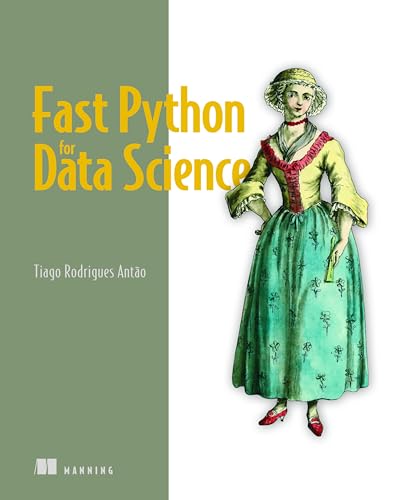
Fast Python: High performance techniques for large datasets
As an affiliate, we earn on qualifying purchases.
As an affiliate, we earn on qualifying purchases.
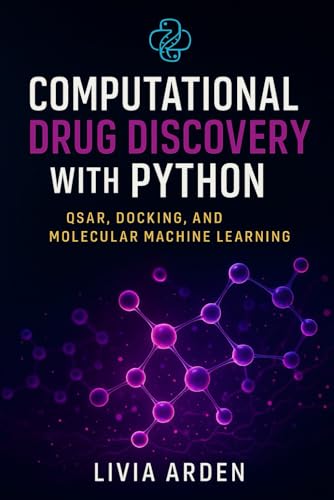
Computational Drug Discovery with Python: QSAR, Docking, and Molecular Machine Learning: Design and Predict Molecules with Python (Python for Health Science and Bioinformatics)
As an affiliate, we earn on qualifying purchases.
As an affiliate, we earn on qualifying purchases.