

AI-driven remediation guidance helps you quickly identify and prioritize threats by analyzing large amounts of data for patterns and anomalies. It offers real-time, adaptive responses with clear steps to contain and eliminate breaches, reducing manual effort and response times. This approach optimizes resources by focusing on high-risk issues and streamlines collaboration across teams. If you want to understand how it can further strengthen your security posture and speed up incident management, there’s more to uncover here.
Key Takeaways
- AI systems analyze vast data to identify threats quickly and accurately, enabling faster breach detection.
- Real-time learning allows AI to adapt defenses proactively against evolving attack techniques.
- AI provides clear, actionable remediation steps to contain threats and eliminate root causes effectively.
- Prioritization algorithms focus resources on high-risk vulnerabilities, reducing operational impact.
- Automated decision-making streamlines incident response, facilitating rapid coordination across security teams.

AI-driven remediation guidance is revolutionizing how organizations detect and address security vulnerabilities. Instead of relying solely on manual analysis and reactive measures, you now have access to intelligent systems that can quickly pinpoint threats, prioritize risks, and suggest precise actions. This shift dramatically accelerates your response times, minimizing potential damage from breaches. With AI, you’re empowered to act swiftly, often before attackers can exploit weaknesses fully.
AI-driven guidance accelerates threat detection and response, empowering swift, precise actions to minimize security risks.
These advanced tools analyze vast amounts of data from your security environment, identifying patterns and anomalies that might go unnoticed by human analysts. When a vulnerability or breach occurs, AI systems don’t just alert you—they provide detailed, context-aware recommendations for mitigation. You get clear instructions on how to contain the threat, eliminate the root cause, and prevent future incidents. This proactive approach reduces your reliance on lengthy manual investigations and guesswork, guaranteeing you respond more efficiently and effectively.
One of the key advantages of AI-driven guidance is its ability to adapt in real time. As new threats emerge and attack methods evolve, your AI tools continuously learn and update their recommendations. This dynamic learning process means your security posture stays current with the latest threat intelligence, giving you a significant advantage over static, rule-based systems. You don’t need to manually adjust defenses or worry about missing critical updates—your AI handles that for you, keeping your defenses sharp and responsive.
Furthermore, AI-driven remediation guidance helps you prioritize your efforts. Not all vulnerabilities carry the same level of risk, and addressing every issue equally can be inefficient. AI systems analyze the context of each threat—such as its potential impact, exploitability, and your organization’s unique environment—and recommend which issues to tackle first. This targeted approach ensures your resources are focused where they’re needed most, reducing downtime and operational disruptions.
Integrating AI into your security operations also enhances collaboration across teams. By providing clear, actionable steps, AI guidance bridges gaps between security analysts, IT teams, and management. Everyone receives a shared understanding of the threat landscape and the necessary response, streamlining communication and coordination. As a result, your organization can achieve faster, more unified responses to security incidents.
Ultimately, AI-driven remediation guidance transforms your security strategy from reactive to proactive. It automates complex decision-making processes, delivers precise recommendations, and accelerates your response to breaches. With AI, you’re better equipped to protect your assets, minimize risks, and maintain business continuity in an increasingly hostile cyber environment. This technology isn’t just an enhancement—it’s a critical evolution in how you defend your organization from cyber threats. Emphasizing the importance of AI Security ensures your defenses remain resilient against evolving cyber threats.

ChatGPT for Cybersecurity Cookbook: Learn practical generative AI recipes to supercharge your cybersecurity skills
As an affiliate, we earn on qualifying purchases.
As an affiliate, we earn on qualifying purchases.
Frequently Asked Questions
How Does AI Prioritize Remediation Actions During a Breach?
When a breach occurs, AI analyzes threat severity, affected systems, and potential impact to prioritize remediation actions. You’ll see it automatically identify the most critical vulnerabilities, recommend specific steps, and allocate resources efficiently. AI continuously updates its assessments as new information emerges, ensuring you focus on the highest risks first. This process accelerates your response, minimizes damage, and helps you swiftly contain the breach while maintaining overall security.
What Are the Limitations of Ai-Driven Remediation Guidance?
Imagine you’re using AI to guide your breach response—just like relying on a GPS in a maze. Its limitations include potential inaccuracies due to incomplete data, biases in algorithms, and inability to fully understand complex, evolving threats. You might also face delays if the AI system isn’t properly integrated or if it lacks real-time updates. Remember, AI is a tool, but human judgment remains essential to navigate tricky security scenarios effectively.
Can AI Adapt to Evolving Cybersecurity Threats?
Yes, AI can adapt to evolving cybersecurity threats by continuously analyzing new data and identifying patterns. You’ll find that AI systems learn from each incident, refining their responses over time. This adaptive capability helps you stay ahead of attackers, quickly identifying new attack vectors and adjusting defenses accordingly. However, it’s vital to regularly update and monitor AI tools to guarantee they effectively respond to the latest threats and avoid false positives.
How Is Data Privacy Maintained During AI Analysis?
Data privacy is meticulously protected during AI analysis by employing encryption, strict access controls, and anonymization techniques. You guarantee sensitive information remains secure, preventing leaks or unauthorized access. Advanced algorithms constantly monitor for vulnerabilities, acting like an impenetrable fortress around your data. This way, even as AI processes vast amounts of information, your privacy stays intact, and your organization’s trust remains unbreakable amidst evolving cybersecurity challenges.
What Role Do Human Analysts Play Alongside AI Tools?
You play a vital role alongside AI tools by reviewing their recommendations, verifying accuracy, and making final decisions. Your expertise helps guarantee that responses are appropriate and compliant with policies. You also monitor AI outputs for errors or biases, providing feedback to improve the system. By collaborating with AI, you streamline breach responses, act swiftly to mitigate threats, and maintain a high standard of security and data privacy throughout the process.
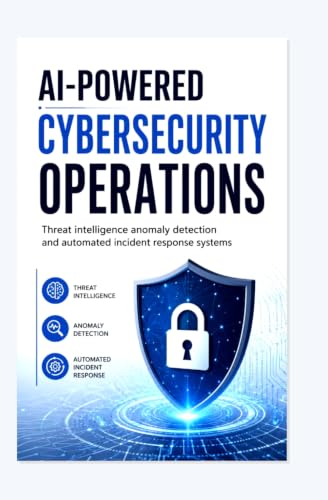
AI-POWERED CYBERSECURITY OPERATIONS: Threat intelligence anomaly detection and automated incident response systems
As an affiliate, we earn on qualifying purchases.
As an affiliate, we earn on qualifying purchases.
Conclusion
By harnessing AI-driven remediation guidance, you turn your cybersecurity response into a finely tuned machine, reacting swiftly and accurately to breaches. Think of it as having a vigilant lighthouse guiding you through stormy waters, illuminating threats before they cause real harm. With this technology, you’re not just reacting—you’re proactively steering your defenses, ensuring your organization stays afloat amidst turbulent cyber seas. Embrace AI today, and let it be your guiding star toward a safer tomorrow.
security vulnerability prioritization solutions
As an affiliate, we earn on qualifying purchases.
As an affiliate, we earn on qualifying purchases.
AI-driven breach remediation tools
As an affiliate, we earn on qualifying purchases.
As an affiliate, we earn on qualifying purchases.






![Mistral Medium 3.5 Vs Llama 4 Maverick Vs GPT-5.6 Luna: $6.30 Gap [2026] - Tech-insider.org](https://smartcr.org/wp-content/uploads/2026/08/mistral-medium-3-5-vs-llama-4-maverick-vs-gpt-5-6-luna-6-30-gap-2026-tech-inside-featured-260x140.jpg)
