

Edge-native architectures bring computation closer to you by processing data at or near the source, reducing delays and bandwidth use. This setup enables faster responses, real-time analytics, and improved security since sensitive information stays local. It also increases system resilience and resource efficiency, lowering costs. As these systems become more common, you’ll experience smarter, quicker, and more secure solutions tailored to your environment—keep exploring to see how this transformation unfolds.
Key Takeaways
- Edge-native architectures process data locally to reduce latency and enable real-time decision-making near the data source.
- They enhance system resilience by allowing devices and sensors to operate independently without relying solely on centralized cloud servers.
- Bringing compute closer to users improves response times and user experience across applications like autonomous vehicles and industrial automation.
- Edge-native systems lower bandwidth usage and cloud costs by transmitting only essential insights rather than raw data.
- They bolster security and privacy by minimizing data transfer and enabling local implementation of data protection measures.

Edge-native architectures are transforming how we process data by shifting computation closer to where it’s generated. Instead of sending vast amounts of raw data to centralized data centers or cloud servers, you now have the ability to handle this information right at its source—on devices, sensors, or local gateways. This shift means faster response times, lower latency, and reduced bandwidth usage, which are essential for applications like autonomous vehicles, industrial automation, and real-time analytics. By bringing compute power to the edge, you eliminate the delays inherent in transmitting data over long distances, enabling more immediate decision-making and action.
With edge-native architectures, you’re empowered to design systems that are more resilient and scalable. Instead of relying solely on a central cloud, each edge node can operate independently, processing data locally and only communicating essential insights or aggregated results to the cloud. This decentralization reduces the risk of system-wide failures and makes your solutions more adaptable to changing environments. For example, in remote or under-connected areas, edge-native systems continue functioning smoothly without constant cloud connectivity, ensuring continuous operation and reliability.
Security and privacy also benefit profoundly from edge-native designs. When sensitive data is processed locally, you minimize exposure by avoiding unnecessary transmission over networks, which reduces the risk of interception or breaches. You can implement privacy-preserving measures directly at the edge, such as data anonymization or encryption, ensuring compliance with regulations and safeguarding user information. This localized processing creates a more secure environment, especially in sectors like healthcare, finance, or personal devices, where data sensitivity is paramount.
Moreover, edge-native architectures facilitate more efficient use of resources. Since data is processed locally, you only send relevant insights or summaries to the cloud, conserving bandwidth and reducing cloud storage costs. This approach also allows for more flexible deployment models, where you can tailor edge nodes to specific tasks or environments, optimizing performance based on local conditions. As you develop these systems, you gain greater control over how data flows and how resources are allocated, making your overall infrastructure more cost-effective and responsive.
In essence, edge-native architectures put you in a position to create smarter, faster, and more secure systems by decentralizing computation. They enable you to respond to real-time demands, improve user experiences, and build resilient networks that adapt seamlessly to diverse environments. As technology continues to evolve, adopting edge-native principles will be pivotal in unlocking the full potential of data-driven solutions, making your systems more efficient and future-proof.

Mobile Edge Computing (Simula SpringerBriefs on Computing Book 9)
As an affiliate, we earn on qualifying purchases.
As an affiliate, we earn on qualifying purchases.
Frequently Asked Questions
How Does Edge-Native Architecture Impact Data Privacy?
Edge-native architecture enhances your data privacy by processing sensitive information locally, reducing the need to transmit data to centralized servers. This minimizes exposure to potential breaches during transfer, keeping your data more secure. Additionally, you gain better control over what data is shared and stored, aligning with privacy regulations. By limiting data movement and enabling real-time control, edge-native architecture helps protect your information more effectively.
What Are the Main Challenges in Deploying Edge-Native Solutions?
You face challenges like managing diverse hardware, ensuring seamless connectivity, and maintaining security across distributed nodes. You must handle data consistency, optimize latency, and scale solutions efficiently. Balancing real-time processing with resource constraints can be tricky. Additionally, deploying updates without disrupting operations and ensuring compliance with regulations demands careful planning. Overcoming these hurdles requires robust infrastructure, adaptive strategies, and continuous monitoring to fully realize edge-native benefits.
How Scalable Are Edge-Native Architectures for Large Enterprises?
Edge-native architectures can be quite scalable for large enterprises, but you’ll face challenges. As your infrastructure grows, managing numerous edge nodes becomes complex, requiring robust orchestration and automation. Network latency and bandwidth limitations can hinder performance, especially with data-intensive tasks. To scale effectively, you need a solid strategy for deployment, monitoring, and security. With the right approach, however, you can extend your reach and improve responsiveness across diverse locations.
What Industries Benefit Most From Edge-Native Computing?
They say, “A chain is only as strong as its weakest link,” and in many industries, edge-native computing strengthens the weakest points. You’ll find it most beneficial in healthcare, manufacturing, retail, and transportation, where real-time data processing is vital. By bringing compute closer to the user, you enhance speed, security, and responsiveness, making these sectors more efficient and adaptive in today’s fast-paced digital landscape.
How Does Latency Reduction Improve User Experience?
Reducing latency makes your experience smoother and more responsive. When data processes faster, you encounter less delay in interactions, whether streaming videos, gaming, or using apps. This quick response time keeps you engaged and satisfied. Lower latency also improves real-time features like virtual reality or autonomous driving, ensuring safety and accuracy. Ultimately, it creates a seamless, efficient experience that feels natural and reliable, enhancing your overall satisfaction with digital services.
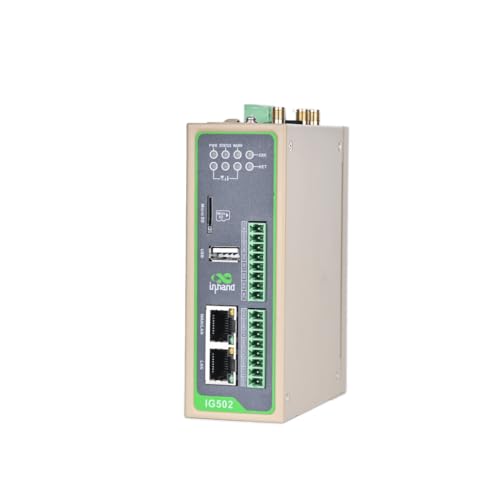
InHand Networks IG502 Industrial Edge Computing Gateway,Cost-Effective connectivity,4G LTE Cat 1,Python Programmable IIoT Gateway with RS232/RS485, 4DI + 4DO, Wi-Fi, GPS, VPN, Modbus MQTT
Reliable North America LTE Cat 1: Specifically designed for North American carriers (Verizon, AT&T, T-Mobile). LTE Cat 1…
As an affiliate, we earn on qualifying purchases.
As an affiliate, we earn on qualifying purchases.
Conclusion
By adopting edge-native architectures, you bring compute power right to your users’ fingertips, reducing latency and improving experience. Imagine slashing response times by up to 50%, making interactions lightning-fast. As you deploy more intelligent applications at the edge, you’ll stay ahead in a competitive landscape. Embracing this shift isn’t just tech evolution — it’s about transforming how users connect with your services every second, every interaction.

Edge AI and Sensor Integration with Raspberry Pi: Elevating Mobile Platforms with Cutting-Edge Technology
As an affiliate, we earn on qualifying purchases.
As an affiliate, we earn on qualifying purchases.

eufy Security HomeBase 3 (HomeBase S380), Smart Hub for eufy Devices, Up to 16 TB Expandable Local Storage, BionicMind AI Facial Recognition, Advanced Encryption, No Monthly Fee
No Monthly Fees, Massive Expandable Storage: Save with 16 GB of built-in storage. Expand up to 16 TB…
As an affiliate, we earn on qualifying purchases.
As an affiliate, we earn on qualifying purchases.