
Natural Language Processing helps you analyze unstructured security logs and reports by turning complex text into clear, actionable insights. It automates routine inspection, detects patterns, and flags anomalies, so you can identify threats faster and more accurately. NLP simplifies technical jargon and integrates data from multiple sources, making your security operations more efficient. To understand how NLP enhances threat detection and boosts your cybersecurity efforts, keep exploring further.
Key Takeaways
- NLP automates the interpretation of unstructured security logs, transforming raw data into actionable insights.
- It detects patterns, anomalies, and recurring error messages to identify potential threats quickly.
- NLP consolidates diverse log formats and terminologies, enabling better correlation and contextual understanding.
- It reduces manual review efforts, minimizing human error and speeding up threat detection processes.
- NLP enhances security operations by integrating with cybersecurity tools for proactive and accurate threat analysis.

In today’s cybersecurity landscape, analyzing vast amounts of security logs and reports is more challenging than ever. With cyber threats evolving rapidly, you need efficient tools to sift through enormous data sets and identify suspicious activity swiftly. That’s where Natural Language Processing (NLP) comes into play. NLP enables you to understand, interpret, and extract meaningful insights from unstructured textual data, transforming raw logs into actionable intelligence. Instead of manually reviewing countless reports, you can leverage NLP algorithms to automate the process, saving time and reducing the risk of human error.
Analyzing security logs is challenging; NLP streamlines understanding and automates insights for faster threat detection.
When you implement NLP in security analysis, you gain the ability to recognize patterns and anomalies across different data sources. Security logs often contain technical jargon, error messages, or system alerts that can be difficult to interpret at a glance. NLP models can parse this language, converting it into structured information that highlights potential issues. For example, they can identify recurring error messages indicative of a cybersecurity breach or flag unusual login attempts by analyzing login reports. This automation allows you to focus on investigating confirmed threats rather than getting bogged down in routine data review.
Another advantage of NLP is its capacity for contextual understanding. Traditional keyword searches might miss nuanced threats hidden within complex reports, but NLP can grasp the context surrounding certain events or phrases. This means you can set up your NLP tools to detect subtle signs of malicious activity, such as phishing attempts embedded in email logs or insider threats disguised within normal user behavior. By capturing the context, NLP enhances your ability to detect threats early, before they escalate.
Furthermore, NLP helps in consolidating information from diverse sources. Security teams often deal with logs from multiple systems, applications, and devices, each with its own format and language. NLP models can unify this data, translating different terminologies and formats into a common understanding. This interoperability simplifies your security operations, making it easier to correlate events and identify overarching attack patterns. As a result, your response becomes more coordinated and effective.
Additionally, integrating cybersecurity software with NLP techniques can further augment threat detection capabilities, providing a comprehensive approach to protecting your digital environment. Ultimately, embracing NLP in analyzing security logs and reports elevates your cybersecurity posture. It accelerates threat detection, improves accuracy, and reduces manual workload. By automating the interpretation of complex textual data, you gain a clearer picture of your security landscape and can act more swiftly to mitigate risks. Given the increasing volume and complexity of security data today, NLP isn’t just a helpful tool — it’s an essential asset for staying one step ahead of cybercriminals.

BookFactory Security Pass Down Log Book/Security Guard Journal – Wire-O Logbook,100 Pages, 8.5'' x 11'' (Made in USA)
Made in USA – Proudly produced in Ohio by a Veteran-owned business
As an affiliate, we earn on qualifying purchases.
As an affiliate, we earn on qualifying purchases.
Frequently Asked Questions
How Does NLP Handle Multilingual Security Logs?
You use NLP tools that support multilingual processing to handle security logs in various languages. These tools leverage language detection algorithms to identify the language, then apply translation or language-specific models to analyze the logs. By doing so, you guarantee that important security events are understood regardless of language, enabling you to respond swiftly. Multilingual NLP helps unify analysis and improves threat detection across diverse linguistic environments.
Can NLP Detect Insider Threats From Textual Reports?
Yes, NLP can help detect insider threats from textual reports. You analyze patterns, keywords, and anomalies in employee communications or reports, and NLP tools flag suspicious behavior. By monitoring language for signs of malicious intent or policy violations, you can identify potential insider threats early. It’s an effective way to supplement traditional security measures, giving you deeper insights into hidden risks within your organization.
What Are the Limitations of NLP in Real-Time Log Analysis?
NLP’s limitations in real-time log analysis are like trying to catch lightning in a bottle. You might miss subtle threats as language nuances and context are often lost in the rush. It struggles with slang, abbreviations, or unusual phrasing, causing potential threats to slip through unnoticed. Processing speeds can lag behind the flood of data, making it hard to react instantly. This means you could overlook critical security signs just when you need to act fastest.
How Does NLP Adapt to Evolving Cybersecurity Terminology?
You can help NLP adapt to evolving cybersecurity terminology by regularly updating its training data with new terms and phrases. Incorporate continuous learning techniques so the system can learn from new logs and reports in real time. Additionally, leverage expert input to fine-tune models, ensuring they stay current. This approach keeps NLP effective at understanding emerging threats, attack methods, and industry jargon as cybersecurity language evolves.
Are There Privacy Concerns With NLP Processing Security Data?
Yes, there are privacy concerns when NLP processes security data. You might worry about sensitive information being exposed or misused, especially if data isn’t properly anonymized or secured. To protect privacy, you should implement strict access controls, anonymize data where possible, and follow relevant regulations. Being transparent about data handling practices also helps build trust and ensures responsible use of your security information.
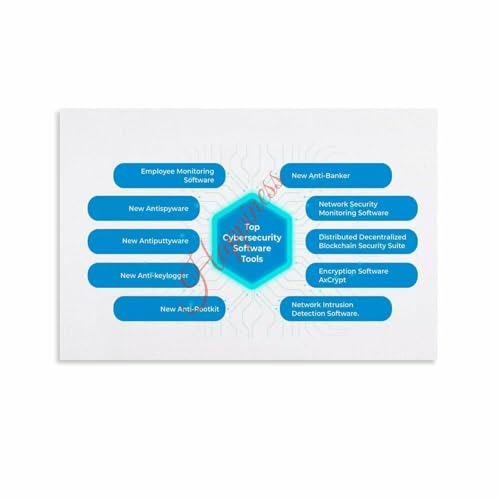
Top Cybersecurity Software Tools Infographic Poster Computer Knowledge Guide Canvas Painting Wall Art 12x08inch(30x20cm) Unframe-style
Size : 5 size for choice(1 inch=2.54cm)
As an affiliate, we earn on qualifying purchases.
As an affiliate, we earn on qualifying purchases.
Conclusion
By leveraging NLP techniques, you can transform security logs and reports into actionable insights, much like how Sherlock Holmes would decode clues in a mystery. With real-time analysis, you stay ahead of threats, preventing cyberattacks before they strike. Though it might seem like sci-fi, NLP brings a modern edge to cybersecurity, turning chaotic data into clarity. Embrace this technology today, or risk being left in the dust as the digital landscape evolves at warp speed.
Threat Detection Log Analyzer
As an affiliate, we earn on qualifying purchases.
As an affiliate, we earn on qualifying purchases.

Snowflake Recipes: A Problem-Solution Approach to Implementing Modern Data Pipelines
As an affiliate, we earn on qualifying purchases.
As an affiliate, we earn on qualifying purchases.