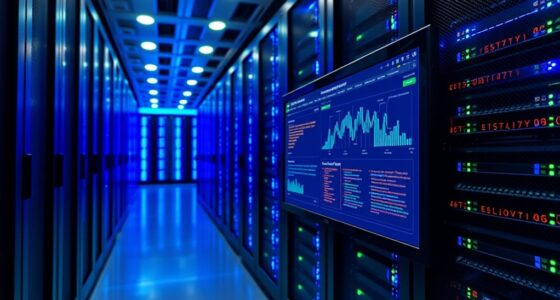
AI-driven observability and troubleshooting tools help you manage Kubernetes environments more effectively by automatically analyzing vast amounts of logs, metrics, and events. They detect anomalies, identify root causes quickly, and suggest remediation steps, reducing downtime and manual effort. These solutions forecast potential issues, prioritize critical alerts, and automate responses. By adopting these advanced tools, you can guarantee high availability and peak performance. Keep exploring to discover how these innovations can transform your Kubernetes management.
Key Takeaways
- AI automates analysis of logs, metrics, and events, enabling rapid detection of anomalies and deviations in Kubernetes environments.
- Anomaly detection and predictive analytics forecast potential issues, allowing proactive scaling and maintenance.
- Intelligent dashboards and automated suggestions streamline troubleshooting and reduce manual effort.
- AI-driven tools correlate data across microservices for deeper insights into complex dependencies.
- Integration of AI in observability ensures high availability, optimized performance, and faster issue resolution in Kubernetes.
As Kubernetes clusters grow more complex, traditional monitoring tools often fall short in providing rapid, actionable insights. You might be overwhelmed by the sheer volume of logs, metrics, and events generated across multiple nodes, containers, and microservices. Sifting through this data manually becomes time-consuming and error-prone, especially when trying to pinpoint the root cause of a problem. That’s where AI-driven observability and troubleshooting come into play, transforming how you monitor and respond to issues. By leveraging artificial intelligence, you can automate the analysis of vast datasets, identify anomalies, and predict potential failures before they impact your services. This shift not only accelerates issue detection but also reduces downtime, ensuring your applications stay available and performant.
AI tools continuously learn from your environment’s behavior, establishing baseline patterns for normal operation. When deviations occur, they flag these anomalies, allowing you to focus your attention on genuine problems rather than false alarms. This proactive approach minimizes alert fatigue, helping you prioritize issues that truly matter. With machine learning algorithms, you gain insights into complex relationships within your data that traditional tools often miss. For example, AI can correlate logs from different services, revealing hidden dependencies or cascading failures that cause performance bottlenecks. As a result, troubleshooting becomes more precise and efficient, saving you valuable time and resources.
AI detects anomalies and correlates logs, enabling precise troubleshooting and reducing false alarms in complex Kubernetes environments.
Moreover, AI-driven observability platforms often incorporate predictive analytics, enabling you to forecast potential outages or resource shortages before they happen. This foresight allows you to preemptively adjust configurations, scale resources, or perform maintenance, reducing the risk of unexpected disruptions. You don’t have to rely solely on reactive measures; instead, you adopt a more strategic, preventive stance. These platforms also offer intelligent dashboards that visualize complex data in understandable formats, making it easier for you to interpret the health of your cluster at a glance. They can highlight areas that need immediate attention and suggest remediation steps, further simplifying your troubleshooting process.
Incorporating AI into your observability stack also enhances automation. You can set up automated responses to specific triggers, such as restarting a problematic pod or reallocating resources, based on AI recommendations. This automation minimizes manual intervention, allowing you to focus on higher-level tasks. Overall, AI-driven observability empowers you with smarter, faster insights, turning overwhelming data into actionable intelligence. As Kubernetes environments continue to grow, adopting AI tools guarantees you stay ahead of issues, maintain high availability, and optimize your infrastructure’s performance with confidence. Additionally, integrating AI in Business solutions can help you leverage the latest advancements to further enhance your monitoring capabilities.

AI for DevOps Engineers: Master AIOps, Kubernetes Automation, and Cloud Infrastructure Monitoring
As an affiliate, we earn on qualifying purchases.
As an affiliate, we earn on qualifying purchases.
Frequently Asked Questions
How Does AI Improve Real-Time Troubleshooting Accuracy?
AI improves your real-time troubleshooting accuracy by quickly analyzing vast amounts of data, identifying patterns, and spotting anomalies that might go unnoticed. It learns from past incidents, helping you predict potential issues before they escalate. With AI, you get faster, more precise insights, enabling you to resolve problems swiftly. This proactive approach minimizes downtime, enhances system reliability, and guarantees your Kubernetes environment runs smoothly without manual guesswork.
Can Ai-Driven Observability Replace Traditional Monitoring Tools?
AI-driven observability can’t fully replace traditional monitoring tools, but it greatly enhances them. You’ll find that it automates data analysis, detects anomalies faster, and provides predictive insights, making troubleshooting more efficient. However, traditional tools still play an essential role in baseline monitoring and detailed diagnostics. Combining both approaches gives you an all-encompassing view, ensuring you catch issues early and respond swiftly to maintain system health.
What Are the Security Implications of AI in Kubernetes?
You should be aware that AI in Kubernetes can introduce security risks like data breaches, model manipulation, and unauthorized access. As AI systems process sensitive data, there’s potential for vulnerabilities if not properly secured. You need to implement strict access controls, monitor AI activities, and regularly update your security protocols. Staying vigilant helps ensure your Kubernetes environment remains protected against evolving threats associated with AI integration.
How Scalable Are AI Solutions for Large Kubernetes Clusters?
AI solutions for large Kubernetes clusters are incredibly scalable, almost like having an army of supercomputers working tirelessly. You’ll find they can handle millions of metrics, logs, and events without breaking a sweat. As your cluster grows, these AI tools adapt seamlessly, providing real-time insights and automatic troubleshooting. This means you can manage massive, complex environments effortlessly, ensuring peak performance and security without missing a beat.
What Skills Are Needed to Implement Ai-Driven Observability Effectively?
To implement AI-driven observability effectively, you need strong skills in Kubernetes and container orchestration, along with a solid understanding of AI and machine learning fundamentals. You should be comfortable with scripting languages like Python, data analysis, and monitoring tools. Additionally, knowledge of cloud platforms, DevOps practices, and troubleshooting skills help you interpret AI insights accurately, enabling you to optimize system performance and swiftly address issues.
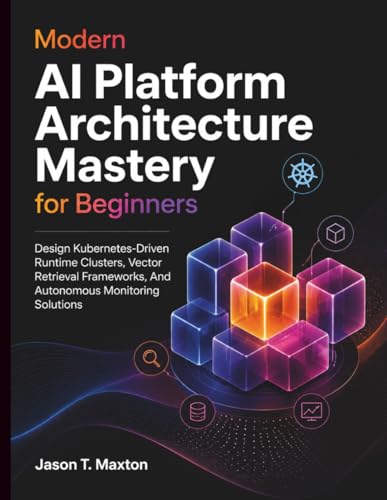
Modern AI Platform Architecture Mastery for Beginners: Design Kubernetes-Driven Runtime Clusters, Vector Retrieval Frameworks, And Autonomous Monitoring Solutions
As an affiliate, we earn on qualifying purchases.
As an affiliate, we earn on qualifying purchases.
Conclusion
By integrating AI-driven observability and troubleshooting into your Kubernetes environment, you gain a powerful ally that’s as insightful as a seasoned detective. It quickly detects issues, predicts failures, and guides your team to resolve problems efficiently. Just like a lighthouse guiding ships through stormy waters, AI tools illuminate the path forward, ensuring your applications stay resilient and performant. Embrace these innovations to stay ahead in the fast-paced world of container orchestration.

Cloud Native DevOps with Kubernetes: Building, Deploying, and Scaling Modern Applications in the Cloud
As an affiliate, we earn on qualifying purchases.
As an affiliate, we earn on qualifying purchases.

Principles MLOPs and AI Models: Operating Machine Learning Pipelines for Reliability, Compliance, and Continuous Delivery (Enterprise Machine Learning Operations)
As an affiliate, we earn on qualifying purchases.
As an affiliate, we earn on qualifying purchases.