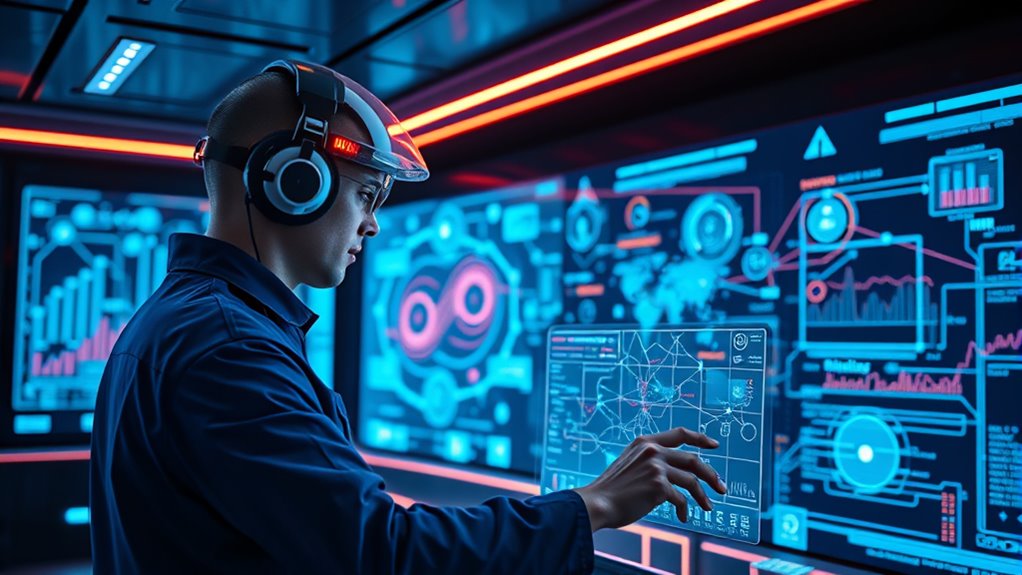

AI-driven SOAR transforms your cybersecurity by seamlessly integrating threat detection, incident response, and security tools to respond faster and more effectively. It analyzes vast amounts of data in real-time, prioritizes critical threats, and automates routine tasks, reducing manual effort and minimizing damage. This approach enables your team to move from reactive to proactive defense, adapting to emerging attack methods. Keep exploring to discover how AI-powered SOAR can strengthen your security posture even further.

Get business pricing on tech for your team
- Business-only prices and quantity discounts
- Tax-exempt purchasing
- Multiple users, one account, clear invoices
Key Takeaways
- AI-driven SOAR integrates security tools, analyzes threat data in real time, and automates incident response for faster detection and mitigation.
- It reduces alert fatigue by prioritizing critical threats and automating routine tasks, enhancing security team efficiency.
- By learning from past incidents, AI-Driven SOAR improves detection accuracy and adapts to emerging attack techniques.
- It facilitates collaboration among security tools and teams, enabling coordinated and swift responses to complex cyber threats.
- AI-Driven SOAR shifts security from reactive to proactive, streamlining operations and strengthening overall cybersecurity posture.

In today’s rapidly evolving cyber threat landscape, traditional security measures often fall short of providing the swift, coordinated responses organizations need. Cyberattacks are becoming more sophisticated, faster, and harder to detect. Relying solely on manual processes or siloed security tools can delay your response, giving attackers more time to cause damage. That’s where AI-driven Security Orchestration, Automation, and Response (SOAR) steps in to transform your security operations. It acts as the nerve center, integrating various security tools and data sources into a unified platform. With AI at its core, it can analyze vast amounts of threat intelligence in real time, identify patterns, and prioritize incidents based on severity. This capability reduces alert fatigue, ensuring you focus on the most critical threats without wasting time on false positives.
As you deploy AI-driven SOAR, you’ll notice how it automates routine incident response tasks, freeing your security team to concentrate on strategic issues. For example, when an alert surfaces indicating suspicious activity, the platform can automatically gather contextual data, verify the threat, and even contain the breach—actions that previously took hours or days to complete manually. This rapid response minimizes potential damage and accelerates recovery. The automation isn’t just about speed; it’s about precision. AI algorithms learn from past incidents to improve detection accuracy, identify new attack vectors, and adapt responses accordingly. Over time, your security posture becomes more resilient as the system evolves with emerging threats.
You’ll also appreciate how AI-driven SOAR fosters better collaboration across your security teams. It acts as a central hub that coordinates responses among different tools, such as firewalls, endpoint detection, and threat intelligence platforms. When a threat is detected, the platform ensures everyone is on the same page, automating workflows and reducing miscommunication. This seamless orchestration helps your team respond faster and more effectively, even during complex security incidents. Additionally, AI provides actionable insights and detailed reports, enabling you to understand attack patterns and improve preventive measures. Continuous learning capabilities mean your security defenses grow smarter over time, making it harder for attackers to exploit vulnerabilities. Moreover, integrating trusted security vendors enhances the reliability and comprehensiveness of your threat detection and response strategies.
Implementing AI-driven SOAR ultimately helps you shift from reactive to proactive security. Instead of just responding to incidents after they happen, you can anticipate threats, automate defenses, and streamline operations. This proactive stance reduces the window of opportunity for attackers and enhances your overall security posture. With AI at the helm, you gain a dynamic, adaptive security system that not only reacts quickly but also learns and evolves, giving you a critical advantage in today’s complex cyber environment.
As an affiliate, we earn on qualifying purchases.
Frequently Asked Questions
How Does AI Improve SOAR Response Times?
AI improves your SOAR response times by quickly analyzing security alerts, identifying threats, and prioritizing actions. It automates routine tasks, freeing your team to focus on complex issues. With AI, your system detects patterns faster and responds in real-time, reducing manual intervention. This acceleration minimizes damage from cyberattacks, keeps your network secure, and guarantees you act swiftly to emerging threats without delay.
What Are the Main Challenges in Implementing Ai-Driven SOAR?
Think of implementing AI-driven SOAR like coding the first computer—complex and demanding. Your main challenges include integrating AI with existing systems, ensuring data quality, and managing false positives. You also need to train your team to adapt to new workflows and keep pace with evolving threats. Balancing automation with human oversight is essential, as over-reliance on AI may lead to overlooked nuances or errors.
How Does AI Handle False Positives in Security Alerts?
AI handles false positives by analyzing alert patterns and contextual data to determine their likelihood of being genuine threats. It learns from previous incidents, refining its accuracy over time, so you receive fewer false alarms. When uncertain, it can escalate alerts for human review, ensuring critical issues aren’t missed. This ongoing learning process helps you focus on real threats while reducing unnecessary investigations, improving your security efficiency.
What Future Advancements Are Expected in Ai-Powered SOAR?
You can expect AI-powered SOAR to become even smarter, with improved threat detection and faster response times. Future advancements will include better contextual understanding, reducing false positives, and automating complex decision-making processes. You’ll see more seamless integration with emerging technologies like 5G and IoT, allowing for real-time, adaptive security measures. This means your security systems will become more proactive, efficient, and capable of handling sophisticated cyber threats effortlessly.
How Secure Is AI Integration Within SOAR Platforms?
AI integration within SOAR platforms is like adding a powerful shield, but it’s only as strong as its design. While it boosts security by quickly identifying threats, vulnerabilities in algorithms or data can expose gaps. You should regularly update and monitor these systems, ensuring they adapt to evolving threats. When properly managed, AI can remarkably enhance your security posture, but complacency could leave your defenses exposed.
As an affiliate, we earn on qualifying purchases.
Conclusion
So, with AI-driven SOAR, you’re finally free to sit back and watch your security team become mere spectators in a high-tech circus. No more sleepless nights or frantic alerts—just automated responses running circles around cyber threats. But hey, don’t get too comfortable; the bots might just start demanding coffee breaks. Embrace the future, where security is as effortless as trusting a machine that’s smarter than you. Welcome to the brave new world!
security incident response automation
As an affiliate, we earn on qualifying purchases.
As an affiliate, we earn on qualifying purchases.
threat detection and response software
As an affiliate, we earn on qualifying purchases.
As an affiliate, we earn on qualifying purchases.
Halloween Picks
halloween
As an affiliate, we earn on qualifying purchases.