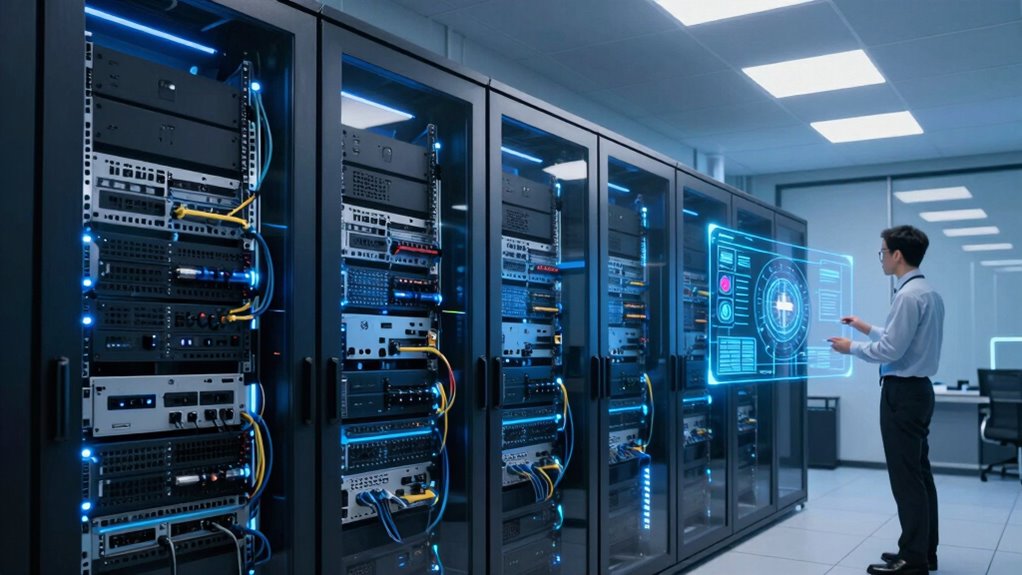

As a security leader, you should know that AI workload isolation is essential for safeguarding sensitive data and critical systems. It helps prevent breaches from spreading, reduces attack surfaces, and guarantees the integrity of AI models. Using containerization, strict access controls, and layered security strategies will strengthen your defenses. Understanding and implementing effective workload segmentation not only protects your assets but also supports compliance. Continue exploring to uncover key strategies for enhancing your AI security framework.
Key Takeaways
- AI workload segmentation safeguards critical assets by isolating sensitive data and processes from less secure areas.
- Proper isolation prevents lateral movement of threats, reducing the risk of widespread system compromise.
- Using containerization, virtual machines, and strict access controls enhances workload security and containment.
- Continuous monitoring and layered security strategies are essential to adapt to evolving AI threats.
- Effective workload isolation supports compliance, maintains control, and strengthens overall AI infrastructure security.

As artificial intelligence becomes integral to business operations, security leaders must prioritize workload isolation to safeguard critical assets. AI risk management is a crucial aspect of this approach, as it helps prevent vulnerabilities from spreading across your systems. When you segment workloads effectively, you’re creating barriers that contain potential breaches, reducing the risk of widespread damage. Workload segmentation isn’t just about dividing tasks; it’s about designing a robust architecture that isolates sensitive data and AI processes from less secure areas, minimizing attack surfaces.
You need to understand that AI models, especially those handling confidential information or making critical decisions, can become targets for malicious actors. If an adversary compromises one part of your AI infrastructure, the consequences could ripple through your entire system. That’s why workload segmentation matters—by isolating high-risk AI workloads, you limit exposure. This approach guarantees that even if a breach occurs, the attacker remains confined to a limited environment, preventing lateral movement within your network.
Implementing effective AI workload isolation requires a layered strategy. Start by identifying which AI workloads are most sensitive or critical, then segment them into separate environments. Use containerization or virtual machines to create isolated execution spaces, and enforce strict access controls to restrict who can interact with each segment. Regular monitoring is essential; it allows you to detect anomalies that might indicate a breach or unauthorized activity within isolated workloads. This proactive stance is fundamental for AI risk management, enabling you to respond swiftly before damage escalates.
Furthermore, integrating workload segmentation with your existing security protocols enhances your overall defense. Automated tools can help enforce segmentation policies consistently, reducing human error. You should also consider implementing encryption for data at rest and in transit within each segment, adding an extra layer of protection. As AI workloads evolve, so should your segmentation strategy. Continuous assessment and adjustment ensure that your workload isolation remains effective against emerging threats and new attack vectors.
In essence, understanding and applying workload segmentation in the context of AI risk management helps you maintain control over your AI environment. It’s about creating a resilient infrastructure that supports innovation without compromising security. By diligently isolating workloads, you safeguard sensitive data, protect your AI models from tampering, and ensure compliance with regulatory standards. Ultimately, workload isolation isn’t just a technical practice; it’s a strategic necessity for security leaders committed to building a secure, reliable AI-enabled enterprise.
AI workload isolation containerization
As an affiliate, we earn on qualifying purchases.
As an affiliate, we earn on qualifying purchases.
Frequently Asked Questions
How Does AI Workload Isolation Impact Overall System Performance?
AI workload isolation can impact your system’s performance by optimizing resource allocation and managing latency effectively. When you isolate workloads, you guarantee critical tasks get the resources they need, reducing interference and delays. However, it might introduce some overhead, potentially increasing latency if not properly managed. Overall, proper workload isolation improves stability and security, but you must balance resource distribution carefully to maintain ideal system performance.
What Are the Cost Implications of Implementing AI Workload Isolation?
Implementing AI workload isolation is like carving out dedicated lanes on a busy highway, which can increase costs. You’ll need to invest in specialized infrastructure and security measures. Conducting a thorough cost analysis helps you understand the expenses, while strategic budget planning guarantees you allocate resources wisely. Though initially pricey, this investment can prevent costly breaches and performance issues down the line, ultimately safeguarding your systems and data more effectively.
How Can Security Leaders Measure the Effectiveness of AI Workload Isolation?
You can measure the effectiveness of AI workload isolation through regular risk assessments and threat mitigation analysis. Track security metrics like incident response times, breach attempts, and system vulnerabilities. Implement continuous monitoring and audits to identify gaps or vulnerabilities. If threat mitigation improves over time and risk levels decrease, your workload isolation measures are effective. Consistently reviewing these metrics helps guarantee your security strategies adapt to evolving AI threats.
Are There Specific Regulatory Compliance Concerns With AI Workload Isolation?
You face regulatory compliance concerns that are as critical as the air you breathe. AI workload isolation raises questions about data sovereignty and adherence to laws like GDPR or CCPA. You must guarantee your AI environments meet data residency requirements and privacy standards. Non-compliance could lead to hefty fines or damage to your reputation. Staying ahead means understanding these regulations deeply and implementing isolation strategies that align with legal mandates.
How Does Workload Isolation Affect AI Model Training and Updates?
Workload isolation helps protect model confidentiality by ensuring AI training and updates occur in separate, secure environments. It enforces data segregation, preventing sensitive information from leaking between models or layers. This setup reduces risks of data breaches, maintains compliance, and safeguards intellectual property. However, it can add complexity to the training process, requiring careful management to balance security with efficient model updates and ongoing training tasks.

Microsoft Fabric Handbook: Guide for Overview, Policy, Governance, AI Adoption and Solution Deployment Leveraging Microsoft Fabric
As an affiliate, we earn on qualifying purchases.
As an affiliate, we earn on qualifying purchases.
Conclusion
Think of AI workload isolation as building a fortress around your data. Just as walls protect valuable treasures, proper isolation keeps your AI processes safe from breaches and interference. As a security leader, you’re the architect of this fortress—design it wisely, reinforce its defenses, and monitor for weak spots. When you treat isolation like a sturdy wall, you guarantee your AI environment remains secure, resilient, and ready to defend your organization’s most precious assets.
AI workload segmentation tools
As an affiliate, we earn on qualifying purchases.
As an affiliate, we earn on qualifying purchases.

AI Chain of Custody: The Missing Evidence Layer for AI Governance, Risk, Compliance, and Accountability
As an affiliate, we earn on qualifying purchases.
As an affiliate, we earn on qualifying purchases.