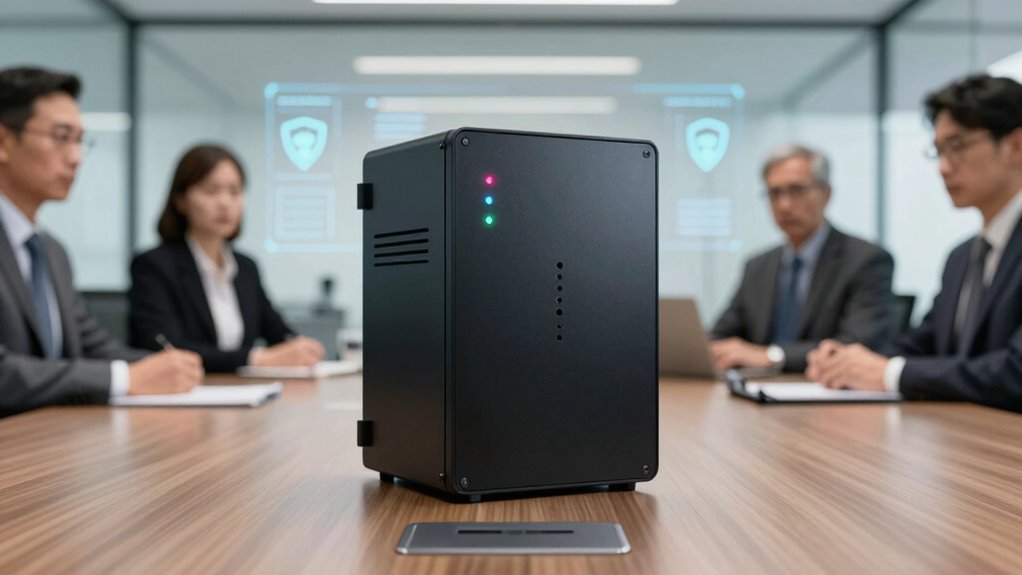

Choosing the best HSM for your enterprise is a strategic move that guarantees robust security, regulatory compliance, and scalability. It supports industry-standard cryptographic algorithms and integrates smoothly with your existing systems, reducing vulnerabilities. A future-proof, modular design helps your organization grow and adapt to new threats. Implementing the right HSM strengthens your security posture and operational efficiency. Keep exploring to discover how the right choice can truly safeguard your future.
Key Takeaways
- Supports industry-standard cryptographic algorithms and protocols, ensuring secure data transmission and compliance.
- Enhances long-term security through scalable, future-proof architecture aligned with evolving threats.
- Facilitates seamless integration with existing systems and cloud environments for operational efficiency.
- Meets strict regulatory standards like PCI DSS, FIPS 140-2, GDPR, and HIPAA, reducing audit burdens.
- Provides robust physical and cyber security features to protect critical enterprise assets.
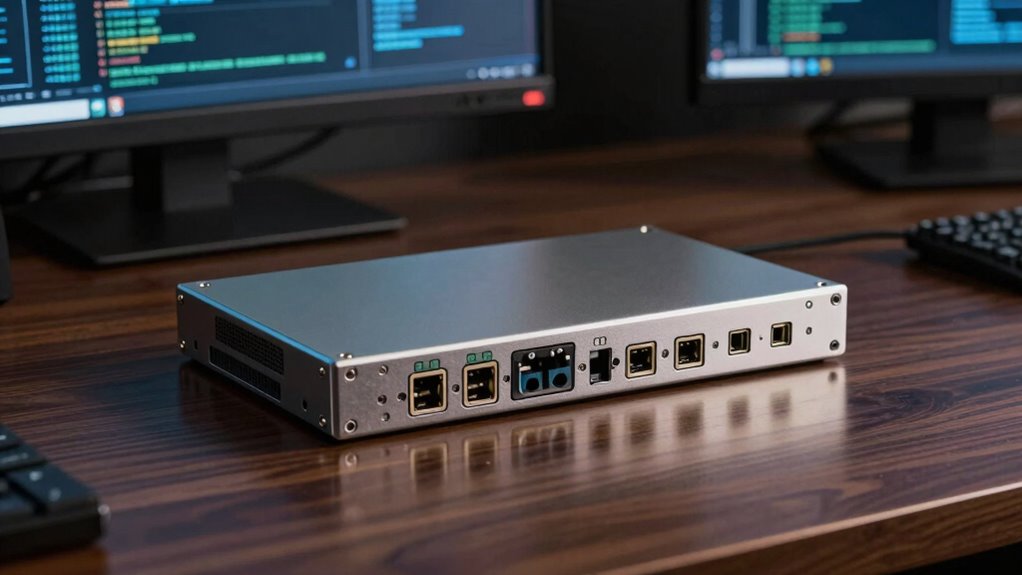
Have you ever wondered how large organizations protect their most sensitive data? The answer often lies in deploying a robust Hardware Security Module (HSM). An HSM is a physical device designed to safeguard and manage digital keys, performing cryptographic functions with high security. When choosing an HSM for your enterprise, it becomes a strategic decision that influences your overall security posture. The best HSMs support advanced cryptographic protocols, ensuring that your data remains encrypted and secure during transmission and storage. These protocols include industry-standard algorithms like RSA, ECC, and AES, which are fundamental in establishing secure communications and data integrity. An HSM that offers support for multiple cryptographic protocols gives your organization flexibility in meeting diverse security requirements and integrating with various systems.
Robust HSMs support industry-standard cryptographic protocols like RSA, ECC, and AES for secure data transmission and storage.
Besides technical capabilities, compliance standards play a critical role in your choice of an HSM. Regulations such as PCI DSS, FIPS 140-2, GDPR, and HIPAA set strict guidelines for data protection, and an enterprise-grade HSM helps you meet these standards with ease. When an HSM complies with recognized standards, it reduces the burden of audits and demonstrates your commitment to security best practices. It also reassures clients and partners that your organization takes data protection seriously. Moreover, a strategic HSM choice considers scalability and future-proofing; as your enterprise grows, your security infrastructure should evolve seamlessly. An HSM with modular architecture and robust key management capabilities ensures long-term viability. Additionally, choosing an HSM that supports hardware-based security further enhances your organization’s defense against physical and cyber threats. Incorporating industry best practices for key management and hardware security features can significantly strengthen your security posture. Employing a comprehensive security approach that includes security standards compliance will help your organization stay ahead of emerging threats. Furthermore, selecting an HSM with cloud integration capabilities can facilitate hybrid deployment models, providing additional flexibility for evolving enterprise needs.
Security is not just about deploying hardware but also about how well it integrates into your broader security ecosystem. A top-tier HSM provides APIs and management tools that enable smooth integration with existing systems, including cloud services and enterprise applications. This integration ensures that cryptographic keys are generated, stored, and used securely without creating vulnerabilities. Additionally, a strategic HSM choice considers ease of management, auditability, and support for remote administration, helping your security team operate efficiently and respond swiftly to threats.
In today’s rapidly changing threat landscape, selecting an HSM with future-proof features can provide your organization with a critical advantage, ensuring your security infrastructure remains resilient amid evolving threats. Ultimately, selecting the right HSM is a strategic decision that impacts your organization’s security, compliance, and operational efficiency. It’s about more than just buying a piece of hardware; it’s about investing in a secure foundation that supports your enterprise’s growth while safeguarding critical data. By prioritizing cryptographic protocol support, compliance standards, and seamless integration, you position your organization for resilient, future-proof security.

Applied Cryptography in .NET and Azure Key Vault: A Practical Guide to Encryption in .NET and .NET Core
As an affiliate, we earn on qualifying purchases.
As an affiliate, we earn on qualifying purchases.
Frequently Asked Questions
How Do HSMS Integrate With Existing Enterprise Security Infrastructure?
You integrate HSMs into your enterprise security infrastructure through hardware integration, connecting them with your existing systems like servers and networks. They enhance user authentication by securely managing cryptographic keys, ensuring only authorized personnel access sensitive data. You configure HSMs to work seamlessly with your security protocols, enabling encrypted transactions and secure key storage. This integration fortifies your overall security, making your enterprise more resilient against cyber threats.
What Are the Compliance Standards for Enterprise HSMS?
You need to guarantee your enterprise HSM complies with standards like FIPS 140-2, which guarantees data encryption strength and secure key management. These standards validate that the HSM securely handles cryptographic keys, protecting sensitive information. By choosing an HSM that meets industry regulations, you strengthen your security posture, maintain regulatory compliance, and ensure robust data encryption and key management practices essential for safeguarding enterprise assets.
How Scalable Are Enterprise-Grade HSM Solutions Over Time?
Enterprise-grade HSM solutions are highly scalable over time, allowing you to adapt to growing security needs. They support cryptographic agility, enabling you to update algorithms as standards evolve, and vendor interoperability, ensuring seamless integration with your existing infrastructure. This flexibility helps maintain security, manage increasing workloads, and future-proof your investment, making these HSMs a strategic choice for long-term enterprise growth and compliance.
What Are the Total Cost Considerations for Enterprise HSM Deployment?
You should conduct a thorough cost analysis to understand the total expenses involved in deploying an enterprise HSM. Consider upfront costs like hardware purchase, software licenses, and implementation, along with ongoing expenses such as maintenance, support, and upgrades. When selecting a vendor, evaluate their pricing models, reputation, and service quality. Balancing cost with security features guarantees you choose an HSM that offers long-term value and aligns with your enterprise’s strategic goals.
How Do HSMS Impact Overall Enterprise Cybersecurity Posture?
You enhance your enterprise’s cybersecurity posture with HSMs by boosting cryptographic agility, allowing quick adaptation to emerging threats. They provide threat resilience through secure key management and hardware protection, making attacks considerably harder. By integrating HSMs, you create a robust defense, ensuring sensitive data remains protected even amid evolving cyber threats. This strategic move strengthens your overall security framework, reducing vulnerabilities and maintaining trust with clients and partners.
As an affiliate, we earn on qualifying purchases.
Conclusion
Choosing the right hardware security module isn’t just a technical decision; it’s a strategic one. When you realize that safeguarding your sensitive data depends on the right security layer, it feels almost like fate. The coincidence? The best HSM aligns perfectly with your enterprise’s growth, security needs, and future plans—almost as if it was meant to be. In the end, making that choice today secures your tomorrow, proving that sometimes, security and strategy truly go hand in hand.

CRYPTOGRAPHY, KEY MANAGEMENT & ZERO-TRUST SECURITY: Rings of Power as a Compromised Public-Key Infrastructure: Root-Key Escrow, Supply-Chain Subversion, and Cryptographic Architecture of the Third
As an affiliate, we earn on qualifying purchases.
As an affiliate, we earn on qualifying purchases.
As an affiliate, we earn on qualifying purchases.