📊 Full opportunity report: Warranty claim packet builder for appliance repair shops on IdeaNavigator AI — validation score, market gap, and execution plan.

Get business pricing on tech for your team
- Business-only prices and quantity discounts
- Tax-exempt purchasing
- Multiple users, one account, clear invoices
TL;DR
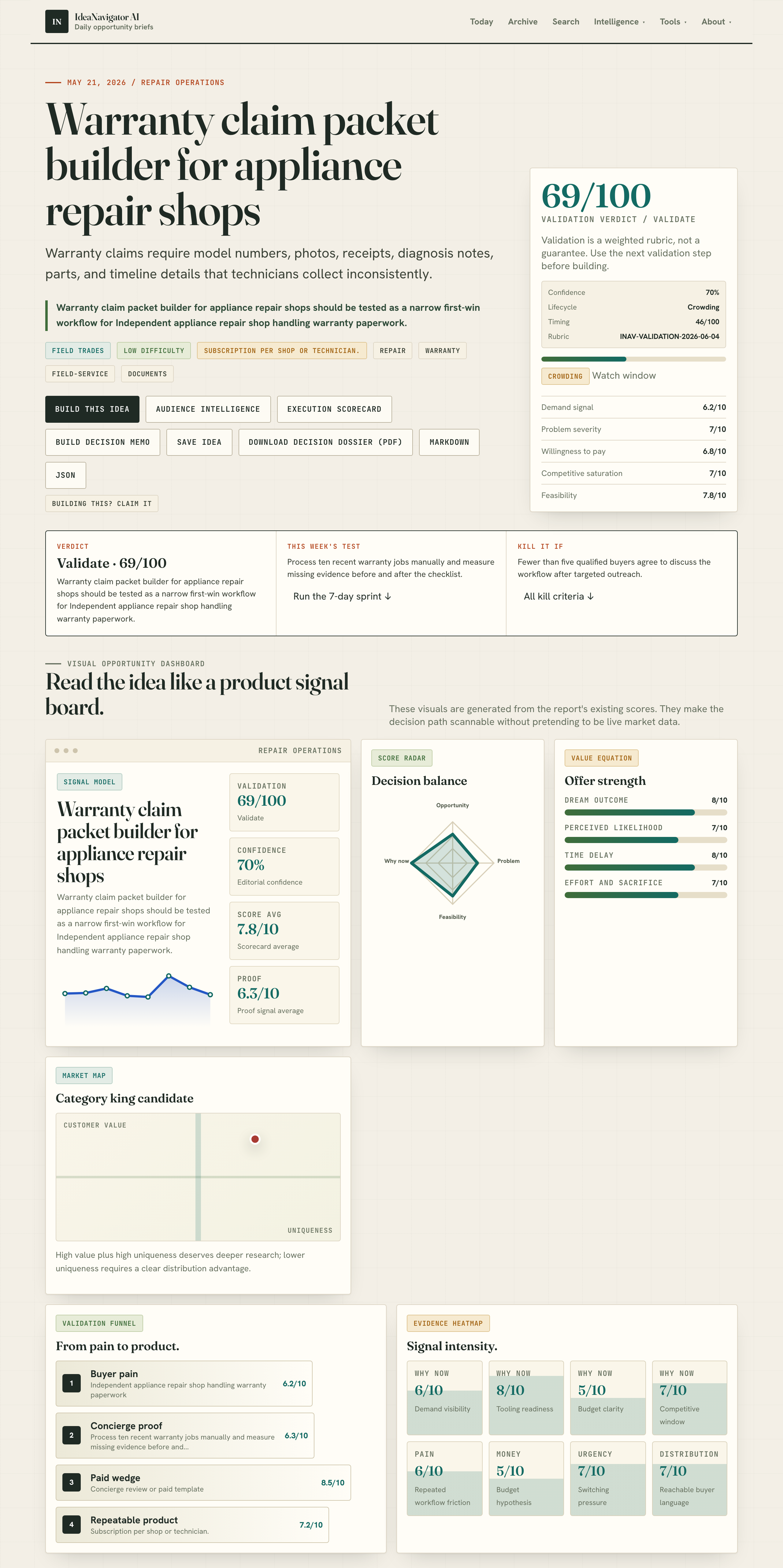
A new warranty claim packet builder designed for independent appliance repair shops is entering pilot testing. It aims to improve documentation, reduce rework, and protect margins by standardizing evidence collection.
A new warranty claim packet builder tailored for independent appliance repair shops is entering a pilot testing phase to improve documentation and streamline warranty claims. The tool prompts technicians to gather necessary evidence and exports a comprehensive claim summary, addressing a common challenge in the industry.
The warranty claim packet builder is designed to assist repair shops by guiding technicians through collecting model numbers, photos, receipts, diagnosis notes, parts used, and timeline details. These elements are often gathered inconsistently, leading to rework and potential claim denials. The initial version will be tested with a small group of repair shops, who will process ten recent warranty jobs manually to measure improvements in evidence completeness before and after using the tool.
Developed as an MVP (minimum viable product), the tool aims to automate parts of the documentation process, reducing errors and increasing claim approval rates. Revenue will be generated through subscription plans per shop or technician, with plans to expand based on feedback from the pilot phase. The approach emphasizes a narrow, targeted workflow to validate the concept before broader deployment.
Why Standardized Documentation Matters for Warranty Claims
This development could significantly reduce the administrative burden on independent appliance repair shops by ensuring consistent, complete documentation for warranty claims. Improved accuracy in evidence collection can lead to higher claim approval rates, fewer rework cycles, and better margins. As warranty rejections due to incomplete evidence are a common industry issue, this tool addresses a critical pain point, potentially transforming how small repair businesses handle warranty processes.
Products Worth Considering

Logitech MX Keys S Combo Wireless Keyboard and Mouse, Graphite

Amazon Kindle Scribe Colorsoft 64GB with 11-Inch Color Display and Premium Pen, Graphite

EcoFlow DELTA 3 Max Portable Power Station, 2048Wh LFP Battery
As an affiliate, we earn on qualifying purchases.
Industry Challenges in Warranty Claim Processes
Independent appliance repair shops often face difficulties in collecting and organizing the necessary documentation for warranty claims. Variability in technician practices and inconsistent evidence collection lead to delays, rework, and claim denials. Currently, many shops process warranty claims manually, which can be time-consuming and error-prone. The industry has seen increasing pressure to improve documentation standards as manufacturers and warranty providers tighten claim requirements. The introduction of a dedicated workflow tool aligns with broader trends toward automation and process standardization in repair operations.
“Automating evidence collection addresses a key pain point for technicians and can improve overall warranty process efficiency.”
— an anonymous researcher
Uncertainties About Pilot Outcomes and Adoption
It remains unclear how quickly repair shops will adopt the new tool and whether it will significantly improve claim approval rates in practice. The effectiveness of the checklist and prompting features will be evaluated during the pilot phase, but broader industry acceptance and integration with existing systems are still unconfirmed. Further testing and user feedback are needed to validate the solution’s impact.
Next Steps in Validation and Expansion
The pilot testing will continue over the coming months, with participating shops processing additional warranty jobs to measure improvements. Based on feedback, developers plan to refine the tool’s features and usability. If successful, a wider rollout and integration with repair shop management systems are expected, along with potential feature expansions to cover more aspects of warranty documentation.
Key Questions
How will the warranty claim packet builder improve my repair shop’s warranty process?
The tool guides technicians through collecting all necessary evidence, reducing errors and rework, and exports a comprehensive claim summary to increase approval chances.
Is this tool suitable for all types of appliance repairs?
Initially, the focus is on independent repair shops handling warranty claims for common appliances. Expansion to other repair types may follow based on pilot results.
How much will the subscription cost for my shop?
Pricing details are still being finalized, but the initial model involves a subscription per shop or technician, designed to be affordable for small businesses.
When will the tool be available for broader use?
Following successful pilot testing and refinement, a wider rollout is expected within the next year, with updates based on early user feedback.
Will the tool integrate with existing repair management software?
Integration plans are under consideration, but initial versions will focus on standalone functionality with potential system integrations later.
Source: IdeaNavigator AI