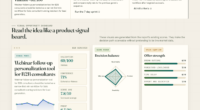
📊 Full opportunity report: The Nordics: Protect the Worker, Not the Job on ThorstenMeyerAI.com — validation score, market gap, and execution plan.
TL;DR
Nordic nations adopt a model that emphasizes safeguarding workers over rigidly protecting jobs, facilitating smoother transitions amid automation. This approach could influence global labor policies.
Nordic countries are implementing a labor policy approach that prioritizes protecting workers rather than jobs, contrasting sharply with traditional European models focused on job preservation. This approach, rooted in the ‘flexicurity’ model, aims to make technological transitions smoother and less disruptive for individuals, which has significant implications for how societies adapt to automation and economic change.
The Nordic model, particularly Denmark’s ‘flexicurity,’ combines flexible labor laws that allow easy hiring and firing with generous unemployment benefits and proactive retraining programs. This framework treats jobs as temporary, while individuals are supported as permanent assets. As a result, Nordic unions tend to be pro-technology, welcoming automation because the social safety net ensures workers are not left destitute when their jobs become obsolete.
Key components include weak employment protection laws, high unemployment replacement rates, and substantial government investment in active labor market policies such as retraining and job search support. Norway’s sovereign wealth fund exemplifies how the region manages capital ownership, providing a collective resource that benefits the population and buffers economic shifts. This contrasts with approaches like Germany’s Kurzarbeit, which aims to preserve existing jobs during downturns.
Protect the Worker, Not the Job
Where Germany saves the job, the Nordics let the job go and catch the worker. The counterintuitive result: unions that welcome automation — because the person is protected even when the role isn’t.
Independent commentary, produced with AI assistance under human editorial oversight. The views are the author’s own and may change. This is analysis, not policy, economic, investment, or legal advice. Descriptions of flexicurity, Nordic active-labor spending, Finland’s basic-income experiment, and Norway’s sovereign wealth fund reflect publicly reported information as of mid-2026 and may change. This phase maps differing approaches and endorses none; contested questions are presented with competing views, not a verdict. Country and program names are referenced for analysis and imply no affiliation.
Why Nordic Worker-Centric Policies Matter Globally
The Nordic focus on protecting workers rather than jobs may offer a blueprint for managing automation and economic transitions worldwide. By reducing the fear associated with technological change, societies can foster innovation and adaptation rather than resistance. This approach could influence labor policies in other regions seeking to balance economic flexibility with social security, especially as automation accelerates.
active labor market retraining programs
As an affiliate, we earn on qualifying purchases.
As an affiliate, we earn on qualifying purchases.
Nordic Labor Policy as a Model for Automation Transition
The ‘flexicurity’ model originated in Denmark in the 1990s as a response to economic restructuring. It has since become a hallmark of Nordic labor policy, emphasizing a social contract where employers enjoy labor market flexibility, and workers receive high income security and active support. This model contrasts with more rigid European systems and with the American emphasis on individual mobility without extensive social safety nets. As automation threatens traditional employment, the Nordic approach offers an alternative paradigm rooted in social resilience and proactive transition management.
“The Nordic model treats jobs as temporary arrangements; people are treated as permanent. This creates a societal environment where automation is less feared, and transitions are smoother.”
— Thorsten Meyer
unemployment support and job transition kits
As an affiliate, we earn on qualifying purchases.
As an affiliate, we earn on qualifying purchases.
Unresolved Questions About Nordic Model Scalability
While the Nordic approach is lauded, it remains uncertain how well this model can be adopted in countries with different political, social, or economic contexts. Questions persist about the sustainability of high social spending, the political will to maintain flexible labor laws, and whether this approach can effectively address rising inequality or labor market polarization in other regions.
As an affiliate, we earn on qualifying purchases.
Future Policy Developments and Global Influence
As automation and AI continue to reshape economies, Nordic countries are likely to further refine their ‘flexicurity’ policies. Other nations may look to these models when designing their own responses to technological change, potentially leading to broader adoption of worker-centered labor reforms. Monitoring how these policies perform during economic shocks or technological disruptions will be crucial in assessing their long-term viability.
automation worker protection tools
As an affiliate, we earn on qualifying purchases.
As an affiliate, we earn on qualifying purchases.
Key Questions
How does the Nordic model differ from traditional European job protection systems?
The Nordic model emphasizes high flexibility for employers, generous unemployment benefits, and active labor market policies, rather than rigid employment protections that make firing difficult. This creates a more adaptable labor market that supports workers through transitions.
Can this model be applied in countries with different political or economic systems?
It is uncertain. The success of the Nordic approach relies on high social spending, strong unions, and political consensus, which may not be present elsewhere. Adaptation would require significant institutional and cultural shifts.
Does prioritizing workers over jobs threaten employment levels?
According to experts, the model actually promotes employment by reducing resistance to automation and fostering a resilient workforce capable of adapting to change.
What role does Norway’s sovereign wealth fund play in this model?
Norway’s sovereign wealth fund provides a collective ownership of capital, buffering economic shifts and ensuring that the benefits of resource wealth support the population, complementing the labor-focused policies.
Source: ThorstenMeyerAI.com