

TL;DR
Moonshot AI released Kimi K3, a 2.8 trillion parameter model priced on par with Western mid-tier models. This marks a significant shift in Chinese AI capabilities, moving beyond cost competition. The development raises questions about export controls and AI scale strategies.
Moonshot AI has launched Kimi K3, a 2.8 trillion parameter language model that costs $3 per million input tokens and $15 per million output tokens, positioning it at the same price as Western mid-tier models like Claude Sonnet 5. This development marks a significant shift in Chinese AI capabilities, moving away from the previous narrative of Chinese models being primarily cost-effective alternatives.
The Kimi K3 model, announced on July 16, is the largest open-weight model from China to date, surpassing competitors such as DeepSeek V4-Pro and Xiaomi’s models in scale. It features a sparse Mixture-of-Experts architecture with 16 of 896 experts active per token, and supports a 1,048,576-token context window, including native text, image, and video inputs.
Moonshot describes K3 as their most capable model, with 2.8 trillion parameters, though the active parameter count remains undisclosed. Independent benchmarks place K3 as the fourth-best in recent evaluations, just 0.54 points behind the top-performing Sol Max, and ahead of models like GPT-5.6 and Claude Fable 5.8. This performance was achieved roughly six months earlier than analysts expected, who predicted China would reach this capability by early 2027.
Pricing is a key factor: K3 is priced at $3 per million input tokens and $15 per million output tokens, matching the rate of Claude Sonnet 5. This parity indicates that Chinese labs are no longer competing solely on cost but are positioning their models based on capability, challenging the long-held belief that Chinese AI was primarily an inexpensive alternative.
Implications of China’s AI Capability Leap
The launch of Kimi K3 at capability levels comparable to Western models and at the same price signals a major shift in global AI competition. It undermines the narrative that Chinese AI development is limited by export controls and suggests that Chinese labs may have achieved breakthroughs in scale and efficiency, possibly through improved hardware or novel training techniques.
This development could accelerate the pace of AI innovation in China, influence global market dynamics, and impact policy discussions around export restrictions. It also raises questions about the true state of China’s technological independence and the effectiveness of current export controls designed to limit access to large-scale AI models.
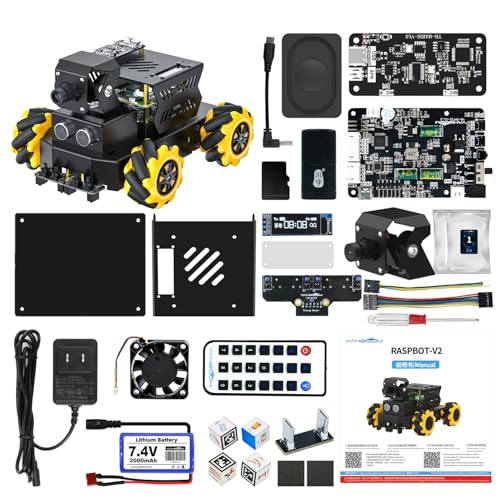
Yahboom Raspberry Pi 5 ROS2 Robot Car 360°Movement, AI Vision & Tracking, Integrated Multimodal Large AI Model OpenRouter, AI Voice Interaction (Superior Without RPi5)
- Powerful Raspberry Pi 5 Control: Enhanced processing, multimedia, and AI performance
- Large AI Model Integration: Advanced human-computer interaction and environmental perception
- Multiple Control Options: APP, PC, remote control, and handle support
As an affiliate, we earn on qualifying purchases.
As an affiliate, we earn on qualifying purchases.
Background on Chinese AI Development and Scale
Over the past two years, Chinese AI labs have focused on creating cost-effective models, emphasizing efficiency due to export controls and limited access to high-end compute resources. Prior to K3, Chinese models were generally considered less capable than Western counterparts, with scale and performance being secondary to affordability.
Moonshot AI’s previous models, such as K2, had around 1 trillion parameters, and the industry consensus was that China would reach large-scale capabilities by early 2027. The release of K3, with 2.8 trillion parameters, came roughly six months ahead of this timeline, indicating rapid progress.
Industry analysts have debated whether this scale was achievable under export restrictions, with some suggesting that China’s hardware and research efficiencies have improved significantly, or that restrictions may be less effective than assumed.
“Our most capable model to date, with 2.8 trillion parameters, demonstrates China’s leap in AI capability.”
— Yutong Zhang, President of Moonshot AI

Optimizing Large Scale AI Workloads with NVIDIA Blackwell:: A Developer’s Guide to the B100 and GB200 Ecosystem
As an affiliate, we earn on qualifying purchases.
As an affiliate, we earn on qualifying purchases.
Unresolved Questions About Compute and Capabilities
It remains unclear what the active parameter count of K3 is, as Moonshot has not disclosed this detail. The total parameters are 2.8 trillion, but the actual training compute and efficiency gains are not fully transparent. There are questions about whether the model’s capabilities are solely due to scale or if novel training techniques and hardware improvements played a significant role.
Additionally, the impact of export controls on Chinese hardware development and whether this model’s existence indicates potential policy loopholes or breakthroughs in domestic silicon manufacturing remains uncertain.
As an affiliate, we earn on qualifying purchases.
Next Steps for Chinese AI Scaling and Policy Response
Further independent evaluations and disclosures from Moonshot are expected to clarify the active parameter count and training efficiencies. Policymakers and industry stakeholders will likely scrutinize the implications of this capability leap, potentially leading to renewed discussions on export restrictions and AI governance.
Additionally, Chinese labs may accelerate development of even larger or more capable models, further narrowing the gap with Western AI, while Western companies might respond with their own scaling strategies or new capabilities.

Building MCP Servers for AI Agents: Scalable Architecture Patterns, Security Design, and Production-Ready AI Infrastructure for Large Language Models
As an affiliate, we earn on qualifying purchases.
As an affiliate, we earn on qualifying purchases.
Key Questions
How does Kimi K3 compare to Western models like GPT-5 and Claude?
Independent benchmarks place Kimi K3 as the fourth-best in recent evaluations, just behind GPT-5.6 and Claude Fable 5, indicating it is competitive at the same scale and price point.
What does the $15 per million output token cost mean for AI deployment?
This pricing makes Kimi K3 comparable to Western models like Claude Sonnet 5, suggesting Chinese labs are now competing on capability rather than just cost.
Does this mean export controls are ineffective?
The existence of a 2.8 trillion parameter model in China raises questions about the effectiveness of current export restrictions, or suggests that domestic hardware and efficiency improvements have advanced faster than anticipated.
Will this development influence global AI policy?
Yes, the capability leap could prompt policymakers to reevaluate export restrictions and AI governance strategies, especially if China demonstrates sustained progress at this scale.
Source: ThorstenMeyerAI.com