
📊 Full opportunity report: Made-in-USA Claim Compliance: Keeping Evidence In Sync on IdeaNavigator AI — validation score, market gap, and execution plan.

Get business pricing on tech for your team
- Business-only prices and quantity discounts
- Tax-exempt purchasing
- Multiple users, one account, clear invoices
TL;DR
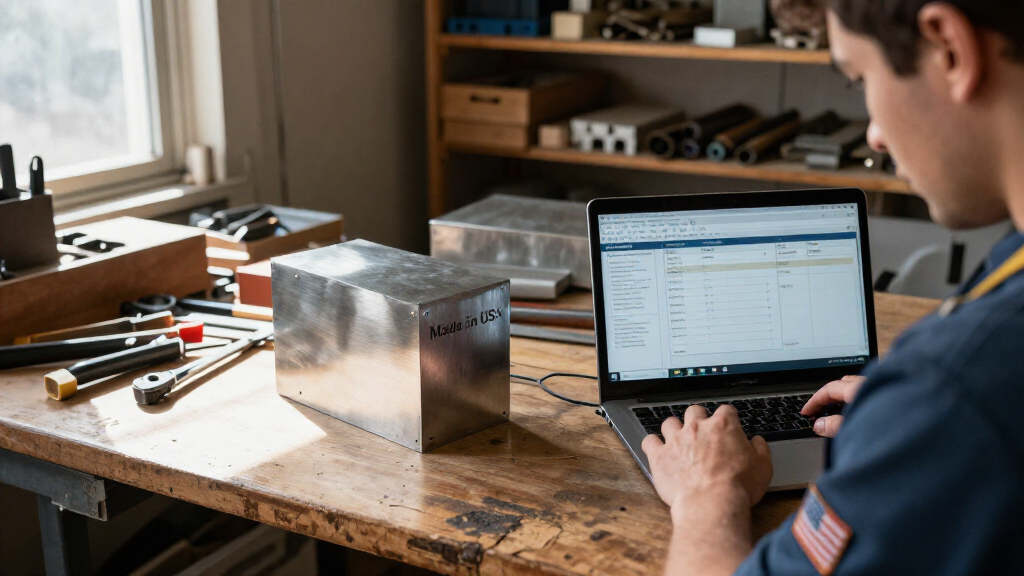
IdeaNavigator AI describes a proposed compliance workflow for consumer brands making Made-in-USA claims: a living file linking each product to materials, supplier affidavits and assembly locations. The material presents the FTC enforcement sweep as a reason to act, but provides no independent confirmation of that sweep, penalties, or an operating product.
IdeaNavigator AI has proposed a compliance workflow that would link each product’s Made-in-USA claim to its bill of materials, supplier affidavits and assembly location, then flag changes that could affect the claim. The proposal targets consumer-brand compliance and operations teams, but the information provided does not establish that the software exists or independently verify its stated trigger: an FTC enforcement sweep in April 2026.
The suggested minimum product would create a record for each stock-keeping unit (SKU), connecting the product to the materials and supplier documentation that support an origin claim. It would assign a red, yellow or green status to each product line, giving staff a visible indication of whether evidence is current or needs review. These are proposed features, not confirmed capabilities of a launched service.
The workflow would also use supplier-change alerts to notify compliance staff when a change may affect a claim, such as a supplier switching production to an overseas factory. That is meant to move review earlier in the process, before packaging or marketing carrying the claim is shipped. The proposal does not specify how supplier changes would be verified, what systems would send the alerts or who would approve a status change.
For commercial validation, IdeaNavigator AI suggests offering a fixed-fee substantiation audit to 15 brands already printing origin claims and measuring how many take up an ongoing monitoring subscription. The suggested pricing model is an annual subscription tiered by brand SKU count, with a separate audit-response module. No participating brands, audit results, prices or customer commitments are identified.
Keeping claim evidence in sync
IdeaNavigator AI proposes a workflow for linking each product’s origin claim to supporting records. The concept and its stated enforcement trigger remain unverified.
What the proposed workflow connects
A living substantiation file would keep product claims tied to supply-chain evidence.
Connect each SKU to its bill of materials, supplier affidavits and assembly location.
Use red, yellow or green indicators to show when a product line needs review.
Alert compliance staff when a change may affect the claim, before packaging or marketing ships.
What is confirmed—and what is not
- A product-level evidence file
- Status indicators and supplier-change alerts
- A fixed-fee audit offer for 15 brands
- Whether software is being built or has launched
- Whether brands have agreed to test it
- How supplier changes and status updates would be verified
Validate the idea with brands
The proposed market test would assess audit demand and interest in ongoing monitoring.
Keeping Product Claims Tied to Evidence
Origin claims can appear on packaging that is produced in large quantities, while the records supporting them may sit across supplier files, invoices and email. If materials or production arrangements change, a brand may need to determine quickly whether its existing claim remains supportable. A centralized, current file could make that review more manageable, if the records are accurate and the alert process works as intended.
The proposed workflow speaks to a practical risk for compliance and operations teams: evidence can become outdated without a clear signal reaching the people responsible for packaging and marketing. Still, software cannot establish the legal accuracy of a claim by itself. Brands would need to assess the underlying facts and applicable requirements, and the proposal offers no evidence yet that its approach reduces enforcement risk or response time.
Products Worth Considering

Samsung 27-Inch Odyssey G5 QHD Gaming Monitor (G51F)

Samsung Galaxy Tab A11+ Tablet, 6GB RAM, 128GB Storage, Expandable Storage, Gray

Bose QuietComfort Ultra Earbuds (2nd Gen), Wireless Noise-Cancelling Earbuds, Black
As an affiliate, we earn on qualifying purchases.
The Proposal and Its Market Test
IdeaNavigator AI frames the idea as a focused first use case for a consumer brand already printing U.S.-origin claims, rather than a broad compliance platform. The initial product is a living substantiation file: a structured link between a product, its inputs, its suppliers and its assembly location. The suggested customer is a compliance or operations lead who must keep those records organized as the supply chain changes.
IdeaNavigator AI’s proposal says an FTC enforcement sweep opened in April 2026 and describes it as making a previously dormant paperwork obligation an active legal exposure with named penalties. That characterization is not independently substantiated by the information provided. The supplied material includes no enforcement announcement, case, penalty amount or agency statement, so the sweep should not be treated as confirmed news. The proposal’s 15-brand audit exercise is a suggested validation plan, not evidence that the test has occurred.
Enforcement and Product Status Need Verification
The principal uncertainty is whether the April 2026 FTC sweep described by IdeaNavigator AI occurred as stated. The material provides no link to an agency notice or details of named penalties, and no specific enforcement actions are identified. Readers should distinguish the proposal’s assertion from verified agency action until supporting records are available.
It is also unclear whether a company is building the proposed software, whether any brands have agreed to test it, or how the system would handle incomplete or conflicting supplier records. IdeaNavigator AI’s proposal does not set out a legal review process, data-security practices, integration requirements or method for confirming a supplier’s factory location. No evidence is presented about pricing, customer demand or measurable outcomes.
Validate the Workflow With Brands
IdeaNavigator AI describes the next step as a fixed-fee audit with 15 brands that currently make origin claims. The proposed test would examine whether the audit identifies a need for ongoing monitoring and whether participants convert to a subscription. The material provides no start date, participant list or results, so this remains a plan rather than a scheduled milestone.
For the enforcement rationale to be assessed, the claim about the FTC would need to be checked against agency announcements and case records. For the product concept, useful evidence would include documented customer trials, a working supplier-change alert process and examples showing how records are updated and reviewed. Until those details are available, the development is best understood as a software opportunity and validation proposal, not a confirmed product launch or enforcement update.
Source: IdeaNavigator AI proposal
Key Questions
What is the proposed Made-in-USA compliance tool?
IdeaNavigator AI describes a proposed system that would link each product’s origin claim to its bill of materials, supplier affidavits and assembly location, with a status indicator and alerts for relevant supplier changes.
Has the software launched?
The IdeaNavigator AI material describes a minimum viable product concept and a customer-validation plan. It does not confirm that a product has launched or that brands are using it.
Did the FTC begin an enforcement sweep in April 2026?
IdeaNavigator AI’s proposal asserts that it did, but the supplied information includes no agency notice, named case or penalty record to verify the claim. The enforcement assertion remains unconfirmed here.
How would the idea be tested?
IdeaNavigator AI proposes fixed-fee substantiation audits for 15 brands already printing origin claims, then measuring conversion to a recurring monitoring subscription. No test results or participants are reported.
Source: IdeaNavigator AI