📊 Full opportunity report: Strength Testing Strategies For Remote Work And Corporate Wellness on IdeaNavigator AI — validation score, market gap, and execution plan.

Get business pricing on tech for your team
- Business-only prices and quantity discounts
- Tax-exempt purchasing
- Multiple users, one account, clear invoices
TL;DR
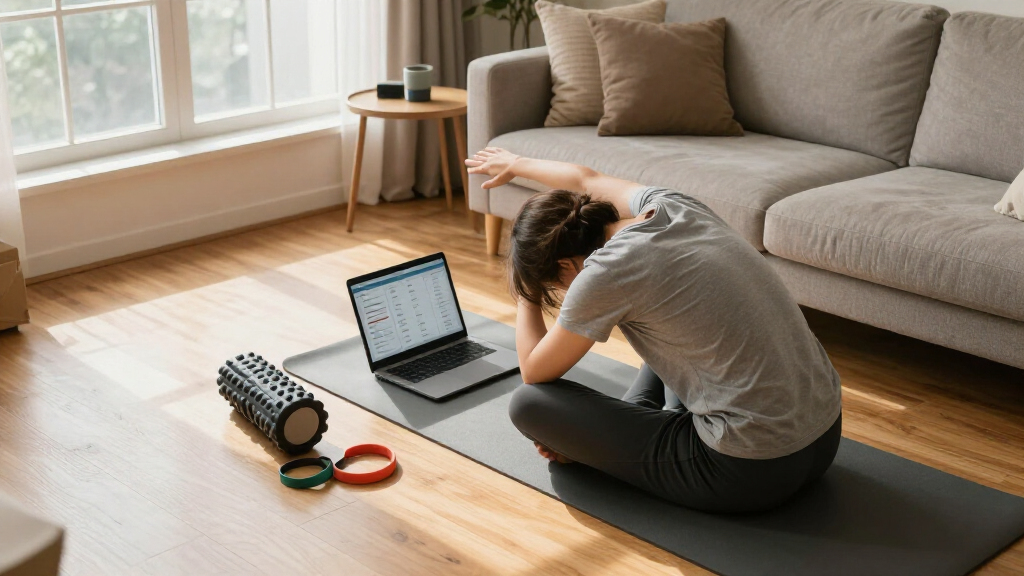
Employers and benefits providers are developing remote strength testing tools to identify early musculoskeletal risks among remote employees. These assessments use smartphone cameras and pose estimation technology, enabling early intervention and reducing costly health claims.
Employers, benefits providers, and health tech developers are collaborating to create at-home strength and mobility assessment tools for remote workers, leveraging smartphone camera technology to identify early musculoskeletal (MSK) risks. This initiative responds to rising MSK-related health issues and costs driven by increased remote work.
Remote work has led to a surge in MSK problems such as neck, back, and posture-related issues, driven by reduced incidental movement and ergonomic challenges. Employers currently lack lightweight, proactive screening methods to detect early signs of mobility decline before costly clinical episodes occur, often relying on reactive treatments after pain manifests. The emerging solution involves a web or mobile-based self-assessment that guides employees through a series of strength, mobility, and posture tests, utilizing smartphone cameras and pose estimation algorithms to generate personalized MSK risk scores.
This assessment is designed to take about 10 minutes, during which employees perform tasks like sit-to-stand repetitions, shoulder and hip range-of-motion tests, and seated posture photos. The system then provides a risk score, tailored corrective exercises, and tracks progress over time. Employers can access an aggregate dashboard displaying team-level MSK risk trends and engagement metrics, with options to refer flagged employees to clinical MSK or physiotherapy services. Initial pilots aim to validate the scoring accuracy, engagement levels, and willingness of HR and benefits teams to adopt the platform, with success measured by completion rates, score validity, and pilot sign-ups.
Potential Impact on Employee Health and Cost Reduction
This technology could transform how companies approach employee health, shifting from reactive treatment of MSK issues to proactive prevention. By identifying early mobility decline, employers can reduce medical claims, decrease lost workdays, and improve overall workforce well-being. For benefits providers, this opens a new revenue stream through SaaS subscriptions and referral partnerships, while also supporting the broader shift toward digital health solutions tailored for remote workforces.
at-home posture assessment smartphone
As an affiliate, we earn on qualifying purchases.
As an affiliate, we earn on qualifying purchases.
Growing Need for Proactive MSK Prevention in Remote Work
The shift to permanent remote and hybrid work arrangements has significantly altered employee health dynamics. Traditional office environments naturally limited sedentary behavior through incidental movement, commuting, and ergonomic setups. The move to home offices has increased sedentary time, leading to a rise in MSK complaints, which are already a major driver of employer healthcare costs. Existing programs tend to treat pain after it appears, rather than preventing it. Advances in smartphone camera technology and pose estimation algorithms have matured enough to enable at-home assessments without sensors or clinical supervision. This technological evolution presents an opportunity for early screening and intervention, aligning with current employer priorities to control health costs and improve employee well-being.
mobile musculoskeletal screening tool
As an affiliate, we earn on qualifying purchases.
As an affiliate, we earn on qualifying purchases.
Validation and Adoption Challenges for Remote MSK Tests
It remains unclear how accurately the camera-based assessments will correlate with clinical evaluations, and whether employees will consistently complete the tests. The effectiveness of risk scoring and the willingness of employers to integrate this into existing wellness programs are still being tested through pilot deployments. Additionally, questions about data privacy, user engagement, and long-term adherence are unresolved.
As an affiliate, we earn on qualifying purchases.
Upcoming Pilot Deployments and Validation Studies
Several organizations plan to launch pilot programs within the next 3 to 6 months, involving 2-3 employers and their remote staff. These pilots aim to validate assessment accuracy, engagement rates, and integration workflows. Results from these pilots will determine the platform’s viability for broader rollout and potential scaling across industries. Further development will focus on refining scoring algorithms, enhancing user experience, and establishing clinical referral pathways.
As an affiliate, we earn on qualifying purchases.
Key Questions
How does the remote strength test work?
The test uses a smartphone camera and pose estimation algorithms to guide employees through exercises like sit-to-stand, shoulder/hip range-of-motion, and posture photos, then generates a personalized MSK risk score.
What are the benefits for employers?
Employers can identify early signs of MSK decline, reduce healthcare costs, improve employee well-being, and track team-level health trends through aggregate dashboards.
Are these assessments secure and privacy-compliant?
Yes, the platforms are designed to be privacy-safe, with data anonymization and compliance with relevant privacy standards, but detailed privacy policies will depend on the deployment vendor.
When will this technology be widely available?
Initial pilot deployments are expected within the next 3 to 6 months, with broader availability contingent on pilot outcomes and validation results.
Can employees perform these tests without supervision?
Yes, the assessments are designed for self-guided use at home, with instructions and real-time feedback provided via the app or website.
Source: IdeaNavigator AI
Fall Picks
fall essentials
As an affiliate, we earn on qualifying purchases.