
📊 Full opportunity report: Supply Chain Compliance: Managing Pesticide Residue Risks In Food Imports on IdeaNavigator AI — validation score, market gap, and execution plan.

Get business pricing on tech for your team
- Business-only prices and quantity discounts
- Tax-exempt purchasing
- Multiple users, one account, clear invoices
TL;DR
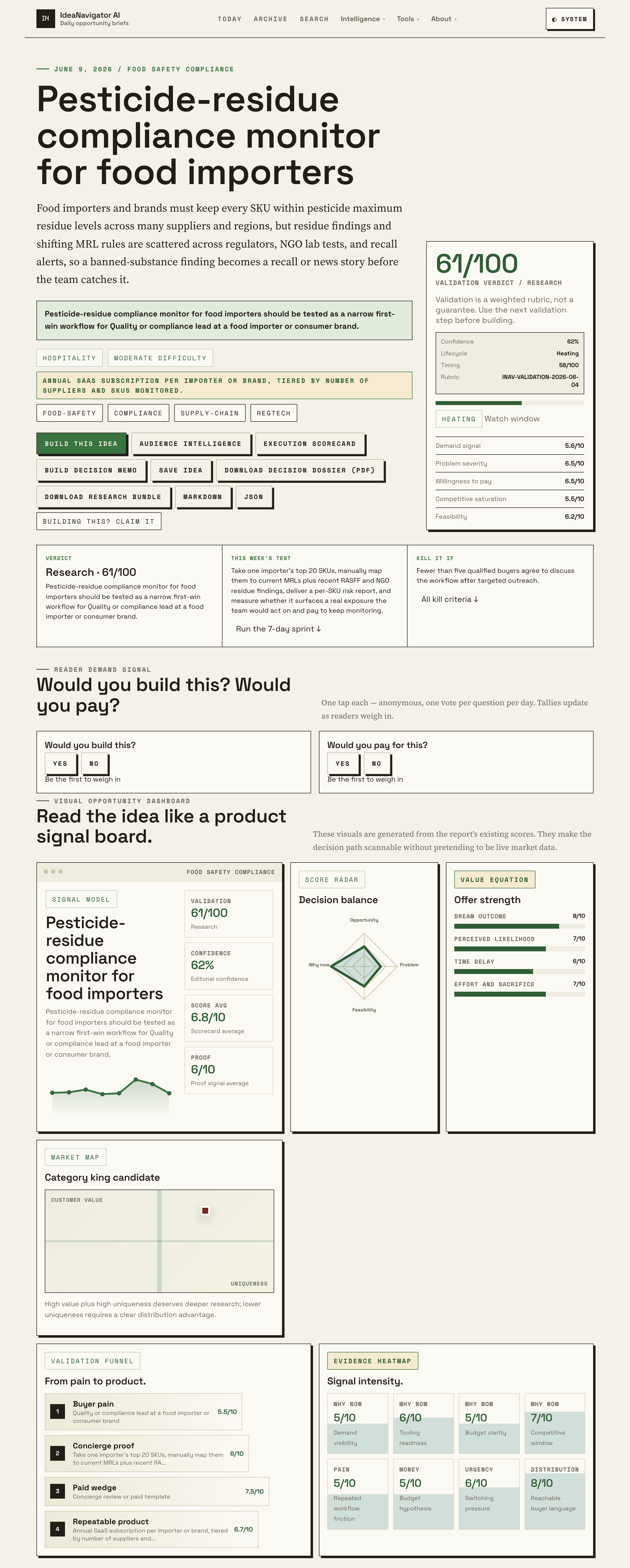
A compliance monitoring tool for pesticide residues is being developed for food importers, aiming to improve risk management by mapping suppliers and SKUs to current residue levels and alerts. This addresses increasing regulatory and consumer demands for food safety. The tool’s effectiveness is being tested with top SKUs from importers.
A new pesticide-residue compliance monitor is being developed for food importers to better manage risks associated with pesticide residues in their products. This tool aims to map supplier SKUs to current maximum residue levels and public residue findings, helping companies prevent violations and recalls. The development comes amid increasing regulatory pressure and consumer demand for transparent food safety practices.
The proposed monitor is designed for quality and compliance leads at food importing companies, offering a SaaS platform that tracks pesticide residue levels across multiple regions and suppliers. It integrates data from EU and regional MRLs, NGO testing results, and regulatory alerts such as RASFF, providing a risk score for each SKU and generating audit-ready compliance reports.
According to sources familiar with the project, the initial validation involves analyzing the top 20 SKUs of an unnamed importer by manually mapping these products to current MRLs and recent residue alerts. The goal is to identify whether the monitor can accurately flag products at risk of exceeding legal limits or containing banned substances, thereby reducing the likelihood of recalls and reputational damage.
Market experts note that the platform could streamline compliance efforts, especially as MRL rules tighten and NGO testing uncovers banned pesticides in staples like rice, tea, and spices. The subscription-based model would charge annually per importer or brand, scaled by the number of monitored SKUs and suppliers.
Implications for Food Safety and Supply Chain Risk Management
This development is significant because it addresses a critical gap in food safety compliance—tracking pesticide residues across complex, global supply chains. As regulators and NGOs increasingly identify violations, companies that proactively monitor and manage residue risks can avoid costly recalls, legal penalties, and damage to brand reputation. The tool also supports transparency and accountability, aligning with consumer expectations for safer, cleaner foods.
pesticide residue testing kits for food
As an affiliate, we earn on qualifying purchases.
As an affiliate, we earn on qualifying purchases.
Regulatory Tightening and Growing Consumer Scrutiny
Over recent years, regulators across regions have intensified pesticide residue regulations, with many countries adopting stricter MRLs. NGO testing programs, such as those conducted by NGOs in Europe, regularly reveal banned pesticides in staple foods, prompting recalls and public concern. Retailers now demand documented evidence of compliance, further pressuring importers to implement effective monitoring systems. Currently, many companies rely on manual checks or fragmented data sources, which are often slow and incomplete.
This new monitor aims to centralize and automate the tracking process, providing real-time insights and reducing the risk of non-compliance. Its development aligns with broader industry efforts to enhance food safety and supply chain transparency.
“Mapping SKUs to current residue data is a critical step in preventing violations before they happen.”
— an anonymous researcher
supply chain pesticide monitoring software
As an affiliate, we earn on qualifying purchases.
As an affiliate, we earn on qualifying purchases.
Effectiveness and Adoption Challenges Remain Unclear
It is not yet confirmed how accurately the monitor will identify actual risk exposures or how quickly it can be integrated into existing compliance workflows. The effectiveness of the initial validation process is still being evaluated, and broader adoption depends on user feedback, regulatory acceptance, and the platform’s ability to keep data current and comprehensive.
food import pesticide residue compliance tools
As an affiliate, we earn on qualifying purchases.
As an affiliate, we earn on qualifying purchases.
Next Steps in Validation and Market Rollout
The development team plans to complete the initial validation phase by testing the monitor with multiple importers’ top SKUs. Pending positive results, the platform will undergo further refinement before a broader market launch. Companies interested in early access or pilot programs are expected to be invited in the coming months, with full commercial availability targeted within the next year.
regulatory compliance pesticide residue monitor
As an affiliate, we earn on qualifying purchases.
As an affiliate, we earn on qualifying purchases.
Key Questions
How will this monitor improve compliance for food importers?
The monitor will automate mapping SKUs to current pesticide MRLs and residue findings, helping companies identify and address risks proactively, reducing the chance of violations and recalls.
What data sources does the monitor use?
It integrates EU and regional MRL databases, NGO testing results, and regulatory alerts such as RASFF, providing a comprehensive view of residue risks.
Is this tool suitable for all types of food products?
Initially, the focus is on staples like rice, tea, and spices where pesticide residues are most frequently scrutinized, but the platform aims to expand to other product categories over time.
When will the platform be available for commercial use?
Following successful validation, a full market launch is expected within the next 12 months, with pilot programs starting sooner.
Source: IdeaNavigator AI
Fall Picks
fall essentials
As an affiliate, we earn on qualifying purchases.