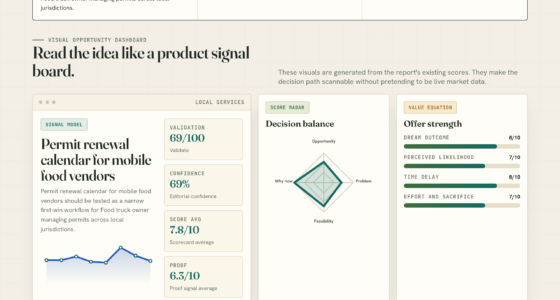

📊 Full opportunity report: Trade Negotiations Fail: Canada’s Dollar-for-Dollar Tariff Response Explained on IdeaNavigator AI — validation score, market gap, and execution plan.

Get business pricing on tech for your team
- Business-only prices and quantity discounts
- Tax-exempt purchasing
- Multiple users, one account, clear invoices
TL;DR
Canada has announced it will respond to US tariffs with equivalent measures, following the breakdown of trade negotiations. This escalation could impact supply chains and international trade dynamics.
Canada has officially announced it will implement a dollar-for-dollar tariff response to US trade measures following the breakdown of recent negotiations. This move marks a significant escalation in the ongoing trade dispute between the two countries, with potential implications for supply chains and bilateral economic relations.
According to Canadian trade officials, the government will mirror US tariffs on affected goods, effectively matching the US’s recent tariff increases. The decision comes after negotiations aimed at resolving trade disagreements failed to produce an agreement, prompting Canada to adopt a retaliatory stance.
Trade analysts note that this response is a direct reaction to US tariffs introduced earlier this year, which targeted specific Canadian exports. The Canadian government has not yet specified the exact scope of the tariffs or the timeline for their implementation, but sources indicate preparations are underway.
US officials have yet to comment publicly on Canada’s announcement, but the escalation is likely to intensify trade tensions and could lead to further retaliatory measures from both sides, affecting supply chains and market stability.
Implications of Canada’s Reciprocal Tariff Strategy
This development signals a potential escalation in trade tensions between Canada and the US, which could disrupt supply chains and impact economic stability in both countries. For businesses managing trade exposure, the move underscores the importance of monitoring geopolitical shifts that could affect tariffs and trade policies.
Market analysts warn that a sustained tariff conflict might lead to increased costs for exporters and importers, as well as potential retaliation that could extend beyond the initial scope of the dispute.
As an affiliate, we earn on qualifying purchases.
Recent Trade Negotiations and Escalation Triggers
Trade negotiations between Canada and the US have been ongoing for months, centered on tariffs, trade barriers, and supply chain issues. The breakdown occurred after disagreements over tariff exemptions and trade enforcement measures, with both sides accusing each other of unfair practices.
The US had recently increased tariffs on certain Canadian goods, citing national security and trade imbalance concerns. Canada’s response to mirror these tariffs is seen as a strategic move to assert its position amid ongoing negotiations.
This escalation follows a pattern of trade disputes in North America, with previous efforts at resolution failing to prevent retaliatory measures.
supply chain risk assessment tools
As an affiliate, we earn on qualifying purchases.
As an affiliate, we earn on qualifying purchases.
Details of Tariff Implementation and Scope Still Unclear
It is not yet clear which specific goods will be targeted by Canada’s dollar-for-dollar tariffs, nor the timeline for their enforcement. Canadian officials have indicated preparations are underway but have not provided detailed lists or dates.
Additionally, the US has not issued an official response, leaving the potential for further diplomatic developments and negotiations in flux.
As an affiliate, we earn on qualifying purchases.
Next Steps in Canada-US Trade Relations
Trade negotiations are likely to continue behind the scenes, with both sides possibly seeking new avenues for dialogue to de-escalate tensions. Canada may also prepare for formal tariff implementation, which could occur in the coming weeks.
Market participants and supply chain managers should monitor official statements and trade policy updates closely, as further retaliatory measures or negotiations could influence trade flows and costs.
As an affiliate, we earn on qualifying purchases.
Key Questions
What prompted Canada’s decision to match US tariffs?
Canada’s decision was prompted by the breakdown of trade negotiations and US tariff increases on Canadian exports, prompting a retaliatory response to defend its trade interests.
Which goods are likely to be affected by Canada’s tariffs?
The specific scope of affected goods has not been disclosed, but they are expected to include key Canadian exports targeted by US tariffs, such as certain machinery, agricultural products, and raw materials.
Could this lead to a trade war between Canada and the US?
While the current response is a retaliatory measure, escalating tariffs could deepen trade tensions and potentially lead to broader trade conflict if negotiations do not resume successfully.
How might this affect supply chains and businesses?
Businesses involved in cross-border trade should prepare for potential cost increases, delays, and market volatility as tariffs and trade tensions evolve.
Source: IdeaNavigator AI
Columbus Day / Indigenous Peoples' Day Picks
long weekend sales
As an affiliate, we earn on qualifying purchases.