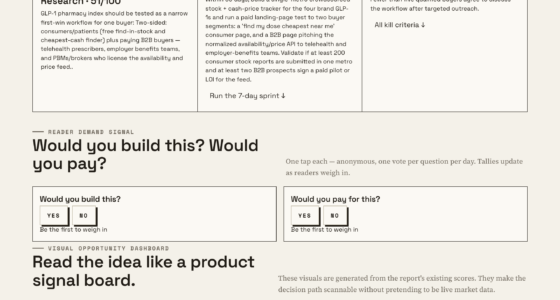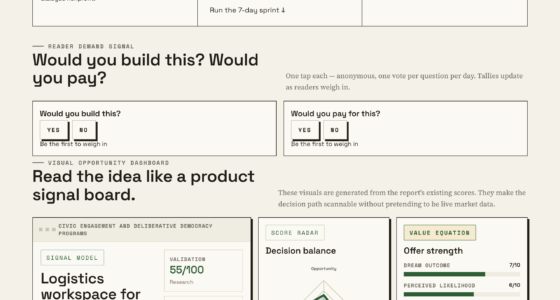
📊 Full opportunity report: Vendor Approval Workflow Essentials For Procurement Operations on IdeaNavigator AI — validation score, market gap, and execution plan.

Get tech for your team delivered free — and shop member deals
- Fast, free delivery on millions of items
- Access to Prime Big Deal Days deals on October 6–7
- Prime Video, Amazon Music and more included
TL;DR

A pilot program for a vendor approval workflow is underway with mid-market companies, aiming to replace scattered email chains with a structured, automated process. This development could significantly improve procurement efficiency and compliance.
A vendor approval workflow for mid-market procurement is being tested as a streamlined alternative to traditional email chains, aiming to address lengthy onboarding times and security concerns. This initiative involves a staged approval process with document collection, review SLAs, and automatic reminders, targeting procurement and finance leads at smaller companies.
The proposed workflow introduces a vendor intake form that feeds into a staged approval board involving security, finance, and legal reviewers. This system aims to replace the current scattered email chains, which often result in delays, lack of transparency, and shadow purchasing.
According to sources familiar with the project, the pilot will be deployed with five mid-market finance teams, and success will be measured by comparing vendor onboarding cycle times against their previous quarter’s baseline. The new system is designed to facilitate faster, more secure onboarding by automating document collection, reviewer SLAs, and status updates accessible to requesters.
This approach addresses growing vendor-risk management requirements, such as security questionnaires, insurance certificates, and compliance attestations, which have exposed the limitations of email-based approval processes in smaller companies without formal procurement systems.
Why Streamlined Vendor Approval Matters for Mid-Market Firms
This development is significant because it tackles a critical bottleneck in procurement operations for mid-market companies—lengthy and opaque vendor onboarding processes.
By introducing a structured workflow, companies can reduce onboarding times, improve compliance, and mitigate risks associated with shadow purchases or unapproved vendors. The automation and transparency offered by the new system could set a standard for procurement efficiency in smaller organizations that currently rely heavily on email chains.
Furthermore, as vendor-risk requirements become more stringent and widespread, the inability of traditional email-based approvals to keep pace may hinder growth and operational agility. The pilot’s success could lead to broader adoption, transforming procurement workflows in this market segment.
As an affiliate, we earn on qualifying purchases.
Background: Challenges in Vendor Approvals for Smaller Companies
Traditional vendor approval processes in mid-market companies often depend on email threads, which involve multiple stakeholders reviewing security, legal, and financial documents separately. This scattered approach results in delays, lack of visibility, and potential security gaps.
Recent regulatory and compliance demands—such as security questionnaires, insurance certificates, and attestations—have increased the complexity of onboarding. Companies without dedicated procurement systems struggle to keep pace, leading to longer cycle times and shadow purchasing activities that bypass formal controls.
In response, some vendors and software providers have begun developing structured workflows and automated approval tools tailored to smaller organizations, aiming to address these inefficiencies.
procurement document management system
As an affiliate, we earn on qualifying purchases.
As an affiliate, we earn on qualifying purchases.
Uncertainties About Workflow Adoption and Effectiveness
It is not yet clear how quickly mid-market companies will adopt the new vendor approval workflow or whether it will deliver the expected reductions in onboarding cycle times. The pilot’s results and user feedback are still forthcoming, and broader scalability remains to be tested.
Additionally, questions remain about integration with existing procurement or finance systems, and whether smaller firms will find the new process cost-effective and user-friendly enough to replace their current methods.
vendor onboarding automation tools
As an affiliate, we earn on qualifying purchases.
As an affiliate, we earn on qualifying purchases.
Next Steps for Validating and Scaling the Workflow Pilot
The initial deployment with five mid-market finance teams will be monitored over the coming months to assess improvements in onboarding speed and compliance adherence. Results will determine whether the workflow can be expanded to more companies or integrated into larger procurement platforms.
Further development may include refining the user interface, adding integrations with existing ERP or procurement systems, and developing additional features such as real-time analytics or vendor performance tracking. The goal is to establish a standardized, scalable solution for mid-market procurement teams.
As an affiliate, we earn on qualifying purchases.
Key Questions
How does the new vendor approval workflow differ from current email-based processes?
The new workflow introduces a structured intake form, staged approval boards, automated reminders, and a centralized status page, replacing scattered email chains to improve transparency and efficiency.
What are the main benefits of adopting this new process?
Key benefits include reduced onboarding cycle times, improved compliance management, enhanced security review, and decreased risk of shadow purchasing activities.
Will smaller companies find this system easy to implement?
Implementation ease depends on the final user interface and integration capabilities. The pilot aims to test usability and cost-effectiveness for mid-market firms without existing procurement systems.
When will broader adoption or commercial availability occur?
The pilot results are expected in the coming months, with potential scaling and commercial rollout contingent on positive outcomes and feedback from participating companies.
What challenges could hinder the success of this new workflow?
Potential challenges include resistance to change, integration complexities with existing systems, and ensuring user adoption and training in smaller organizations.
Source: IdeaNavigator AI
Fall Picks
fall essentials
As an affiliate, we earn on qualifying purchases.