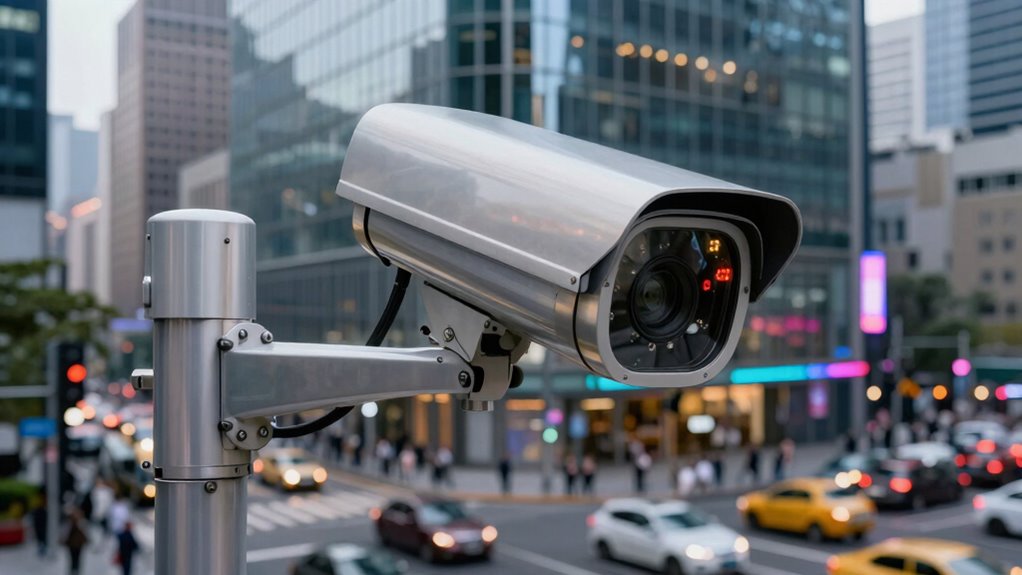

You need better planning for AI surveillance camera systems to guarantee they cover critical areas effectively and protect privacy. Poorly planned setups waste resources, increase security risks, and can violate privacy laws. Proper placement and understanding AI limitations help reduce false alarms and system failures. By developing a clear strategy, you can balance security needs with privacy concerns and save costs. Keep listening to learn how solid planning can improve your surveillance system even further.

Get business pricing on tech for your team
- Business-only prices and quantity discounts
- Tax-exempt purchasing
- Multiple users, one account, clear invoices
Key Takeaways
- Proper planning ensures effective coverage, reducing resource wastage and minimizing privacy invasions.
- It enhances data security by identifying sensitive areas and implementing appropriate safeguards.
- Planning accounts for AI limitations, reducing false alarms and improving overall system reliability.
- A well-designed deployment balances security needs with privacy rights, fostering trust and compliance.
- Strategic placement minimizes operational costs and creates a responsible, ethical surveillance ecosystem.
While AI surveillance camera systems are becoming more widespread, their deployment often lacks proper planning, leading to ineffective coverage and privacy concerns. Without a clear strategy, you may find yourself with cameras that miss critical areas or record unnecessary spaces, which not only wastes resources but also raises questions about how well your surveillance system respects individual privacy. This can erode trust within the community or workforce, making people wary or even resistant to surveillance efforts altogether.
Poorly planned AI surveillance can waste resources and damage trust through privacy violations and lack of transparency.
Data security is another critical issue that often gets overlooked during rushed or unplanned deployments. When AI systems collect vast amounts of footage, sensitive information can become vulnerable if proper data security measures aren’t in place. You need to contemplate how this data is stored, who has access, and how it’s protected from potential breaches. Without robust encryption and strict access controls, your surveillance data could fall into the wrong hands, exposing personal details and compromising privacy. This risk isn’t just about theft; it’s about maintaining the integrity of your entire surveillance operation and ensuring compliance with data protection laws. Incorporating proper data security measures is essential to protect sensitive information and uphold privacy standards.
Effective planning involves more than just installing cameras randomly around a property. You must analyze the environment, identify high-risk zones, and determine the purpose behind each camera’s placement. For instance, cameras intended for security should cover entry points and vulnerable spots, while those meant for monitoring workflows need to be positioned to avoid infringing on employees’ privacy. When you neglect this step, surveillance becomes inefficient and intrusive. Clear policies about data handling and privacy protocols should accompany the system, ensuring that your use of AI surveillance respects legal standards and ethical boundaries. Additionally, understanding the limitations of AI in identifying context can help prevent false alarms and improve overall system reliability. Recognizing these AI limitations can also help set realistic expectations and improve user trust in the system’s capabilities.
Inadequate planning can also lead to increased operational costs, as poorly designed systems require frequent adjustments or additional equipment to cover blind spots. It’s in your best interest to develop a holistic plan that balances security needs with privacy rights, ensuring that the system is both effective and respectful of individual freedoms. Taking the time to strategize upfront minimizes risks, safeguards sensitive data, and fosters a transparent environment where surveillance is seen as a tool for safety rather than an invasion of privacy. Ultimately, better planning isn’t just about technology — it’s about creating a responsible and secure surveillance ecosystem. Proper system design is essential to avoid unnecessary expenses and ensure compliance with privacy standards.
AI surveillance camera placement kit
As an affiliate, we earn on qualifying purchases.
As an affiliate, we earn on qualifying purchases.
Frequently Asked Questions
How Can AI Surveillance Systems Be Ethically Implemented?
You can ethically implement AI surveillance systems by following strong ethical frameworks that prioritize privacy and transparency. Guarantee bias mitigation by regularly auditing your AI models for fairness and accuracy. Clearly communicate how data is collected and used, and obtain informed consent when possible. By actively addressing these aspects, you promote responsible use, build public trust, and reduce potential harm associated with surveillance technology.
What Are the Costs of Upgrading Existing Surveillance Infrastructure?
Think of upgrading your surveillance infrastructure as planting a sturdy tree. The cost analysis reveals expenses for new equipment, software, and installation, while the actual upgrade fortifies your security roots. You might face costs for hardware replacement, system integration, and staff training. Though it’s an investment upfront, a well-planned infrastructure upgrade ensures resilient, future-proof surveillance, guarding your assets more effectively and saving costs long-term.
How Do Privacy Laws Impact AI Camera Deployment?
Privacy laws considerably impact AI camera deployment by requiring you to prioritize data encryption, ensuring captured footage remains secure and protected. You must also consider public awareness, as transparency about surveillance practices builds trust and complies with legal standards. Balancing effective security with privacy rights means implementing strong encryption measures and informing the public about how their data is collected and used, fostering responsible and lawful AI surveillance deployment.
What Training Is Necessary for Effective AI Surveillance Management?
Imagine equipping yourself with a secret weapon—effective AI surveillance. To wield it wisely, you need thorough training protocols and user education. This guarantees you understand system capabilities, limitations, and legal boundaries. Regular updates and hands-on practice keep you sharp, preventing misuse or oversight. With proper training, you turn surveillance from a mere tool into a strategic asset, enhancing security while respecting privacy and legal standards.
How Can False Positives in AI Detection Be Minimized?
To minimize false positives in AI detection, you should focus on algorithm tuning—adjusting sensitivity thresholds and parameters to improve accuracy. Regularly update your models with diverse, real-world data to help the system better distinguish genuine threats from false alarms. Also, implement continuous testing and validation, and consider combining AI with human oversight to catch false positives early, ensuring your surveillance system remains reliable and effective.
privacy-focused security camera system
As an affiliate, we earn on qualifying purchases.
As an affiliate, we earn on qualifying purchases.
Conclusion
Imagine building a house without a blueprint—you might have the latest tools, but chaos will likely follow. Similarly, rushing into AI surveillance without proper planning is like steering a maze blindfolded. A well-thought-out plan ensures your system covers all angles, respects privacy, and functions seamlessly. Remember, technology alone isn’t enough; thoughtful planning is what transforms a good idea into a reliable, effective security solution. Without it, even the smartest cameras can become liabilities.
high-resolution security cameras for business
As an affiliate, we earn on qualifying purchases.
As an affiliate, we earn on qualifying purchases.
surveillance camera data security encryption
As an affiliate, we earn on qualifying purchases.
As an affiliate, we earn on qualifying purchases.
Columbus Day / Indigenous Peoples' Day Picks
long weekend sales
As an affiliate, we earn on qualifying purchases.