
TL;DR

Get business pricing on tech for your team
- Business-only prices and quantity discounts
- Tax-exempt purchasing
- Multiple users, one account, clear invoices
Bonsai unveiled the Bonsai 27B, a 27-billion-parameter AI model designed to run on smartphones. This development could democratize access to advanced AI but raises questions about performance and security.
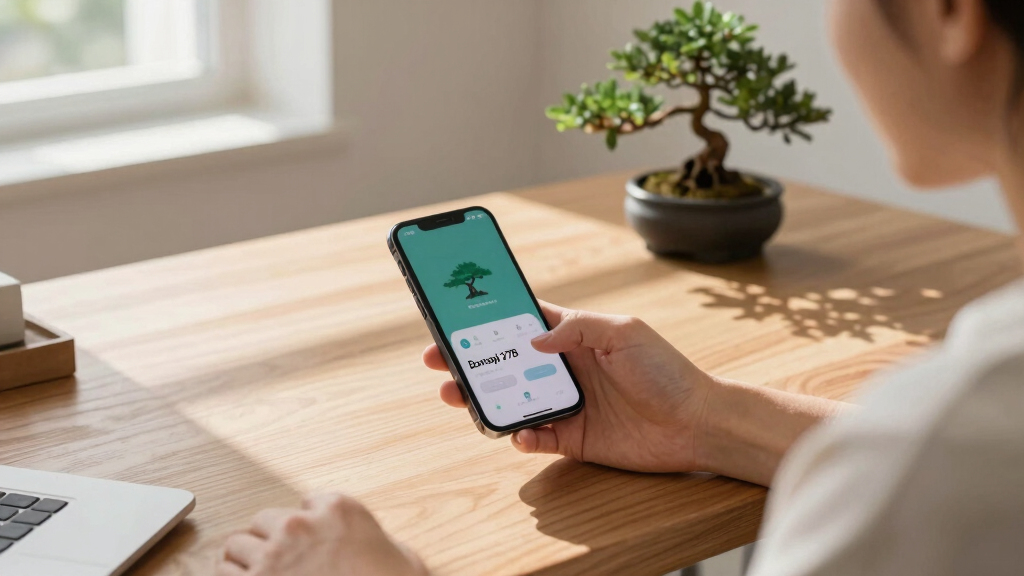
Bonsai has introduced the Bonsai 27B, a 27-billion-parameter AI model that can operate directly on smartphones. This marks a significant shift in AI deployment, making advanced models more accessible without relying on cloud infrastructure. The announcement was made by Bonsai’s development team during a press event on March 15, 2024.
The Bonsai 27B is designed to run efficiently on modern mobile devices, leveraging optimized algorithms and model compression techniques. According to Bonsai, this allows users to access advanced AI functionalities—such as natural language processing, image recognition, and decision-making—entirely on their phones, without needing an internet connection or cloud servers.
Bonsai’s spokesperson stated that the model is tailored to balance performance and resource constraints, with a focus on privacy and security. The company claims that the model’s architecture is a breakthrough in edge AI, enabling complex tasks to be performed locally.
While the company provided technical details about the model’s size and optimization methods, it did not release the full architecture or benchmark results, citing proprietary technology and ongoing testing phases.
Potential Impact on AI Accessibility and Privacy
The Bonsai 27B could significantly democratize access to powerful AI by removing the reliance on cloud servers, especially in regions with limited internet connectivity. It also enhances privacy by processing data locally on devices, reducing exposure to data breaches and surveillance. However, this development raises questions about performance limits and security risks associated with running large models on consumer hardware.
As an affiliate, we earn on qualifying purchases.
Advances in Model Compression and Edge AI Development
Recent years have seen rapid progress in model compression and edge computing, enabling AI models to operate on less powerful hardware. Prior efforts focused on smaller models or cloud-based solutions, but Bonsai’s announcement indicates a new trend toward larger, more capable models functioning locally. This follows industry-wide investments in making AI more accessible and privacy-conscious.
Previous large models, such as GPT-3 or PaLM, required extensive cloud infrastructure. The Bonsai 27B’s ability to run on a smartphone marks a notable departure, driven by advances in efficient neural network architectures and hardware acceleration.
“The Bonsai 27B redefines what’s possible on mobile devices, combining scale with efficiency to bring advanced AI directly to users’ pockets.”
— Bonsai spokesperson
As an affiliate, we earn on qualifying purchases.
Remaining Questions About Performance and Security
Details about the benchmark performance of Bonsai 27B on various devices are not yet publicly available. It is unclear how the model compares to cloud-based counterparts in terms of speed, accuracy, and resource consumption. Additionally, the security implications of running large models locally are still under discussion, with experts raising concerns about potential vulnerabilities.
mobile device AI processing hardware
As an affiliate, we earn on qualifying purchases.
As an affiliate, we earn on qualifying purchases.
Next Steps in Testing and Industry Adoption
Bonsai plans to release public beta tests of Bonsai 27B in the coming months, inviting developers to evaluate its capabilities. Industry analysts will closely monitor its performance benchmarks and security assessments. Further, competitors may accelerate efforts to produce similar edge-optimized models, leading to broader adoption of on-device AI solutions.
privacy-focused AI apps for Android
As an affiliate, we earn on qualifying purchases.
As an affiliate, we earn on qualifying purchases.
Key Questions
Can Bonsai 27B run on all smartphones?
It is designed for modern smartphones with sufficient processing power and memory, but compatibility may vary depending on hardware specifications.
What are the security benefits of running AI locally?
Local processing reduces data transmission and storage on external servers, enhancing privacy and decreasing exposure to hacking or data breaches.
Will this affect AI performance compared to cloud models?
While optimized for mobile, the performance may differ from cloud-based models, with potential trade-offs in speed or complexity of tasks until further testing is completed.
When will developers be able to access Bonsai 27B?
Bonsai has announced plans for public beta releases in the upcoming months, with more details to be provided by the company.
Could this lead to widespread use of AI on devices?
If successful, it could enable mass adoption of AI in everyday devices, from smartphones to IoT gadgets, expanding AI’s reach beyond cloud reliance.
Source: hn
Fall Picks
fall essentials
As an affiliate, we earn on qualifying purchases.