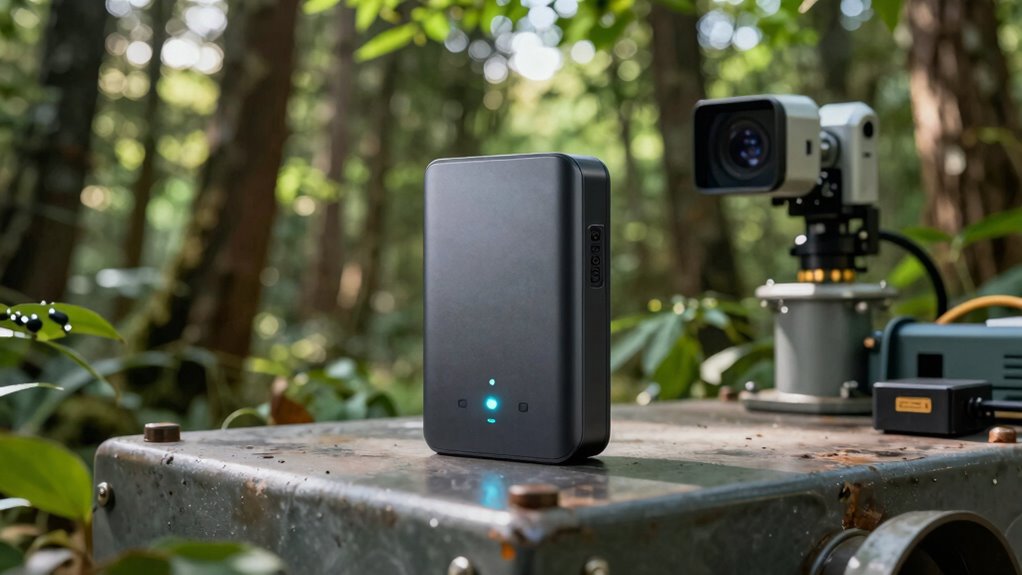

Edge AI supports computer vision without constant connectivity by processing data directly on devices like cameras and sensors, reducing the need for reliable internet. It enables real-time analysis, quick decision-making, and responsiveness, especially in critical situations. By filtering relevant data locally and using specialized hardware, it lowers bandwidth needs and maintains operations even if the network is down. Keep exploring to discover how these advantages maintain system efficiency and security in various applications.

Get business pricing on tech for your team
- Business-only prices and quantity discounts
- Tax-exempt purchasing
- Multiple users, one account, clear invoices
Key Takeaways
- Processes visual data locally, enabling real-time analysis without relying on constant cloud connectivity.
- Reduces bandwidth usage by filtering and processing data at the edge before transmission.
- Enhances system resilience, maintaining operation during internet outages or poor network conditions.
- Utilizes specialized hardware and AI accelerators for efficient, energy-saving processing at the source.
- Ensures data privacy by keeping sensitive visual information confined within local devices or networks.
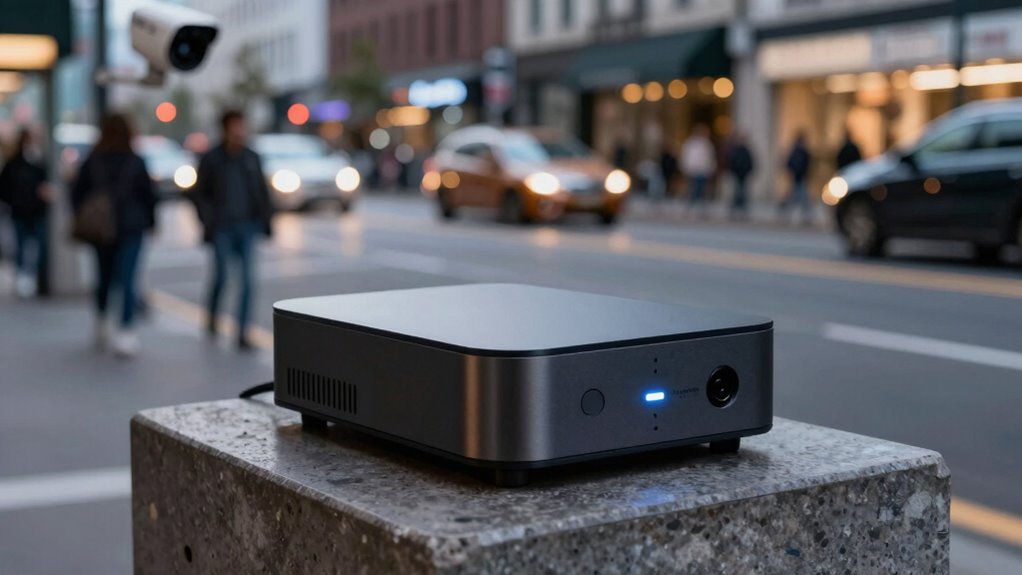
Edge AI is transforming computer vision by bringing processing power closer to the data source, reducing latency and dependence on cloud connectivity. When you rely on traditional cloud-based systems, data must travel back and forth, which can create delays and increase vulnerability to data breaches. With Edge AI, the heavy lifting happens right at the edge—on devices like cameras, sensors, or embedded systems—so you get faster insights and more control over your data. This setup is especially valuable when continuous internet access isn’t guaranteed or when you need real-time processing to make quick decisions.
Edge AI processes data locally for faster insights, reduced latency, and improved privacy in computer vision applications.
One of the biggest advantages of Edge AI in supporting computer vision is its ability to enhance data privacy. Since sensitive visual data doesn’t have to leave the local device or network, you considerably reduce the risk of exposing private information. For instance, in security applications, you can process video feeds directly on the camera, identifying intruders or anomalies without transmitting footage over the internet. This keeps the data confined within a secure environment, guaranteeing compliance with privacy regulations and giving you peace of mind.
Real-time processing is another core benefit. When you’re monitoring an environment—like a factory floor, retail store, or autonomous vehicle—delays can be costly or even dangerous. Edge AI enables instant analysis of visual data, allowing your systems to react immediately to detected objects, movements, or hazards. You don’t have to wait for cloud servers to analyze footage or send updates back and forth. Instead, the device instantly recognizes a breach, a malfunction, or a safety concern and triggers an appropriate response. This speed is vital in scenarios where milliseconds matter, and it enables proactive management rather than reactive fixes.
Furthermore, by decentralizing processing, Edge AI reduces the bandwidth load on your network. Instead of streaming high-resolution video constantly to the cloud, your devices process only relevant information locally. This not only conserves bandwidth but also ensures your systems remain operational even if internet connectivity drops temporarily. You maintain continuous oversight and decision-making capability, making your computer vision applications more resilient and reliable. Additionally, understanding edge computing principles helps optimize overall system performance and resource allocation. Incorporating AI accelerators can further boost processing efficiency at the edge, making these systems even more powerful. Moreover, leveraging advanced hardware tailored for AI tasks can significantly improve processing speeds and energy efficiency at the edge. In some cases, deploying customized hardware solutions can provide tailored performance improvements specific to your application’s needs.
In essence, Edge AI empowers your computer vision systems to operate efficiently and securely without constant connectivity. You gain rapid insights, uphold data privacy, and enjoy uninterrupted performance. As technology advances, this decentralized approach will become even more essential for applications requiring immediacy and confidentiality, transforming how you deploy and trust computer vision in diverse environments.
As an affiliate, we earn on qualifying purchases.
Frequently Asked Questions
How Does Edge AI Handle Data Privacy and Security?
You handle data privacy and security in Edge AI by implementing data encryption, which protects your data during processing and storage. Access controls ensure only authorized users can access sensitive information. Since processing happens locally, you reduce exposure to cyber threats, keeping your data safe. This setup minimizes the need to transmit data over networks, further enhancing privacy and security, and giving you more control over your information.
What Are the Limitations of Edge AI in Computer Vision?
Think of Edge AI as a finely tuned instrument, but it faces limitations like needing precise sensor calibration to function correctly and relying on model compression, which can sometimes reduce accuracy. These challenges mean it may struggle with complex scenes or evolving environments. You might find it less adaptable to new data, and its processing power can be constrained, like a small vessel steering through vast data seas, limiting its scope and precision.
How Energy-Efficient Is Edge AI for Continuous Operation?
Edge AI is highly energy-efficient for continuous operation because it minimizes power consumption through smart energy optimization techniques. You benefit from reduced reliance on cloud processing, which lowers data transmission energy costs. By optimizing power consumption at the device level, edge AI guarantees sustained performance without draining resources, making it ideal for long-term, continuous computer vision applications where energy efficiency is vital.
Can Edge AI Improve Real-Time Decision-Making Accuracy?
Yes, edge AI can improve real-time decision-making accuracy. By leveraging predictive analytics, it anticipates potential issues before they occur, enhancing responsiveness. Sensor fusion combines data from multiple sources, providing an all-encompassing view that sharpens decision accuracy. This combination allows you to process complex information locally, reducing latency and errors, ultimately enabling more precise and timely actions without relying on constant connectivity.
What Hardware Requirements Are Necessary for Deploying Edge AI?
You need hardware with robust sensor integration capabilities to deploy Edge AI effectively. Look for devices that support various sensors like cameras, lidar, or thermal sensors, ensuring seamless data collection. Additionally, prioritize hardware scalability, so you can handle increasing data loads or expand your system without major overhauls. A powerful CPU or GPU optimized for AI workloads and sufficient memory are essential to process data locally, enabling real-time computer vision tasks.
AI-enabled embedded vision systems
As an affiliate, we earn on qualifying purchases.
As an affiliate, we earn on qualifying purchases.
Conclusion
You now see how Edge AI empowers your computer vision applications without relying on constant connectivity. It’s like having your cake and eating it too—delivering real-time insights right at the source. By processing data locally, you avoid delays and keep sensitive info secure. Remember, “A chain is only as strong as its weakest link”—and with Edge AI, you strengthen your system’s resilience and efficiency. Embrace this technology to stay ahead in the game.
local processing computer vision devices
As an affiliate, we earn on qualifying purchases.
As an affiliate, we earn on qualifying purchases.
privacy-focused edge AI hardware
As an affiliate, we earn on qualifying purchases.
As an affiliate, we earn on qualifying purchases.
Fall Picks
fall essentials
As an affiliate, we earn on qualifying purchases.