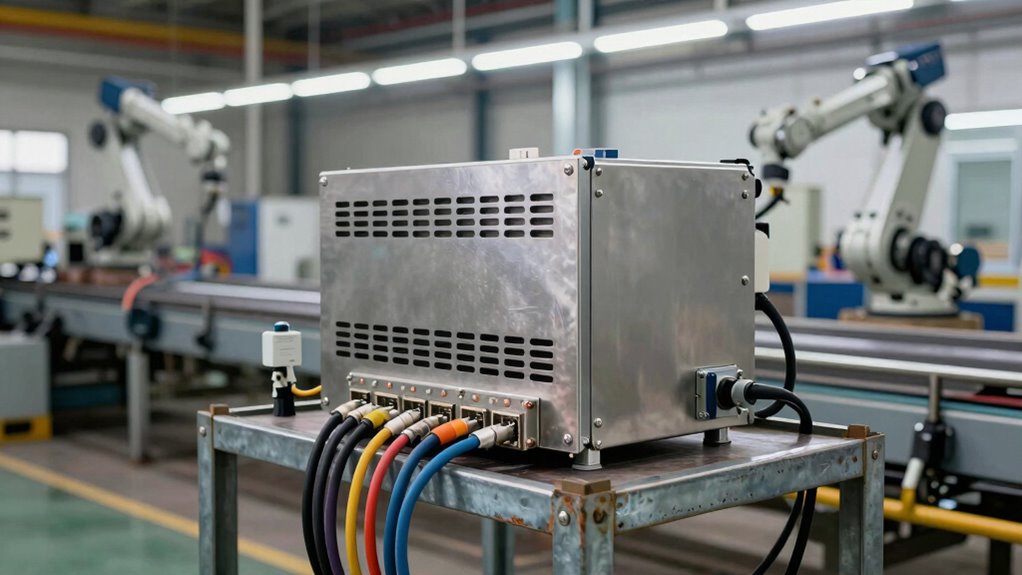

Industrial IoT gateways at the edge connect your devices and systems, ensuring seamless data transfer across various protocols and legacy equipment. They serve as security guards, encrypting data and controlling access to protect your sensitive information from cyber threats. These gateways process data locally, enabling faster responses and reducing bandwidth usage. They also translate different data formats, making your systems more interoperable and flexible. Keeping your operations reliable and secure, they form the backbone of smarter manufacturing—discover how they do it in greater detail.

Get business pricing on tech for your team
- Business-only prices and quantity discounts
- Tax-exempt purchasing
- Multiple users, one account, clear invoices
Key Takeaways
- Securely connect and integrate diverse industrial devices and protocols with centralized networks.
- Perform local data processing, filtering, and analytics to reduce bandwidth and enable quick decisions.
- Convert various data formats for interoperability and seamless communication across systems.
- Enhance network flexibility, supporting real-time monitoring, predictive maintenance, and automation.
- Act as a system backbone, ensuring reliable, secure data flow from the edge to data centers.

Industrial IoT gateways are essential components at the edge of modern manufacturing and automation systems, serving as the critical link between sensors, devices, and centralized data centers. They handle the massive flow of data generated by machines and sensors, guaranteeing that information moves smoothly and securely from the factory floor to your data analysis platforms. As you deploy these gateways, you play a vital role in maintaining data security. They act as gatekeepers, implementing encryption protocols and access controls that protect sensitive information from cyber threats. This is especially important in environments where industrial data could be targeted for sabotage or theft. By managing data security directly at the edge, you reduce the risk of breaches and guarantee compliance with industry standards.
Industrial IoT gateways secure data flow at the edge, protecting sensitive information from cyber threats and ensuring compliance with industry standards.
Network integration is another key function of these gateways. They seamlessly connect a variety of industrial protocols and legacy systems with modern IP networks, simplifying complex infrastructure. You can configure them to communicate with different devices—whether they use Ethernet, Modbus, or other industrial standards—without needing additional hardware or extensive reprogramming. This flexibility allows you to integrate new sensors and devices into your existing network quickly, reducing downtime and operational costs. The gateways act as translators, converting data from various formats into a common language that your centralized systems can understand. This interoperability is essential for real-time monitoring, predictive maintenance, and automation, as it ensures all parts of your system work together harmoniously. Understanding industrial protocols is crucial for optimizing system integration and ensuring seamless communication. Additionally, keeping up with network security best practices helps you safeguard your entire industrial setup. Staying informed about security protocols is also vital for maintaining the integrity of your systems. Moreover, you can improve the overall efficiency of your network by utilizing edge analytics**** capabilities that many gateways now offer.
Beyond basic connectivity, these gateways also perform local processing, filtering, and analytics. Instead of flooding your data center with raw information, they process data at the edge, sending only relevant insights upstream. This reduces latency, speeds up decision-making, and lessens bandwidth demands. You’re empowered to respond faster to issues on the factory floor, even if connectivity to the cloud or data center is temporarily disrupted. Additionally, many gateways come with built-in security features like VPNs, firewalls, and intrusion detection, giving you additional layers of protection right at the edge. Moreover, understanding industrial protocols helps you troubleshoot and optimize network performance effectively.
In essence, your role with industrial IoT gateways involves managing secure, reliable network integration and guaranteeing smooth data flow from the edge to centralized systems. These gateways are more than just connectors—they’re the backbone of your industrial network, enabling smarter, safer, and more efficient operations. By understanding and leveraging their full capabilities, you streamline your manufacturing processes while safeguarding your critical data assets.
As an affiliate, we earn on qualifying purchases.
Frequently Asked Questions
How Do Iot Gateways Handle Cybersecurity Threats at the Edge?
IoT gateways handle cybersecurity threats at the edge by implementing data encryption, ensuring sensitive information stays secure during transmission. They also perform threat detection, monitoring network traffic for suspicious activity and potential breaches. You can rely on these gateways to continuously analyze data, identify vulnerabilities, and respond quickly to threats, helping protect your industrial systems from cyberattacks. Their proactive approach keeps your operations safe and maintains data integrity.
Can Iot Gateways Operate in Extreme Environmental Conditions?
Like a steadfast lighthouse amid stormy seas, IoT gateways can operate in extreme environmental conditions. Their environmental resilience and hardware durability allow them to withstand harsh temperatures, humidity, and vibrations. Engineered with rugged enclosures and specialized components, they stand firm against nature’s fury. This robustness guarantees continuous data flow and reliable performance, even in the most challenging environments, making them indispensable at the edge of industrial operations.
What Is the Typical Lifespan of an Industrial Iot Gateway?
You can expect an industrial IoT gateway to last around 5 to 10 years, depending on hardware durability and deployment challenges. High-quality gateways built for harsh environments tend to have longer lifespans, but frequent exposure to extreme conditions can accelerate wear and tear. Regular maintenance and choosing rugged, reliable models help extend their operational life, ensuring you get the most value from your investment despite challenging deployment scenarios.
How Do Gateways Manage Firmware Updates Remotely?
You can remotely manage firmware updates on gateways by scheduling updates during off-peak hours to minimize disruptions. They incorporate firmware security measures, like encryption and authentication, ensuring updates are safe. Automated update processes enable you to push firmware enhancements efficiently, reducing manual effort. Regular update scheduling keeps your gateways protected against vulnerabilities, maintaining best performance and security at the edge.
Are Iot Gateways Customizable for Specific Industry Needs?
Yes, IoT gateways are highly customizable for specific industry needs. You can tailor them with industry-specific integrations like protocols, sensors, and data formats. Many gateways offer flexible customization options, allowing you to add or modify features to suit your operational requirements. This guarantees seamless connectivity and data management across diverse sectors such as manufacturing, energy, or transportation, making them versatile solutions at the edge.
As an affiliate, we earn on qualifying purchases.
Conclusion
Now that you know what industrial IoT gateways do at the edge, it’s clear they’re more than just data pass-through devices. They’re the backbone of real-time decision-making, ensuring your operations run smoothly and securely. Think about it—without these gateways, how effectively could you respond to issues or optimize performance at the edge? Embracing this technology isn’t just smart; it’s essential for staying ahead in today’s fast-paced industrial landscape. Are you ready to harness their full potential?
As an affiliate, we earn on qualifying purchases.
industrial network security gateway
As an affiliate, we earn on qualifying purchases.
As an affiliate, we earn on qualifying purchases.
Halloween Picks
halloween
As an affiliate, we earn on qualifying purchases.