
🔍 Read the full analysis: Anthropic Sets A New Benchmark With Its AI Hardware Standard on ThorstenMeyerAI.com

Get business pricing on tech for your team
- Business-only prices and quantity discounts
- Tax-exempt purchasing
- Multiple users, one account, clear invoices
TL;DR
Anthropic has launched a limited research preview of its Model Hardware Standard (MHS), a protocol designed to enable AI agents to connect with and operate physical equipment more efficiently. Early results from partner projects suggest potential for reducing integration times and improving automation, though safety and broad applicability remain under evaluation. For more context, see the original analysis here.
Anthropic has launched a limited research preview of its Model Hardware Standard (MHS) on August 27, aiming to enable AI agents to discover, monitor, and operate physical laboratory and industrial equipment through a shared protocol. This development could significantly reduce the time and effort required to integrate diverse instruments with AI control systems, marking a step toward more automated and flexible research and manufacturing environments.
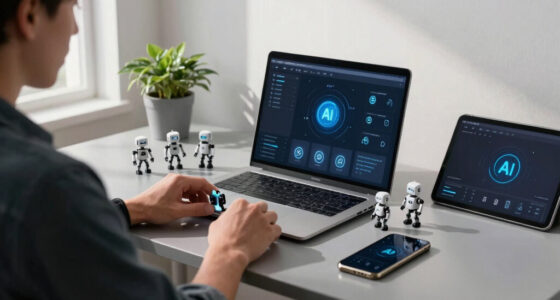
The Model Hardware Standard (MHS) introduces a standardized software driver layer that exposes basic device operations, describes device capabilities, and enforces safety limits. Developed initially in collaboration with the HHMI Janelia Research Campus, MHS allows AI agents to interact with connected equipment via the Model Context Protocol, a command-line interface or code files. The goal is to facilitate discovery, monitoring, and coordination across instruments such as microscopes, liquid handlers, and robotic arms.
Early partner projects demonstrate promising results: Genentech used MHS for protein-assay automation, where an AI agent coordinated multiple instruments; QuEra reported a 99.3% success rate in recovering laser lock using an agent-developed controller. These projects suggest that MHS can drastically cut setup times from weeks or months to hours or minutes, although these claims are based on internal testing and have not yet been independently validated.
Anthropic emphasizes that MHS could reduce the need for custom engineering in multi-instrument workflows, making automation more accessible. Learn more about how Anthropic is advancing AI hardware standards here. However, safety remains a concern, as the system currently places limits at the driver level but lacks comprehensive safety validation across diverse hardware and failure modes. The standard does not yet support equipment lacking programmable interfaces, limiting its scope to compatible devices.
Potential Impact on Laboratory and Industrial Automation
The introduction of MHS could transform how laboratories and factories implement automation by providing a common interface that reduces integration time and complexity. This standard has the potential to make multi-instrument workflows more reproducible and easier to scale, saving significant time and resources.
However, safety and reliability are critical. Errors in physical control can cause equipment damage, safety hazards, or sample contamination. The current prototype relies on driver-level safety limits, but broader validation and enforcement mechanisms are needed before widespread adoption. The success of MHS could influence the future design of AI-controlled systems, but its real-world impact depends on rigorous testing and independent validation.
laboratory automation robotic arms
As an affiliate, we earn on qualifying purchases.
As an affiliate, we earn on qualifying purchases.
Origins and Development of the Model Hardware Standard
The MHS project began through collaboration between Anthropic and the HHMI Janelia Research Campus, focusing on replacing complex point-to-point connections with a unified interface for experimental rigs combining lasers, cameras, and motorized components from different vendors. This approach was aimed at simplifying hardware integration and creating a consistent data recording format.
Following initial success, Anthropic expanded testing to include organizations in biotechnology, robotics, and quantum computing, with companies such as AWS, Doosan Robotics, Tecan, and Universal Robots participating. Notably, support for MHS is being integrated into platforms like Hugging Face’s LeRobot and Raspberry Pi for broader adoption. The development remains in early preview, with the company planning to publish detailed safety and deployment guidelines based on ongoing testing.
“MHS aims to reduce the time and effort needed to connect AI agents with physical equipment, enabling more flexible and scalable automation.”
— Thorsten Meyer, Anthropic
AI-controlled laboratory equipment
As an affiliate, we earn on qualifying purchases.
As an affiliate, we earn on qualifying purchases.
Unverified Safety and Compatibility Challenges
While early results are promising, the safety and reliability of MHS across diverse hardware and failure scenarios remain unproven. The system currently relies on driver-level safety limits, but comprehensive validation, independent testing, and real-world deployment data are still lacking. It is also unclear how well MHS will support equipment without programmable interfaces or how it will handle unexpected failures or physical obstructions.
industrial automation hardware interfaces
As an affiliate, we earn on qualifying purchases.
As an affiliate, we earn on qualifying purchases.
Next Steps for Validation and Broader Adoption
Anthropic is accepting applications from research and industry groups to participate in further testing of MHS, with a focus on safety evaluations, device compatibility, and deployment protocols. The company plans to publish safety findings, detailed guidelines, and an open-source version of the standard in the coming months. The critical test will be whether MHS can deliver consistent, safe results across multiple independent sites and hardware configurations, especially during failure conditions.
programmable laboratory instruments
As an affiliate, we earn on qualifying purchases.
As an affiliate, we earn on qualifying purchases.
Key Questions
What is the main purpose of the Model Hardware Standard?
The MHS aims to provide a shared interface that enables AI systems to discover, monitor, and operate physical laboratory and industrial equipment more efficiently and with less custom engineering.
Which organizations are involved in early testing?
Participants include Anthropic, HHMI Janelia, Genentech, QuEra, AWS, Doosan Robotics, Tecan, Universal Robots, Hugging Face, and Raspberry Pi, among others.
What safety concerns are associated with MHS?
Safety concerns include the potential for errors to damage equipment or cause safety hazards, especially if limits are not reliably enforced or if the system encounters unanticipated failure modes. Validation is still ongoing.
When will the standard be publicly available?
Anthropic has not announced a specific release date but plans to publish findings, safety guidelines, and an open-source version after further testing and validation.
Can MHS support equipment without programmable interfaces?
No, currently the standard supports only equipment with programmable interfaces. Support for non-programmable devices will depend on future driver development and manufacturer participation.
Primary source: Anthropic · via ThorstenMeyerAI.com
Fall Picks
fall essentials
As an affiliate, we earn on qualifying purchases.