📊 Full opportunity report: Best Thermal Paste and Pads for High-TDP GPUs on ThorstenMeyerAI.com — validation score, market gap, and execution plan.

Get business pricing on tech for your team
- Business-only prices and quantity discounts
- Tax-exempt purchasing
- Multiple users, one account, clear invoices
TL;DR
For high-TDP GPUs running continuously, phase-change materials like Honeywell PTM7950 offer superior long-term stability. Traditional pastes like Arctic MX-6 and Noctua NT-H2 are reliable options, while reusable graphene pads like Kryosheet suit enthusiasts. Application and longevity vary by product.
Honeywell PTM7950, a phase-change material designed for sustained high temperatures, is identified as the best thermal interface material for high-TDP GPUs running continuously, according to recent testing and expert analysis.
Traditional thermal pastes like Thermal Grizzly Kryonaut excel in initial cooling but may degrade over time under continuous high heat, leading to pump-out and increased temperatures. In contrast, Honeywell PTM7950, a phase-change material, resists pump-out and maintains low thermal resistance over years of operation, making it ideal for 24/7 GPU workloads, especially in AI or inference setups.
For those preferring traditional pastes, Arctic MX-6 offers an easy-to-apply, non-conductive solution with a lifespan of 8–10 years, providing a good balance of performance and ease of use. Noctua NT-H2 is another reliable, premium traditional paste known for durability and consistent performance. Enthusiasts seeking a reusable solution can consider Thermal Grizzly Kryosheet, a graphene-based pad that never dries out but requires careful handling due to its electrical conductivity.
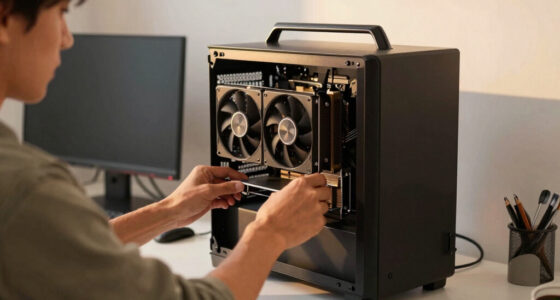
Best thermal paste
for a high-TDP GPU.
The standard “coldest on day one” advice is wrong for a 24/7 rig. Continuous heat slowly squeezes traditional paste out — a failure called pump-out — so the real question is what stays cold for years.
Why Long-Term Thermal Stability Matters in AI Workstations
In high-performance AI and inference workloads, GPUs operate at high temperatures continuously. Degradation of thermal interface materials can lead to overheating, throttling, and reduced hardware lifespan. Selecting a stable, long-lasting thermal interface material like PTM7950 can ensure consistent performance, lower maintenance, and potentially longer hardware longevity, which is critical for enterprise and research applications.
Products Worth Considering

Bose QuietComfort Headphones (2nd Gen), Wireless Over-Ear Noise-Cancelling Headphones, Black

Samsung Galaxy Tab A11+ Kids Edition, 128 GB Android Tablet, Royal Blue

DJI Mic 3 (2 TX + 1 RX + Charging Case) Wireless Microphone
As an affiliate, we earn on qualifying purchases.
Thermal Interface Material Choices for High-Power GPUs
Most consumer guides focus on initial temperature drops for gaming GPUs, favoring pastes like Kryonaut. However, these materials often suffer from pump-out under sustained load, leading to performance degradation over time. Phase-change materials like Honeywell PTM7950 are specifically engineered to withstand continuous high temperatures, making them more suitable for AI and inference workloads that run 24/7. The trend toward long-term stability is driven by the need for reliable, maintenance-free operation in professional settings.
"Our Kryonaut paste offers excellent initial performance, but users should consider long-term stability for continuous operation."
— Thermal Grizzly representative
Unconfirmed Long-Term Performance of Some Pastes
While Honeywell PTM7950 is widely regarded as highly durable, long-term data beyond lab testing is limited. The actual lifespan under real-world high-TDP workloads can vary based on application, maintenance, and operating environment. Similarly, some traditional pastes may perform better than expected if properly applied and maintained, but their tendency to degrade remains a concern.
Monitoring and Testing Future Thermal Interface Developments
Further long-term testing of phase-change materials and traditional pastes under real-world, high-TDP workloads will clarify performance differences. Manufacturers may introduce new formulations optimized for durability, and users should stay informed about updates. Reassessment of thermal solutions for AI and continuous workloads is expected as hardware demands increase.
Key Questions
Is phase-change material better than traditional paste for GPUs running 24/7?
Yes, phase-change materials like Honeywell PTM7950 are designed to resist pump-out and maintain stable thermal contact over years, making them more suitable for continuous workloads.
Can I reuse thermal pads like Kryosheet on multiple GPUs?
Yes, graphene-based pads like Kryosheet are reusable, but they require precise cutting and careful handling due to electrical conductivity. They are ideal for enthusiasts seeking a long-term, maintenance-free solution.
Are traditional pastes still effective for high-TDP GPUs?
Traditional pastes like Arctic MX-6 and Noctua NT-H2 provide reliable performance and are easier to apply, but they may degrade over time under continuous high temperatures, potentially requiring reapplication.
Does applying better thermal paste significantly improve GPU performance?
Improved thermal interface materials can lower operating temperatures, reduce fan noise, and extend hardware lifespan, especially important for high-TDP GPUs running continuously.
What factors should I consider when choosing thermal interface materials for AI workloads?
Prioritize long-term stability, resistance to pump-out, ease of application, and compatibility with your GPU. For continuous operation, phase-change materials are often preferred.
Source: ThorstenMeyerAI.com