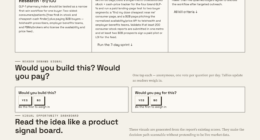

📊 Full opportunity report: Data: The One Thing You Can’t Rent on ThorstenMeyerAI.com — validation score, market gap, and execution plan.

Get business pricing on tech for your team
- Business-only prices and quantity discounts
- Tax-exempt purchasing
- Multiple users, one account, clear invoices
TL;DR
The AI industry has moved from renting compute to securing exclusive access to rare, verified data. This shift is driven by legal, economic, and strategic factors, creating new barriers for startups and increasing industry concentration.
In 2026, the AI industry has officially transitioned from freely scraping data to a system where access is fenced, licensed, and highly regulated, marking a fundamental shift in how models are trained and who controls the data. This shift is discussed in detail in our article on AI cybersecurity frameworks.
Industry estimates indicate that the public internet contains roughly 300 trillion tokens of high-quality text, with models already approaching full utilization of this corpus. Experts like Elon Musk have declared the human knowledge pool nearly exhausted for training purposes, prompting a move toward synthetic data and more efficient algorithms. However, synthetic data introduces risks of model collapse, increasing reliance on verified, human-generated data.
Legal actions in 2026, including Anthropic’s $1.5 billion settlement with authors over copyright infringement, have set a precedent that AI security frameworks are increasingly important in legal considerations. Courts have drawn clear lines: fair use applies to legally acquired books, but piracy and shadow library downloads are not protected. As a result, data providers and publishers are shifting from lawsuits to licensing agreements, creating a costly entry barrier for newcomers and consolidating power among large incumbents.
This new licensing regime favors well-funded companies capable of paying high fees, effectively creating a moat that limits smaller players’ access to critical data sources. Understanding these trends is crucial for cybersecurity strategies. Meanwhile, the most valuable data now resides behind paywalls, inside enterprises, or within expert communities, making data fencing a key strategic move for industry control.
Data: The One Thing You Can’t Rent
The free part of “all human knowledge” is running out. As compute and models commoditize, the corpus you can’t replicate becomes the moat — so data is being fenced, priced, and, in places, treated as a national asset.
Data was supposed to be the abundant input. It’s the scarce one. It’s also the chokepoint you can actually own — so guard your proprietary data, and don’t hand it to a provider who can become your competitor (the lesson everyone fled Scale to learn). Nations: license it like Ukraine — keep the model, keep the leverage.
Impacts of Data Fencing on AI Industry Power Dynamics
The shift to fencing and licensing of data fundamentally alters industry dynamics. It favors large, established companies with deep financial resources, making it harder for startups to compete. This trend increases industry concentration and could slow innovation by limiting access to the most valuable, verified data. Additionally, it raises questions about data monopolies and the future of open AI development.
As an affiliate, we earn on qualifying purchases.
Legal and Market Shifts Reshaping Data Access
Historically, AI training relied on freely scraped web data, but legal rulings in 2026 have curtailed this practice. The landmark Anthropic settlement and ongoing litigation, including the case against OpenAI, signal a move toward regulated, paid data access. This transformation reflects broader industry trends toward data ownership and the recognition of data as a strategic asset.
Meanwhile, the industry has seen a rise in the importance of expert-generated data, as models move toward reasoning and domain-specific tasks. The move to licensed data and proprietary sources is part of a broader effort to secure competitive advantage in an increasingly resource-constrained environment.
“The court’s ruling affirms that fair use applies only to legally acquired content, marking a turning point for data sourcing practices.”
— Legal expert involved in the Anthropic case
As an affiliate, we earn on qualifying purchases.
Unclear Long-Term Effects of Data Fencing
It remains uncertain how quickly smaller startups can adapt to the new licensing regime, and whether alternative sources or synthetic data can fully compensate for restricted access to high-value data. The full impact of legal rulings on global data markets and open AI development is still unfolding.
AI training data validation platform
As an affiliate, we earn on qualifying purchases.
As an affiliate, we earn on qualifying purchases.
Next Steps in Data Market Consolidation
Legal battles and licensing negotiations will likely continue to shape data access policies. Industry leaders are investing heavily in proprietary data sources and expert-generated content, while regulators may intervene to address potential monopolies. The industry will also watch for technological innovations that can mitigate data scarcity, such as improved synthetic data or new data-sharing frameworks.
As an affiliate, we earn on qualifying purchases.
Key Questions
Why is data now considered the most valuable asset in AI?
Data is the foundation of model accuracy and reasoning ability. As compute becomes more commoditized and synthetic data carries risks, verified human data becomes the key differentiator and strategic asset for AI development.
How did legal rulings affect data access in 2026?
Legal decisions, including the Anthropic settlement, clarified that scraping copyrighted content without permission is not protected by fair use, leading to increased licensing and the end of free data scraping practices.
What are the risks of relying on synthetic data?
Synthetic data can introduce errors and biases, especially in domains where answers are hard to verify, potentially causing model collapse or inaccuracies over time.
Will smaller companies be able to compete under the new data regime?
It is uncertain; high licensing costs and data fencing create barriers, favoring large incumbents. Smaller firms may need to find alternative data sources or innovate in synthetic data, but the barrier is significant.
Source: ThorstenMeyerAI.com
Fall Picks
fall essentials
As an affiliate, we earn on qualifying purchases.