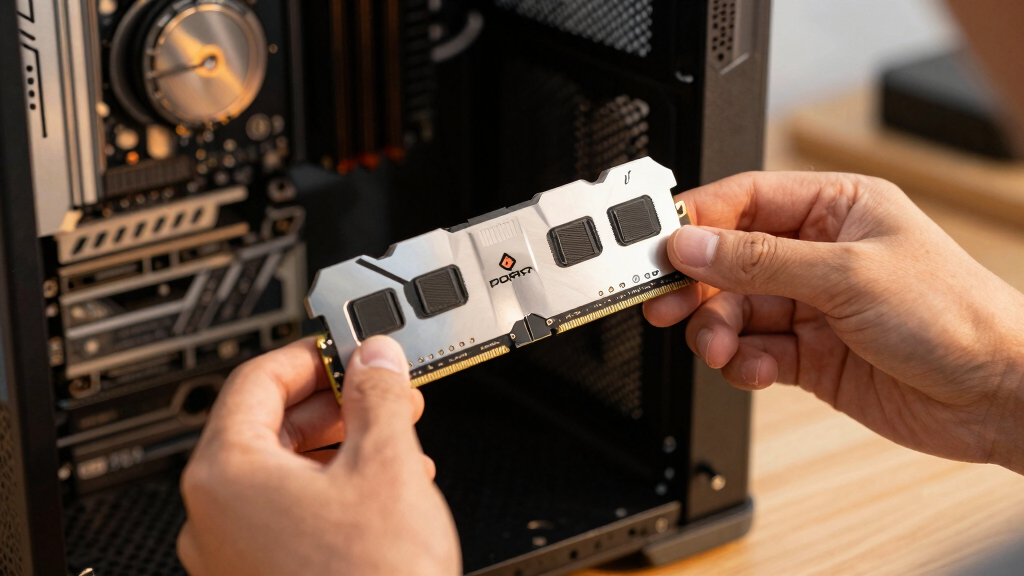

📊 Full opportunity report: DDR5 Now, DDR6 Soon: A Buyer’s Field Guide on ThorstenMeyerAI.com — validation score, market gap, and execution plan.
Get ready for Prime Big Deal Days — try Prime free
Exclusive member deals on October 6–7, plus fast free delivery. Cancel anytime.
Start your free trialAs an affiliate, we earn on qualifying purchases.
TL;DR
Despite ongoing hype, DDR6 is not yet a practical upgrade for 2026. Buyers should focus on DDR5-6000 with CL30 timings for current needs. DDR6 will arrive later, but at a premium and with limited compatibility.
Buyers should prioritize DDR5 memory for their 2026 builds, as DDR6 remains at least two years away from mainstream adoption and will come at a significant cost. Experts emphasize that current market conditions favor DDR5-6000 CL30 configurations, which provide the best value and performance for most users, while waiting for DDR6 is likely to lead to higher prices and limited benefits in the near term.
Recent industry forecasts indicate that DDR5 memory will dominate the mainstream market until at least 2028, with prices stabilizing only around 2028 or later. DDR5-6000 CL30 kits are considered the sweet spot for both gaming and productivity tasks, delivering optimal performance without the premium cost of faster modules like DDR5-8000.
For capacity, 32GB remains sufficient for most desktop users, while content creators and heavy multitaskers should consider 64GB. The temptation to buy 128GB modules now is discouraged, as they are unlikely to be used immediately and could lock in high prices. Platform-specific notes highlight that newer boards with CUDIMMs support higher speeds, and workstations may prefer registered DIMMs, but compatibility should be verified beforehand.
Manufacturers have phased out DDR4, making it a poor choice for new builds in 2026. DDR4 prices are now comparable to DDR5, but DDR4 is a dead-end platform with no future support. Building on DDR5 is the recommended approach for longevity and compatibility.
Regarding DDR6, it is not yet a practical option. DDR6 promises significant bandwidth improvements and new form factors like CAMM2, but it requires entirely new hardware, including CPUs, chipsets, and modules. Its release is staged, starting with enterprise and AI servers in 2026–27, followed by desktops and laptops in 2027, with broad availability not expected until around 2030. Early adoption is recommended only for specialized, long-term workstations or early adopters willing to face immature technology and higher costs.
DDR5 now, DDR6 soon
A buyer’s field guide. The 20-year instinct — wait for prices to drop, or wait for the next generation — is broken this cycle. Buy the DDR5 you actually need now; don’t wait for DDR6. Here’s the reasoning.
Driven to end-of-life, production slashed. Same money, dead-end socket. Leave a working DDR4 box alone — but never start a new build on DDR4 to “save.”
A framework, not a gamble. Buy the DDR5 you need now, at the sweet spot, in the capacity you’ll actually use — don’t buy DDR4, don’t wait for DDR6. The two costliest mistakes in this market are the ones that feel prudent: waiting for a price drop that isn’t coming, and waiting for a next-gen part that launches dearer than what’s on the shelf. Next: The SSD Squeeze.
Why Buying DDR5 Now Is the Smarter Choice
Choosing DDR5 now aligns with current market realities, offering better performance, compatibility, and value than waiting for DDR6. Delaying purchase to wait for DDR6 may lead to higher costs and missed opportunities for platform upgrades, especially as other components like CPUs and GPUs continue to evolve rapidly. For most users, investing in DDR5 ensures a balanced upgrade path that supports current workloads and gaming needs.
As an affiliate, we earn on qualifying purchases.
Market Trends and Future Memory Developments
The memory market has experienced significant price volatility, driven by supply shortages and industry shifts. DDR4 has been phased out, and DDR5 has become the standard for new systems, with prices stabilizing but still relatively high. DDR6, announced as a future standard, is still in development, with no immediate plans for broad adoption. Its architecture offers substantial improvements, but the required hardware overhaul makes it unsuitable for early 2024 purchases.
Historically, new memory standards take several years to reach mass adoption, and DDR6 is expected to follow this pattern, with mainstream availability around 2027–30. In the meantime, consumers should focus on optimizing DDR5 configurations for performance and capacity, avoiding premature upgrades to unproven standards.
“DDR5-6000 CL30 modules offer the best performance-to-price ratio for mainstream users, and there’s little benefit in chasing faster kits at a premium.”
— Hardware manufacturers
As an affiliate, we earn on qualifying purchases.
Remaining Questions About DDR6 Adoption Timeline
While DDR6 promises significant bandwidth improvements, the exact timeline for its widespread adoption remains uncertain. Hardware manufacturers have announced plans, but actual availability, pricing, and compatibility details are still emerging. Early models may face stability issues, and capacities could be limited initially. The impact of DDR6 on gaming performance and typical workloads is also still under evaluation.
high performance DDR5 RAM for gaming
As an affiliate, we earn on qualifying purchases.
As an affiliate, we earn on qualifying purchases.
Upcoming Milestones for Memory Standards and Compatibility
In the coming months, industry events and JEDEC standard updates will clarify DDR6’s official specifications and compatibility lists. Consumers and builders should monitor motherboard support announcements and early product releases, but mainstream adoption is not expected before 2027. Meanwhile, the focus remains on optimizing DDR5 configurations for current and near-future systems.
As an affiliate, we earn on qualifying purchases.
Key Questions
Should I buy DDR4 memory in 2026 to save money?
No. DDR4 is at end-of-life, and new builds should prioritize DDR5 for compatibility and future-proofing. DDR4 prices may be similar to DDR5, but it will become obsolete soon.
Is DDR6 worth waiting for in 2026?
For most users, no. DDR6 is still in development, with limited compatibility and high costs. It is better to invest in DDR5 now and consider DDR6 only for specialized, long-term systems planned for 2027 or later.
What DDR5 configuration offers the best value?
DDR5-6000 CL30 kits are recommended for most users, providing excellent performance without the premium cost of faster modules like DDR5-8000.
When will DDR6 be widely available?
Industry forecasts suggest DDR6 will reach mainstream desktops around 2027–28, with broad adoption unlikely before 2030.
Should I buy large capacity RAM now or wait?
Buy capacity based on current needs—32GB for most, 64GB for heavy multitasking—rather than locking in high prices with 128GB modules, which may remain unused for years.
Source: ThorstenMeyerAI.com
Fall Picks
fall essentials
As an affiliate, we earn on qualifying purchases.