
TL;DR
Google DeepMind introduced Genie 4 on October 27, describing it as a real-time model that generates interactive scenes with sound and can respond to typed instructions. The demonstrations are company-selected, public access has not opened, and DeepMind says scenes can drift after a few minutes.
Google DeepMind introduced Genie 4 on October 27, presenting a model that generates interactive scenes in response to keyboard, mouse and text inputs, alongside sound generated with the visuals. The system is not publicly available: DeepMind says it is being tested by trusted users, and its own announcement acknowledges that details can shift over time and interaction lasts for only a few minutes.

Get business pricing on tech for your team
- Business-only prices and quantity discounts
- Tax-exempt purchasing
- Multiple users, one account, clear invoices
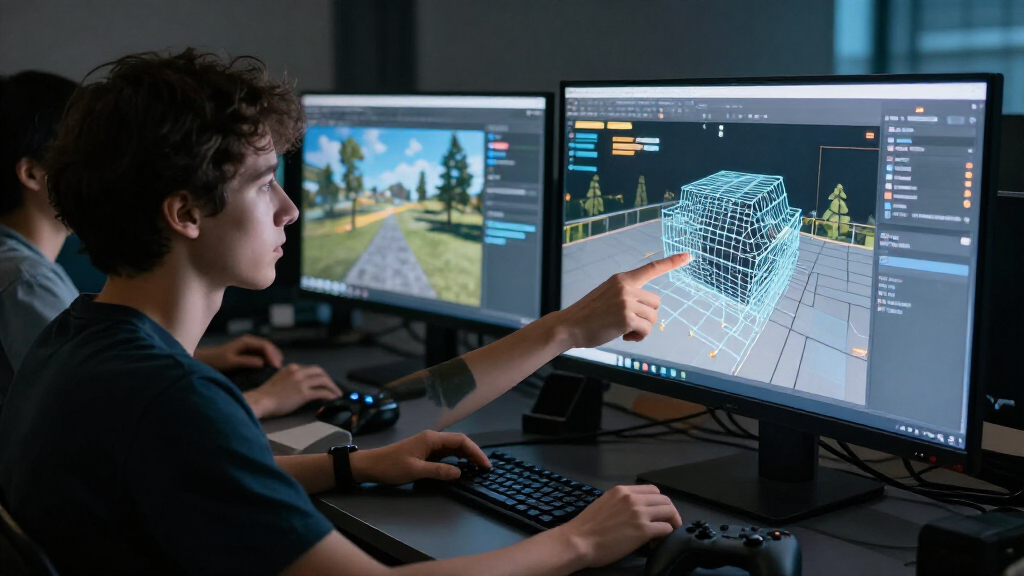
DeepMind says users can move through a generated scene using standard controls and alter it with typed instructions, such as changing the weather or adding an object. The company also says Genie 4 generates ambient sound, music and dialogue with the scene. These capabilities were shown in selected demonstrations published by DeepMind; the source material provides no independent benchmark results or measurements of how consistently the model performs.
According to DeepMind, Gemini 3.8 Flash works alongside Genie 4 by interpreting goals, breaking them into steps and monitoring the generated scene. The company also describes Gemini Omni as grounding simulations in real-world appearance and behavior. Those system descriptions and performance claims come from Google; the materials cited do not provide a separate technical evaluation.
DeepMind says Genie 4 is available to trusted testers. It says access is planned for Google AI Ultra subscribers through Project Genie and early Gemini API partners, but has not announced a date or API price. The supplied source identifies the Ultra subscription as a $200-a-month tier at the time of writing.
World models / launch briefing
Inside Google’s Genie 4
World building, breakdowns, and availability. DeepMind describes a real-time model that turns movement and typed instructions into evolving scenes with generated sound. Its launch demonstrations are selected by the company, access remains limited, and scenes can drift.
Announced October 27, 20262026 announcement
Company-described duration
Trusted testers
No release schedule given
From prompt to playable scene
DeepMind presents Genie 4 as an interactive world model: it generates the next moment from the scene and inputs so far, rather than returning only a fixed video clip.
Explore with controls
Move through generated environments using familiar keyboard and mouse inputs.
Direct the scene
Type instructions to alter details, such as changing the weather or adding an object.
Sound generated in context
DeepMind says scenes include ambient sound, music, and dialogue alongside visuals.
Move or type
A user supplies controls or a goal.
Break into steps
Gemini 3.8 Flash is described as interpreting and monitoring goals.
Build the next moment
Genie 4 renders an evolving scene and its audio.
Continue exploring
The user sees the result and can act again.
From short clips to live worlds
The lineage below reflects DeepMind’s descriptions. The supplied material offers no matched benchmark to quantify improvements between generations.
Genie
Generated simple 2D worlds. The research paper described an 11-billion-parameter model trained on unlabeled internet videos.
Genie 2
Generated 3D worlds from a single image and could maintain them for up to a minute; real-time output traded off quality.
Genie 3
Described as DeepMind’s first real-time world model, with reported 720p output at 24 fps and consistency for a few minutes.
Genie 4
Announcement claims more realistic scenes, native audio, and live text changes. Independent comparisons are not supplied.
Interactive model, game engine, or video?
The distinction matters: a responsive scene can feel playable, but the available examples do not establish consistent performance across prompts or long sessions.
| Approach | What it produces | What changes during use | Evidence in the supplied material |
|---|---|---|---|
| Video generator | A clip created from a prompt | Usually fixed after generation | Genie 4 is presented as continuously responsive |
| Game engine | Views drawn from a stored, structured world | Changes follow authored world rules | DeepMind describes Genie 4 as generating each next moment |
| Genie 4 | An evolving scene responding to user inputs | Movement and text can affect what appears next | Company-selected demonstrations; independent benchmarks not provided |
Promising demonstrations, open questions
The announcement shows a direction of travel. It does not yet answer how reliably the system performs outside curated clips.
Details can drift
DeepMind acknowledges that objects and details may shift over time. Interaction is described as lasting a few minutes.
Exact conditions are unclear
TechCrunch and Bloomberg, as cited by heise, reported scenes up to about two minutes. DeepMind’s own text does not specify that figure or test conditions.
No independent benchmark set
The supplied materials include no benchmark numbers for realism, physical accuracy, audio quality, reliability, or generation speed.
Watermark details remain open
DeepMind says audio and video carry invisible SynthID. The source does not establish detection reliability after editing or how viewers will see it.
“Details and objects can shift or drift over time.”Google DeepMind
Where the idea may be useful
DeepMind reports early tester use in creative workflows. These reports are not independently verified production results.
Previsualization
Explore rough scenes interactively before committing to a production plan.
Prototype spaces
Test environment ideas by moving through generated worlds and adjusting them with instructions.
Simulation only, so far
A cited Apollo checkers scene was simulated. The Decoder reported no physical robot took part; it does not establish robot training or real-world performance.
Testing is open; public access is not
The announcement describes a staged path, but leaves dates and commercial terms unresolved.
Trusted testers
DeepMind says Genie 4 is being tested by trusted users. No general public release is described.
Ultra subscribers and API partners
Access is planned through Project Genie for Google AI Ultra subscribers and for early Gemini API partners. The supplied source identifies Ultra as a $200-per-month tier at the time of writing. No date or API price has been announced.
What the announcement does—and doesn’t—establish
What is Google Genie 4?
DeepMind describes a real-time world model that generates interactive scenes responding to movement and text instructions, with audio alongside visuals.
Can the public use it now?
No. DeepMind says trusted testers have access and plans to expand through Project Genie and early Gemini API partners. No public date is given.
How long can a scene last?
DeepMind says a few minutes of continuous interaction and warns of drift. Reports of up to about two minutes come from other outlets; precise conditions remain unclear.
Has it trained a real robot?
The cited Apollo checkers example was a simulation. It does not demonstrate physical robot training or improved real-world performance.
Interactive Worlds Move Beyond Video
Genie 4 points toward AI systems that respond continuously to a user’s actions instead of producing a fixed clip from a prompt. If the approach becomes reliable, it could give game and film teams a way to explore scenes and prototypes more interactively. DeepMind reports that testers have used the system for film previsualization and game prototyping; those are early user reports, not independently verified production results.
The model’s possible role in robotics is more limited in the evidence provided. DeepMind showed a simulation in which a Gemini model planned steps for a task and Genie 4 depicted Apptronik’s Apollo humanoid playing checkers. The Decoder reported that no physical robot took part. The demonstration therefore shows a simulated scenario, not evidence that Genie 4 trained a robot or improved its real-world performance.
Generated scenes that include sound may also make synthetic media more convincing. DeepMind says Genie 4’s video and audio outputs carry an invisible SynthID watermark. The source does not specify how reliably that watermark can be detected after editing or how it will be surfaced to viewers.
Products Worth Considering

Logitech MX Mechanical Mini for Mac Wireless Keyboard, Space Gray

DJI Mini 4K Fly More Combo Drone with 4K Camera and 3 Batteries

Logitech MX Mechanical Wireless Illuminated Keyboard, Tactile Quiet, Graphite
As an affiliate, we earn on qualifying purchases.
From Short Clips to Live Scenes
Genie is part of DeepMind’s effort to build models that represent how environments change. The first Genie, introduced in February 2024, generated simple 2D worlds; its research paper described an 11-billion-parameter model trained on unlabeled internet videos. Genie 2, announced in December 2024, generated 3D worlds from a single image and could maintain them for up to a minute, although its real-time version traded off quality.
In August 2025, Genie 3 became DeepMind’s first real-time world model, according to the source material. DeepMind reported 720p output at 24 frames per second and consistency for a few minutes. Genie 4’s announcement builds on that progression with claims of more realistic scenes, native audio and live text changes. The comparison is based on the company’s descriptions; no matched benchmark figures are supplied to quantify the improvement.
A world model differs from a conventional video generator because it predicts what happens next as the user moves or gives instructions. It also differs from a standard game engine, which draws from a stored, structured world. DeepMind’s description says Genie 4 generates each next moment from the scene and inputs so far. That design helps explain both the interactive demonstrations and the acknowledged risk that details may drift.
“Details and objects can shift or drift over time.”
— Google DeepMind
Limits Behind the Demonstrations
It is not yet clear how Genie 4 performs across ordinary prompts or extended sessions. DeepMind acknowledges that objects and details can drift and describes interaction lasting a few minutes. TechCrunch, and Bloomberg as cited by heise, reported scenes of up to about two minutes; that figure does not appear in DeepMind’s own text, so the exact duration and test conditions remain uncertain.
The announcement materials provide no benchmark numbers for realism, physical accuracy, audio quality, reliability or generation speed. The clips were selected by DeepMind, and the source does not establish how representative they are. It is also unclear when wider access will begin, what Gemini API access will cost, and whether the announced capabilities will be available to all users in the same form.
Access and Testing Remain Ahead
DeepMind says it plans to bring Genie 4 to Google AI Ultra subscribers through Project Genie and to early Gemini API partners. It has not supplied a release date, API price or broader availability schedule. Those details will determine when developers and other users can test the system directly.
Further evidence will be needed to judge the model beyond its launch demonstrations: independent evaluations, longer interaction tests and results from real development or robotics workflows. For now, Genie 4 remains a limited-access announcement, with its strengths described chiefly by Google and its acknowledged scene drift still a practical constraint.
Key Questions
What is Google Genie 4?
Google DeepMind describes Genie 4 as a real-time world model that generates interactive scenes in response to user movement and text instructions, with audio generated alongside visuals.
Can the public use Genie 4 now?
No public release is described in the announcement. DeepMind says the model is with trusted testers and that access is planned for Google AI Ultra subscribers through Project Genie and early Gemini API partners. No date has been given.
How long can a Genie 4 scene last?
DeepMind says the model supports a few minutes of continuous interaction and warns that details can drift. TechCrunch and Bloomberg, as cited by heise, reported scenes of up to about two minutes; the precise duration and test conditions are not established in DeepMind’s own text.
Has Genie 4 been shown training a real robot?
The cited robotics example was a simulation involving Apptronik’s Apollo humanoid playing checkers. The Decoder reported that no physical robot was involved, so the example does not establish real-world robot training or performance.
Source: Thorsten Meyer AI