

To make generative AI more sustainable, you can focus on optimizing algorithms with techniques like pruning and quantization to lower energy use. Supporting data centers that use renewable energy and advanced cooling methods further cuts emissions. Using specialized hardware, such as AI-optimized GPUs or ASICs, also reduces power consumption. By adopting these strategies, you contribute to decreasing AI’s carbon footprint. Stay with us to explore how these practices are shaping a greener AI future.
Key Takeaways
- Optimizing algorithms through pruning, quantization, and distillation reduces model size and energy consumption.
- Transitioning data centers to renewable energy sources and implementing efficient cooling systems lower carbon emissions.
- Utilizing specialized hardware like AI-optimized GPUs and ASICs enhances computational efficiency and reduces energy use.
- Setting sustainability goals and monitoring resource use ensures responsible AI development and minimizes environmental impact.
- Supporting open-source models and sharing efficiency improvements promote community efforts toward greener AI solutions.
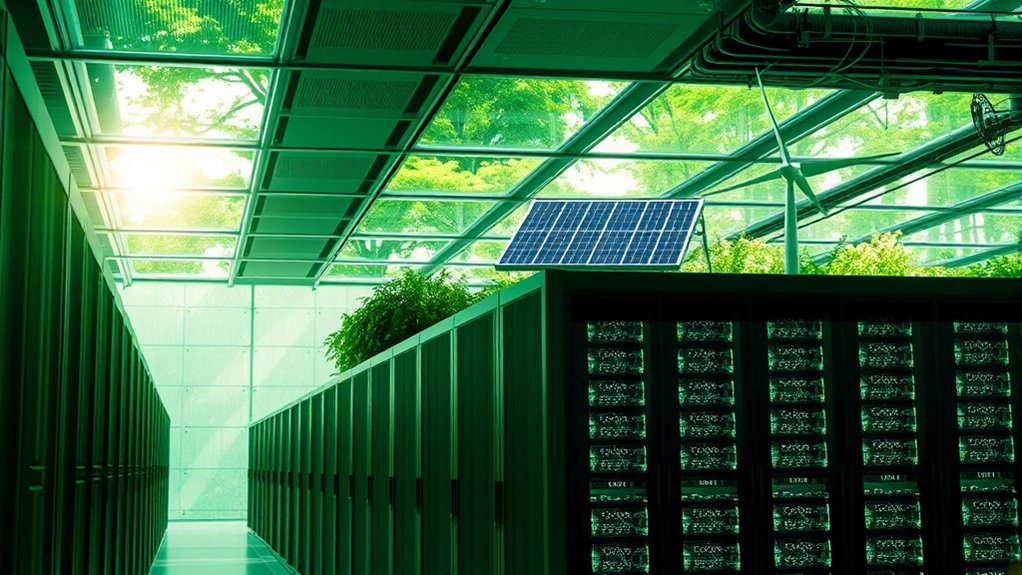
Have you ever wondered if the rapid growth of generative AI can be sustainable? As these powerful technologies become more integrated into everyday life, questions about their environmental impact grow louder. Generative AI models require vast amounts of computational power, which often translates into high energy consumption. This not only increases operational costs but also contributes significantly to carbon emissions. If we’re to harness the full potential of AI without harming the planet, we need to focus on strategies that reduce energy use and make AI development more sustainable.
Balancing AI growth with environmental sustainability requires innovative strategies to reduce energy consumption and carbon emissions.
One of the most effective ways to achieve this is through optimizing algorithms. Developers are increasingly refining models to be more efficient, requiring less computational power without sacrificing performance. Techniques like pruning, quantization, and distillation help shrink the size of models, making them faster and less resource-intensive. These improvements mean you can deploy powerful AI systems with a smaller carbon footprint, which is vital as models grow larger and more complex.
Data center efficiency also plays a central role in reducing environmental impact. Many organizations are shifting to greener energy sources such as wind, solar, or hydropower for their data centers. Implementing advanced cooling systems, like liquid cooling or free-air cooling, can drastically cut energy use. By choosing data centers powered by renewable energy, you directly decrease the carbon emissions associated with AI operations. Some companies even locate their data centers in regions where renewable energy is abundant to maximize sustainability.
Another key aspect is the development of specialized hardware designed for AI workloads. Traditional CPUs are often inefficient for training large models, leading to excessive energy consumption. In contrast, application-specific integrated circuits (ASICs) and graphics processing units (GPUs) tailored for AI can perform computations more efficiently. When you use hardware optimized for AI tasks, you reduce energy use and lower the associated carbon footprint, making your AI infrastructure more environmentally friendly.
Furthermore, adopting sustainable practices in AI research and deployment involves thoughtful planning. This includes setting clear goals for energy efficiency, monitoring resource use continuously, and prioritizing projects that deliver maximum impact with minimal environmental cost. By choosing to support open-source models and sharing efficiency improvements, you help the entire AI community move toward more sustainable innovation.
A focus on hardware optimization can make a significant difference in reducing energy consumption, especially as models continue to grow in size and complexity. In essence, making generative AI sustainable requires a multifaceted approach—improving algorithms, investing in greener infrastructure, utilizing efficient hardware, and fostering responsible practices. If you’re involved in AI development or deployment, embracing these strategies allows you to harness AI’s benefits while minimizing its environmental footprint. This way, you guarantee that technological progress doesn’t come at the expense of the planet’s health.

AI Systems Performance Engineering: Optimizing Model Training and Inference Workloads with GPUs, CUDA, and PyTorch
As an affiliate, we earn on qualifying purchases.
As an affiliate, we earn on qualifying purchases.
Frequently Asked Questions
How Can AI Training Models Be Optimized for Energy Efficiency?
You can optimize AI training models for energy efficiency by using techniques like model pruning, which removes unnecessary parameters, and quantization, reducing the precision of calculations without sacrificing accuracy. Additionally, you should leverage energy-efficient hardware, such as GPUs or TPUs, and adopt smarter training algorithms that require fewer iterations. Implementing distributed training and monitoring energy consumption also helps guarantee your models run with minimal environmental impact.
What Are the Best Renewable Energy Sources for Powering AI Infrastructure?
You should consider wind and solar power, as they are the most sustainable options for powering AI infrastructure. While some argue they’re unreliable, advancements in storage technology make them more dependable. Solar panels generate energy during daylight, and wind turbines work day and night. By integrating these renewable sources, you can markedly reduce carbon emissions, lower energy costs over time, and contribute positively to environmental sustainability in AI operations.
How Does AI Hardware Design Impact Energy Consumption?
You can substantially reduce energy consumption by designing AI hardware with efficiency in mind. Choosing specialized chips like ASICs or GPUs optimizes processing power while minimizing energy use. You should also focus on hardware that supports dynamic power management and heat dissipation, which prevents unnecessary energy waste. Incorporating energy-efficient components and optimizing architecture directly impacts your AI system’s overall energy footprint, making it more sustainable and cost-effective.
What Policies Can Encourage Sustainable AI Development Globally?
You can promote sustainable AI development globally by advocating for stricter regulations on energy efficiency standards and carbon emissions. Supporting international agreements that prioritize green technology investments encourages responsible innovation. Encouraging transparency and reporting on AI energy usage can foster accountability. Additionally, investing in research for low-energy AI models and incentivizing companies to adopt eco-friendly practices motivates industry-wide change towards sustainability.
Are There Existing Standards for Measuring AI Carbon Footprints?
Measuring AI’s carbon footprint is like trying to weigh a cloud—you need specific standards. Currently, there are emerging guidelines, such as the Green AI framework and carbon accounting tools, but no universal standard exists yet. You can use these tools to estimate energy consumption and emissions. As awareness grows, expect more standardized metrics to develop, helping you better assess and reduce AI’s environmental impact.
ASIC hardware for AI workloads
As an affiliate, we earn on qualifying purchases.
As an affiliate, we earn on qualifying purchases.
Conclusion
By adopting sustainable practices in generative AI, you can make a real difference, much like planting seeds that grow into a greener future. Every effort to reduce energy use and carbon emissions adds up, turning complex technology into a force for good. Remember, just as a small stream feeds a mighty river, your choices can ripple outward, helping create a more sustainable world for everyone. Together, you can guarantee AI’s future is both innovative and eco-friendly.

Liquid Cooling For Data Centers (HVAC Industrial Books)
As an affiliate, we earn on qualifying purchases.
As an affiliate, we earn on qualifying purchases.

ADVANCING DATA CENTER SUSTAINABILITY: Through Artificial Intelligence and Renewable Biological Power Sources
As an affiliate, we earn on qualifying purchases.
As an affiliate, we earn on qualifying purchases.