
The biggest mistake that wastes serious money on a GPU workstation is neglecting proper cooling and power supply planning. When you skip investing in quality cooling solutions and a reliable power supply, your hardware is vulnerable to overheating, thermal throttling, and damage. Poor airflow and underpowered units lead to reduced performance and costly repairs. If you keep these oversights in mind, you can optimize your setup. Stay tuned to discover how to avoid these pitfalls entirely.
Listen free for 30 days with Audible
Thousands of audiobooks and originals — cancel anytime.
As an affiliate, we earn on qualifying purchases.
Key Takeaways
- Neglecting proper GPU cooling leads to thermal throttling and potential hardware failure, wasting money on repairs and replacements.
- Choosing an underpowered or low-quality power supply causes instability and risks damaging expensive GPU components.
- Focusing solely on GPU specs without considering cooling and power infrastructure limits performance and shortens hardware lifespan.
- Ignoring airflow and ventilation results in overheating, reducing GPU efficiency and increasing cooling costs.
- Failing to plan holistically for cooling, power, and system support causes costly setbacks and diminishes workstation value.
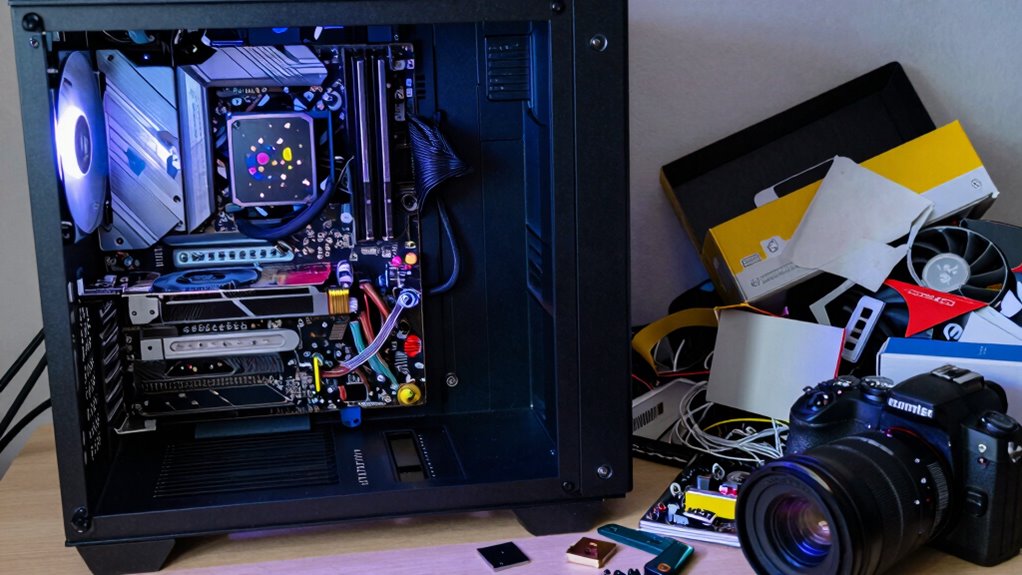
Have you ever invested in a high-end GPU workstation only to find it underperforming or causing unexpected issues? It’s frustrating, especially when you’ve spent so much money expecting top-tier performance. One common mistake that leads to wasted resources is overlooking essential setup details, particularly GPU cooling and power supply selection. These elements are critical to ensuring your workstation runs smoothly and efficiently, but they often get sidelined in favor of more obvious hardware choices.
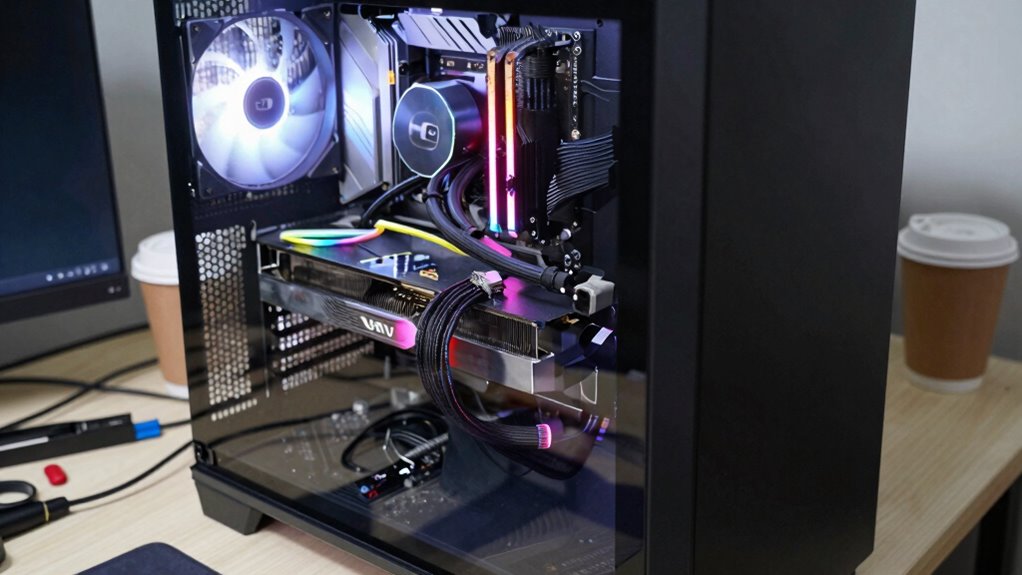
First, neglecting proper GPU cooling can turn your powerful system into a thermal disaster. When your GPU overheats, it throttles performance to cool down, which defeats the purpose of investing in high-end hardware. You might notice your workstation slowing down during intensive tasks or, worse, experiencing sudden shutdowns due to thermal shutdowns. To avoid this, you need to prioritize effective GPU cooling solutions—whether that’s high-quality fans, liquid cooling, or well-ventilated cases. Proper airflow management ensures heat dissipates quickly, maintaining consistent performance and prolonging hardware lifespan. Additionally, understanding the importance of thermal management can help you design a more efficient cooling setup. Ensuring proper system airflow is often overlooked but vital for maintaining optimal temperatures. Recognizing the impact of thermal issues early can save you from costly repairs or replacements. Moreover, considering ambient room temperature can also play a significant role in thermal performance.
Effective GPU cooling prevents thermal throttling, maintains performance, and extends your hardware’s lifespan.
Equally important is selecting the right power supply. It might seem straightforward—just get a power supply with enough wattage—but many overlook the importance of quality and compatibility. An underpowered or low-quality power supply can cause instability, crashes, or even hardware damage. When choosing a power supply, you must consider the GPU’s power requirements, the overall system load, and future upgrades. Going for a power supply with a sufficient wattage margin and stable power delivery ensures your workstation runs reliably under heavy loads. Skimping here leads to wasted money, as you’ll face troubleshooting, repairs, or premature hardware failure.
Many users make the mistake of focusing solely on GPU specs without considering cooling and power. They assume that a more powerful GPU will automatically perform well without investing in cooling solutions or a quality power supply. This oversight often results in the hardware not reaching its full potential or breaking down prematurely. Remember, even the most advanced GPU can underperform if it’s overheating or not supplied with stable power.
In the end, it’s about understanding that your GPU’s performance isn’t just about the card itself—it’s about the entire ecosystem supporting it. Proper GPU cooling and well-chosen power supply are investments that prevent costly setbacks, ensuring your high-end workstation delivers the performance you paid for. Neglecting these essential setup details can lead to significant financial setbacks that could have been avoided with proper planning. Ignoring these critical aspects isn’t just a small mistake; it’s a financial trap that can wipe out your budget and delay your projects. Take the time to plan carefully, and your workstation will serve you well for years to come.
As an affiliate, we earn on qualifying purchases.
Frequently Asked Questions
How Do I Identify if My GPU Is Bottlenecking My Workstation?
You can identify if your GPU is bottlenecking your workstation by monitoring your system’s performance during intensive tasks. Check your GPU utilization; if it’s consistently at 100%, but your CPU is much lower, the GPU might be the bottleneck. Confirm your GPU compatibility with your system and verify your power supply requirements to support high-performance GPUs. Upgrading or adjusting components can help eliminate bottlenecks and optimize workstation performance.
Can Upgrading Other Components Improve GPU Performance?
You can definitely boost GPU performance by upgrading other components, but don’t put the cart before the horse. Make sure your GPU cooling is adequate to prevent thermal throttling, and check that your power supply is compatible and provides enough wattage. Upgrading RAM or CPU can help, but if your GPU isn’t properly cooled or powered, those upgrades won’t reach their full potential. It’s all about setting the stage right.
What Are Signs of an Underpowered GPU for My Workload?
If your GPU struggles with your workload, signs include lagging, overheating despite proper cooling, or crashes during intensive tasks. An underpowered GPU can’t handle high demands, leading to performance issues. Check your GPU cooling system to guarantee it’s adequate and your power supply provides enough wattage for peak performance. Upgrading these components can prevent bottlenecks, maximize your GPU’s potential, and save you money in the long run.
How Often Should I Upgrade My GPU for Optimal Efficiency?
You should upgrade your GPU every 2-3 years to maintain peak efficiency, especially if you notice performance drops or increased temperature issues. Keep an eye on GPU cooling and make sure your power supply can handle new cards, as these factors impact performance and longevity. Upgrading timely prevents bottlenecks and overheating, saving you money in the long run by avoiding costly repairs or replacements caused by neglecting cooling or power needs.
Are There Specific GPU Brands Better for Workstation Tasks?
Imagine your workstation as a finely-tuned engine; choosing the right GPU brand keeps it running smoothly. Brands like NVIDIA and AMD often lead in compatibility and reliability, offering better graphics card longevity. You’ll want to compare their latest models for your specific tasks, ensuring GPU compatibility. Opting for reputable brands means fewer crashes, faster rendering, and a more efficient workflow, saving you money in the long run.
high quality power supply for workstation
As an affiliate, we earn on qualifying purchases.
As an affiliate, we earn on qualifying purchases.
Conclusion
Avoid the costly trap of overestimating your GPU needs, much like Icarus flying too close to the sun—believing bigger is always better. Remember, choosing the right GPU means balancing performance with your actual workload, not chasing the allure of the top-tier. By doing so, you save your resources from melting away in pursuit of an illusion. Stay grounded, and let wisdom guide your decision, lest you end up chasing shadows instead of tangible gains.
As an affiliate, we earn on qualifying purchases.
PC airflow management accessories
As an affiliate, we earn on qualifying purchases.
As an affiliate, we earn on qualifying purchases.
NFL season / tailgating Picks
team gear
As an affiliate, we earn on qualifying purchases.