
📊 Full opportunity report: Inside The AI-Driven Design Of Station 36’S Listening Post Website on ThorstenMeyerAI.com — validation score, market gap, and execution plan.

Get business pricing on tech for your team
- Business-only prices and quantity discounts
- Tax-exempt purchasing
- Multiple users, one account, clear invoices
TL;DR
Station 36’s Listening Post website is an AI-crafted, interactive experience mimicking a vintage shortwave radio room. It combines detailed SVG design, real-time audio synthesis, and immersive visuals, showcasing AI’s role in creative web development.
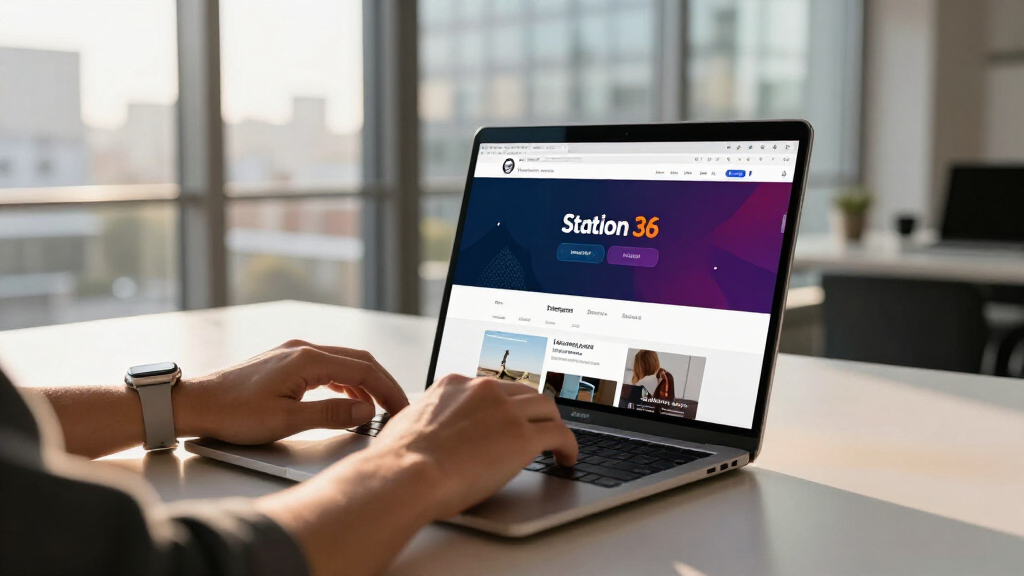
The Station 36 Listening Post website is a fully AI-crafted, interactive web experience that simulates a vintage shortwave radio room, combining detailed SVG controls, spectral visualizations, and synthesized audio. This development showcases AI’s emerging role in creating immersive, historically styled digital interfaces, making it relevant to both web design and AI innovation audiences.
The website employs a restrained, vintage-inspired color palette rooted in materials like bakelite brown-black (#191210), amber (#ffb54a), phosphor cyan, and soft cream, reinforcing its authentic, classified radio aesthetic. Built with techniques similar to those detailed in the original analysis. Built entirely with HTML, CSS, and JavaScript—without external assets or frameworks—it features inline SVG elements that mimic vintage hardware, including a tuning dial, knobs, meters, and a spectral waterfall visualization.
Interaction is driven by JavaScript, which dynamically generates dial ticks, updates frequency readings, and synchronizes visual and audio elements. This approach is similar to the design tricks explained in the original analysis. When users power on the receiver, the site synthesizes static hiss, carrier hum, heterodyne whistles, and Morse code signals via the Web Audio API, creating a realistic listening environment. The spectral waterfall scrolls in real-time, overlaying simulated signals that evoke the experience of tuning into secret stations during the Cold War era. For more on this technique, see Glimpse: Station 36 — Shortwave Numbers Listening Post.
Implications of AI-Crafted Vintage Web Interfaces
This project exemplifies how AI can be used to generate complex, highly detailed web interfaces that evoke specific historical aesthetics, blending craftsmanship with automation. It demonstrates the potential for AI to assist in creative design, especially for projects requiring authenticity and tactile interactivity, which could influence future digital recreations of vintage or specialized environments.
For web developers and designers, this showcases a new paradigm where AI not only assists but fully executes creative concepts, reducing manual effort while maintaining high fidelity. It also raises questions about the role of AI in preserving cultural and technological history through digital mediums.
As an affiliate, we earn on qualifying purchases.
AI’s Role in Recreating Vintage Radio Experiences
Recent years have seen increasing interest in digital recreations of historical technology, driven by both nostalgia and educational goals. The Station 36 project is part of a broader movement to use AI for generating immersive, authentic interfaces that evoke specific eras. Unlike previous static or simplified simulations, this site’s use of AI-driven SVG, real-time audio synthesis, and interactive controls pushes the boundary of web-based historical recreation.
This project is also aligned with a series of AI-crafted websites that aim to blend history, art, and technology, each designed end-to-end by AI, as part of a larger exhibition. It builds on prior efforts like the Arctic Geomagnetic Observatory and the 1929 Stock Exchange site, emphasizing detailed craftsmanship and user immersion.
“This site exemplifies how AI can produce highly detailed, interactive, and authentic vintage experiences without traditional design workflows.”
— an anonymous researcher
As an affiliate, we earn on qualifying purchases.
Unconfirmed Aspects of AI’s Creative Process
It is not yet clear how much of the site’s detailed design was autonomously generated by AI versus human input, or whether AI played a guiding role in the creative decisions. The internal development process remains largely undisclosed, raising questions about the extent of AI’s creative autonomy in such projects.
spectral waterfall visualization monitor
As an affiliate, we earn on qualifying purchases.
As an affiliate, we earn on qualifying purchases.
Future of AI-Generated Historical Web Experiences
As the project is currently live, further developments may include expanded interactivity, more complex audio synthesis, or integration with other AI-driven creative tools. Observers will likely watch for similar projects that push AI’s boundaries in recreating immersive, historically accurate digital environments, potentially influencing both education and entertainment sectors.
As an affiliate, we earn on qualifying purchases.
Key Questions
How does the website simulate vintage radio signals?
The site uses Web Audio API to synthesize static, carrier hum, heterodyne whistles, and Morse code signals, synchronized with visual spectral waterfalls to create an authentic listening experience.
Is the entire website generated by AI?
The website’s design and implementation are claimed to be fully created by AI, utilizing code-based art direction and automation, though specific details of the development process are not publicly confirmed.
Can users interact with the signals or just observe?
Users can tune the virtual receiver by dragging the dial, which updates the spectral visualization and triggers audio synthesis, allowing active signal hunting within the simulated environment.
What is the significance of this project for web design?
It demonstrates how AI can produce highly detailed, immersive interfaces that blend artistic aesthetics with technical authenticity, potentially shaping future digital recreations of historical or specialized environments.
Source: ThorstenMeyerAI.com
Halloween Picks
halloween
As an affiliate, we earn on qualifying purchases.