📊 Full opportunity report: Kill-Switch-Proof: How To Build So Washington Can’t Take Your AI Stack Down on ThorstenMeyerAI.com — validation score, market gap, and execution plan.
Open a free Amazon Business account
Business pricing, bulk buying and tax-exempt orders.
Create a free accountAs an affiliate, we earn on qualifying purchases.
TL;DR
In June 2026, the US government shut down top AI models, exposing vulnerabilities in reliance on vendor-controlled models. Experts recommend strategies like dependency mapping and open-weight models to prevent outages caused by government actions.
In June 2026, the US government ordered the shutdown of the most advanced AI models, including Anthropic’s Fable 5 and restricted access to OpenAI’s GPT-5.6 for certain partners. This exposed a critical vulnerability: reliance on vendor-controlled models can result in unpredictable outages without warning or recourse, regardless of contractual SLAs. Experts warn that organizations must now build AI stacks that are resilient to government actions, making dependency on external models a strategic risk.
Following the shutdowns, organizations relying on these models discovered that access can be revoked instantly and globally, with no prior notice or ability to appeal. Export control laws, especially for international teams or offshore contractors, complicate model deployment and create legal risks that can lead to sudden disconnection. The core issue is that models are often treated as code dependencies, making them difficult to swap quickly in crisis. The recommended approach involves mapping all dependencies, establishing abstraction layers via AI gateways, and maintaining open-weight models hosted on infrastructure under the organization’s control.
Key strategies include creating a comprehensive dependency map to identify single points of failure, deploying a model-abstraction gateway for seamless swapping, and maintaining a tier of open-weight models that are self-hosted or run on infrastructure the organization controls. These steps aim to ensure that even if government directives shut down vendor models, organizations can continue operations using alternative, resilient models. Notably, open-weight models like Qwen3-Coder-480B and Kimi K2 now offer performance levels close to proprietary models, making them viable fallback options. The emphasis is on licensing terms, self-hosting, and infrastructure control to achieve sovereignty and resilience.
Kill-switch-proof: build so Washington can’t take your AI stack down
In June, the US government switched off the market’s most capable model — twice, in three weeks. You can’t stop the gate. You can decide whether it takes you down. The difference is entirely architectural — and buildable.
You can’t control the gate — Washington will keep deciding which frontier models ship, and both labs are pushing to make review permanent. What you control is your exposure to it. Kill-switch-proofing isn’t predicting the next directive — it’s making the next one a config change instead of an outage, a routing rule that fails over to a model no one can pull while your users notice nothing. The question stops being “will they take my model away?” and becomes the boring one you can answer: “which one do I route to next?”
Implications of Model Shutdowns for AI Infrastructure Security
This development highlights the growing importance of building AI systems that are resistant to government shutdowns and legal restrictions. As reliance on vendor-controlled models becomes riskier, organizations must adopt architectural strategies that prioritize sovereignty, flexibility, and control. Failure to do so could lead to operational paralysis if access to critical models is revoked unexpectedly, impacting sectors from tech to defense. The shift toward self-hosted open-weight models and dependency mapping marks a strategic evolution in AI infrastructure management, emphasizing resilience against political and legal disruptions.
As an affiliate, we earn on qualifying purchases.
Recent Government Actions and the Rise of Dependency Risks
In June 2026, the US government executed unprecedented shutdowns of leading AI models, including Anthropic’s Fable 5 and restricted access to GPT-5.6 for select partners. These actions followed new export and national security regulations aimed at controlling AI technology flow and usage. The shutdowns demonstrated that access to AI models can be severed at a moment’s notice, regardless of prior agreements or SLAs. This event underscored the importance of understanding dependency chains and prompted a reevaluation of AI architecture strategies, especially for organizations operating across borders or with international teams. The hardware side of the equation also evolved, with a focus on self-hosted open-weight models that can serve as resilient alternatives. These developments are part of a broader shift toward sovereignty in AI infrastructure, driven by geopolitical tensions and legal constraints.
“The recent shutdowns prove that reliance on vendor-controlled models is a strategic vulnerability. Organizations must now prioritize building kill-switch-proof architectures.”
— Thorsten Meyer, AI infrastructure expert
As an affiliate, we earn on qualifying purchases.
Unresolved Challenges in Building Resilient AI Stacks
It remains unclear how quickly organizations can transition to fully self-hosted open-weight models at scale, and what the performance trade-offs might be. There are also questions about licensing restrictions, infrastructure costs, and legal compliance for self-hosting, especially across different jurisdictions. The effectiveness of fallback tiers and gateways in real-world crisis scenarios has yet to be tested extensively. Additionally, the evolving legal landscape may introduce new restrictions that could complicate or invalidate current approaches.
As an affiliate, we earn on qualifying purchases.
Next Steps for Organizations and Developers
Organizations should begin comprehensive dependency mapping immediately and invest in deploying AI gateways to enable quick model swaps. Developing and testing fallback tiers, including self-hosted open-weight models, will be critical. Industry groups and regulators may also work on establishing standards for resilient AI architectures. Future developments may include more open models with performance closer to proprietary offerings, as well as legal frameworks that clarify the sovereignty and control of AI assets. Monitoring legal and geopolitical developments will be essential for maintaining resilience in the evolving landscape.
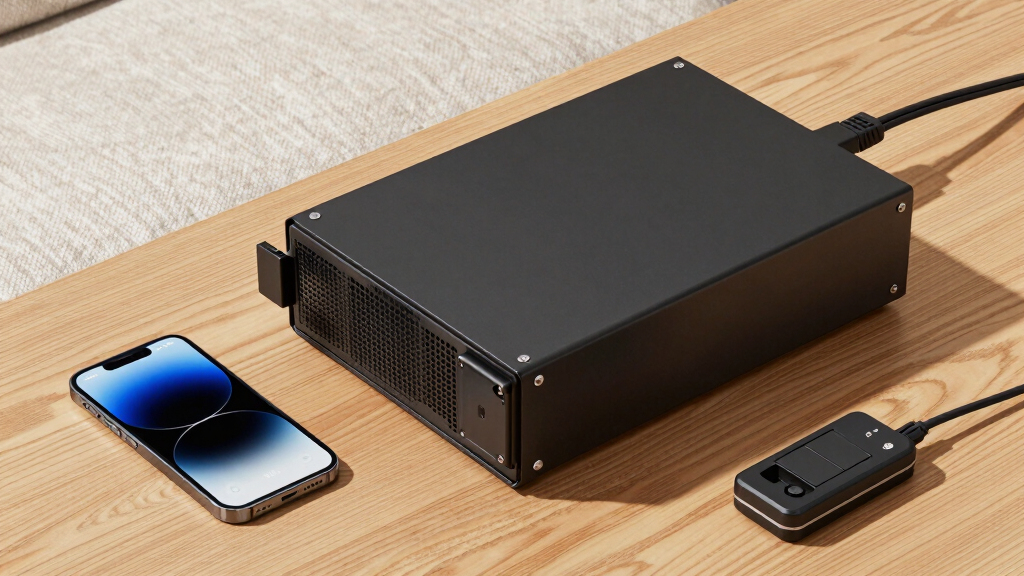
resilient AI infrastructure hardware
As an affiliate, we earn on qualifying purchases.
As an affiliate, we earn on qualifying purchases.
Key Questions
What is a kill-switch-proof AI architecture?
A kill-switch-proof AI architecture is one designed to prevent total operational shutdowns caused by external actions, such as government directives. It relies on dependency mapping, abstraction layers, and self-hosted open-weight models to maintain control and flexibility.
Can organizations fully self-host AI models today?
Many open-weight models are now capable of being self-hosted on infrastructure organizations control. However, performance and licensing considerations vary, and large-scale deployment still presents technical and cost challenges.
What are the legal risks of self-hosting AI models?
Legal risks include compliance with export laws, licensing restrictions, and jurisdictional regulations. Careful review of licenses and adherence to local laws are essential to avoid legal complications.
Will government actions like shutdowns continue?
While it is uncertain how frequently or severely governments will act, recent events suggest that organizations should prepare for possible future shutdowns by adopting resilient architectures now.
Are open-weight models ready for production use?
Many open-weight models now offer performance levels close to proprietary models for coding and reasoning tasks, making them viable as fallback options, especially when self-hosted.
Source: ThorstenMeyerAI.com
NFL season / tailgating Picks
team gear
As an affiliate, we earn on qualifying purchases.