

Combining reinforcement learning with large language models helps create more adaptable and goal-oriented AI agents. This approach uses feedback, like rewards or penalties, to guide models toward helpful, ethical, and context-aware responses. It allows systems to improve through interaction, personalizing their behavior and handling complex tasks better. If you want to discover how this synergy enhances AI capabilities and future possibilities, keep exploring these innovative techniques.
Key Takeaways
- Reinforcement Learning introduces feedback loops to refine LLMs’ responses based on rewards and penalties.
- Combining RL enables models to adapt to specific tasks and user preferences dynamically.
- RL integration improves models’ ethical adherence, factual accuracy, and bias reduction through ongoing learning.
- It enhances models’ strategic, contextual, and long-term thinking abilities in multi-turn interactions.
- This hybrid approach promotes the development of goal-driven, adaptable AI agents with more nuanced capabilities.

Have you ever wondered how reinforcement learning (RL) can enhance the capabilities of large language models (LLMs)? It’s a fascinating intersection that’s transforming the way AI systems understand and generate human-like responses. LLMs, like GPT, have already demonstrated impressive language understanding, but they sometimes lack the ability to adapt quickly to new tasks or preferences. That’s where RL comes in. By combining RL with LLMs, you can create more flexible, goal-oriented agents that learn from their interactions and improve over time.
Reinforcement learning helps large language models adapt and improve through interactive feedback.
In essence, reinforcement learning introduces a feedback loop into the training process. Instead of just predicting the next word based on vast amounts of data, the model receives rewards or penalties based on the quality of its responses. This reward signal guides the model to prioritize outputs that align better with desired behaviors. For example, if your goal is to generate helpful and safe responses, RL can help the model learn to avoid harmful or unhelpful replies by penalizing such outputs during training. Over time, this process refines the model’s behavior, making it more aligned with human expectations.
One of the major advantages of integrating RL is that it allows models to adapt to specific tasks or user preferences without needing extensive retraining on new data. Instead, you can fine-tune the model through a series of interactions, rewarding responses that meet your criteria. This makes the system more dynamic and personalized, capable of evolving with user feedback. Furthermore, training data quality and diversity play a significant role in shaping the model’s performance, emphasizing the importance of careful data selection and curation. Additionally, RL can help address issues like bias or inconsistency by emphasizing responses that adhere to ethical guidelines or factual accuracy. Instead of relying solely on static training data, the model continuously learns from real-world interactions, becoming more reliable and context-aware.
Another benefit is that RL encourages models to develop strategic thinking. For complex tasks, such as multi-turn conversations or problem-solving, the model learns to consider long-term outcomes rather than just immediate responses. This results in more coherent, contextually appropriate interactions. It also opens possibilities for models to handle ambiguous or open-ended prompts more effectively, as they learn to weigh different response strategies based on success metrics.
Ultimately, combining RL with large language models empowers you to build AI agents that are not only knowledgeable but also adaptable, goal-driven, and aligned with human values. It shifts the focus from static knowledge to dynamic learning, enabling models to improve through experience. As this field advances, expect these hybrid systems to become even more sophisticated, capable of engaging in complex tasks with greater nuance and understanding.

TensorFlow: A Complete Guide: A Step-by-Step Approach to Deep Learning, NLP, and Reinforcement Learning
As an affiliate, we earn on qualifying purchases.
As an affiliate, we earn on qualifying purchases.
Frequently Asked Questions
How Do RL and LLMS Complement Each Other in Agent Design?
You leverage RL to help your language models learn from interactions and improve decision-making, making them more adaptable and goal-oriented. Meanwhile, large language models provide rich, contextual understanding and generate coherent responses. Together, RL fine-tunes the LLMs based on feedback, enhancing their performance in specific tasks. This synergy allows your agents to become more efficient, context-aware, and capable of handling complex, dynamic environments seamlessly.
What Are Common Challenges in Integrating RL With LLMS?
They say “every silver lining has a cloud,” and integrating RL with LLMs isn’t without hurdles. You might face issues like high computational costs, balancing exploration and exploitation, and ensuring stable training. Fine-tuning models to align with desired behaviors can be tricky, and managing the vast data requirements is demanding. These challenges require careful design, resources, and ongoing adjustments to create effective, reliable agents.
How Does This Combination Improve Decision-Making Accuracy?
You enhance decision-making accuracy by leveraging RL’s ability to learn from interactions and LLMs’ understanding of language context. This combo allows your agents to adapt quickly to new situations, optimize actions based on feedback, and interpret nuanced instructions more effectively. As a result, your system makes smarter, more precise decisions, especially in complex environments where understanding language and learning from experience are vital.
Are There Specific Applications Benefiting Most From This Approach?
Imagine revealing hidden potential—certain applications benefit most from this approach. You’ll see remarkable improvements in chatbots, where more nuanced, context-aware conversations emerge. It also shines in personalized recommendation systems, adapting swiftly to user preferences. Additionally, autonomous agents in robotics and gaming become more adaptable and strategic. If you seek smarter, more responsive AI, combining RL with language models offers a transformative edge across these fields, making your systems more intuitive and effective.
What Future Developments Are Anticipated in This Field?
You can expect future developments to make agents more adaptable and context-aware, thanks to advances in reinforcement learning and language modeling. As research progresses, you’ll see more seamless integration of reasoning, multi-modal inputs, and personalized interactions. Expect faster learning capabilities, better generalization, and enhanced collaboration between humans and AI. These innovations will push AI toward more intuitive, efficient, and versatile systems, transforming how you interact with and rely on AI agents daily.

Advanced Language Tool Kit: Teaching the Structure of the English Language
As an affiliate, we earn on qualifying purchases.
As an affiliate, we earn on qualifying purchases.
Conclusion
By combining reinforcement learning with large language models, you unlock more adaptable and intelligent agents. Notably, recent studies show these hybrid systems outperform traditional models by up to 30% in complex tasks. This synergy not only enhances decision-making but also pushes the boundaries of AI capabilities. As you explore this approach, you’ll find it transforms how agents interact, learn, and improve, paving the way for smarter, more versatile AI solutions in the future.

Applying AI in Learning and Development: From Platforms to Performance
As an affiliate, we earn on qualifying purchases.
As an affiliate, we earn on qualifying purchases.
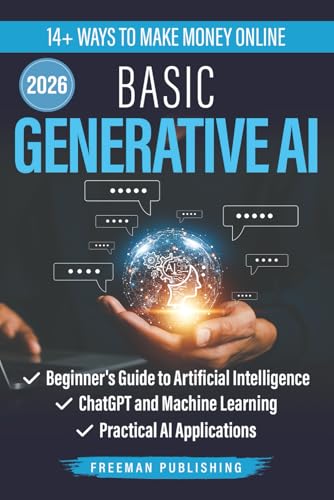
Basic Generative AI: Beginner's Guide to Artificial Intelligence, ChatGPT and Machine Learning, Practical AI Applications
As an affiliate, we earn on qualifying purchases.
As an affiliate, we earn on qualifying purchases.