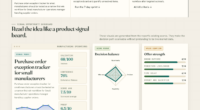
📊 Full opportunity report: The cleaner cap table. Why Anthropic’s public-benefit structure dodges OpenAI’s charitable-trust problem — and trades it for a governance question of its own. on ThorstenMeyerAI.com — validation score, market gap, and execution plan.

Get business pricing on tech for your team
- Business-only prices and quantity discounts
- Tax-exempt purchasing
- Multiple users, one account, clear invoices
TL;DR
Anthropic’s structure, built as a public benefit corporation with a mission trust, avoids the legal issues faced by OpenAI’s charitable trust conversion. However, both face governance discounts in public markets, raising questions about valuation and future regulation.
Anthropic’s founding as a Public Benefit Corporation with a Long-Term Benefit Trust means it did not need to convert from a nonprofit, avoiding the legal and regulatory issues faced by OpenAI’s charitable trust-to-for-profit conversion, and this structural choice significantly impacts its potential public-market valuation and governance profile.
Founded in April 2021 by Dario and Daniela Amodei, Anthropic was deliberately structured from inception as a Public Benefit Corporation with a layered Long-Term Benefit Trust. This trust, composed of five disinterested trustees, holds voting stock and has the authority to influence the company’s board, prioritizing safety and public benefit over shareholder returns, even against major investors like Google and Amazon. Unlike OpenAI, which faced scrutiny over its nonprofit-to-for-profit conversion, Anthropic’s structure sidesteps this issue entirely, as it was never a nonprofit to begin with.
However, this structure introduces a different governance challenge. The Trust’s control over key voting rights and its mandate to prioritize safety can be viewed by public markets as a governance discount, similar to the discount applied to mission-driven companies. Both Anthropic and OpenAI are entering the public markets with governance structures that diverge from traditional profit-maximizing models, raising questions about valuation, investor confidence, and regulatory oversight.
The cleaner cap table.
Why Anthropic’s public-benefit
structure dodges OpenAI’s
charitable-trust problem —
and trades it for a governance
question of its own.
to convert · no charitable trust
board majority within ~4 years
$30B raise · GIC + Coatue led
breakeven 2027-28 vs 2030s
- Conversion history · nonprofit → capped-profit → PBC · $130B Foundation equity + control
- The litigation · Musk case dismissed on timing, on appeal · underlying theory unreached
- Regulatory overhang · AG settlement + oversight · IRS conversion review · future plaintiffs
- Microsoft entanglement · AGI clause · $38B revenue-share cap · 27% equity · access through 2032
- The Long-Term Benefit Trust · Class T voting · escalating board control · mission-balancing mandate
- Hyperscaler concentration · Google ~14% / $40B · Amazon $25B · much in credits · antitrust at IPO
- Compute dependency · AWS / GCP reliance · SpaceX 300MW / 220,000 GPUs · unit-economics proof
- Mission-vs-margin tension · ad-free pledge · Pentagon dispute cost a contract OpenAI won
The cleaner cap table is not the cleaner valuation. Anthropic dodged the exact problem that consumed three weeks of OpenAI’s litigation — by adopting a structure that introduces a governance question public markets have never priced at this scale. It is a different discount, not no discount.Thorsten Meyer · The Cleaner Cap Table · AI Governance 02
Implications of Mission-Driven Corporate Structures in AI
This analysis highlights how different legal and governance structures influence the valuation and perception of AI companies in public markets. Anthropic’s design aims to avoid legal pitfalls associated with charitable trust conversions, but it still faces the challenge of convincing investors that its mission trust will not undermine shareholder value. This reflects a broader trend where mission-oriented governance models are tested at scale, potentially shaping future regulation and investor behavior in the AI industry.
As an affiliate, we earn on qualifying purchases.
Legal and Market Challenges of AI Corporate Structures
OpenAI’s recent history involves converting from a nonprofit to a for-profit, which has subjected it to legal scrutiny and debate over whether the conversion was lawful. This process has created a ‘conversion overhang’ that influences its market perception. Conversely, Anthropic’s structure was designed to preempt such issues by never undergoing a conversion, instead embedding mission priorities into its corporate governance through a layered trust. Both companies are now entering public markets with governance models that challenge traditional investor expectations, raising questions about valuation discounts and regulatory oversight.
“Anthropic was built, deliberately and from the founding documents, to avoid the exact structural failure mode that the Musk litigation alleged at OpenAI.”
— Thorsten Meyer
As an affiliate, we earn on qualifying purchases.
Unresolved Questions About Market Valuations
It remains unclear how public investors will ultimately value Anthropic’s mission trust compared to OpenAI’s conversion overhang, and whether these structural differences will lead to meaningful valuation disparities or regulatory actions in the near future.
As an affiliate, we earn on qualifying purchases.
Future Regulatory and Market Developments
Both Anthropic and OpenAI are expected to file S-1s or similar disclosures in the coming months, providing more detailed governance and valuation information. Monitoring investor reactions and regulatory responses will be key to understanding how these structures influence the AI industry’s public-market trajectory and whether new standards emerge for mission-oriented corporate governance.
As an affiliate, we earn on qualifying purchases.
Key Questions
How does Anthropic’s structure avoid the legal issues faced by OpenAI?
Anthropic was founded as a Public Benefit Corporation with a Long-Term Benefit Trust from the start, meaning it never needed to convert from a nonprofit, thus avoiding associated legal and regulatory scrutiny.
What is the main governance challenge for Anthropic in public markets?
The Trust’s control over voting rights and its mandate to prioritize safety and mission over shareholder returns may lead to a governance discount, affecting valuation and investor confidence.
Will Anthropic’s mission trust structure impact its valuation compared to OpenAI?
It is uncertain; both companies face governance discounts, but Anthropic’s structure aims to mitigate legal risks, while OpenAI’s conversion history may impose a different kind of market overhang.
How might regulators respond to these mission-focused structures?
Regulators could develop new guidelines for mission-driven corporate governance, especially in high-stakes AI industries, potentially influencing future company structures and disclosures.
Source: ThorstenMeyerAI.com
Fall Picks
fall essentials
As an affiliate, we earn on qualifying purchases.