📊 Full opportunity report: The Real Cost of a Local-Inference Rig in 2026 on ThorstenMeyerAI.com — validation score, market gap, and execution plan.

Get business pricing on tech for your team
- Business-only prices and quantity discounts
- Tax-exempt purchasing
- Multiple users, one account, clear invoices
TL;DR
In 2026, owning a local inference rig for large language models involves significant hardware costs, especially for high VRAM capacity. Cost-effective options include used GPUs and multi-GPU setups. The choice depends on model size and budget, with implications for privacy and cloud reliance.
Building a local inference rig for large language models in 2026 involves significant hardware investments, particularly in GPU VRAM capacity. Despite the high costs, owning the hardware can offer advantages in privacy and cost stability over cloud services, making it a compelling option for dedicated AI users.
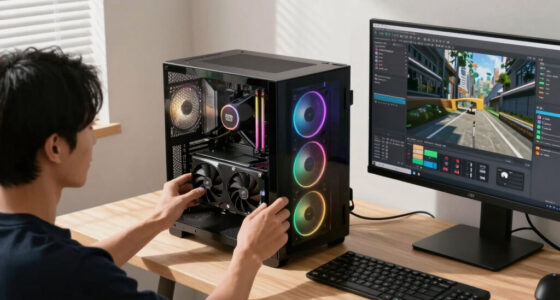
The core factor determining the cost of a local inference setup is VRAM capacity, with a critical threshold at 24GB. Models up to 32B parameters can run on a single 24GB GPU, such as a used RTX 3090 or 4090, which cost around $600–850. For larger models like 70B, multiple GPUs or high-end cards like the RTX 5090 (32GB, ~$2,000) are needed, but these are often less cost-efficient than older, used hardware. The key insight is that VRAM-per-dollar is a better metric than raw GPU speed, leading many to prefer used GPUs like the RTX 3090, which offer better value despite older technology. Multi-GPU configurations, especially with used 3090s via NVLink, can pool VRAM to handle models up to 120B, offering a practical, budget-friendly alternative to expensive flagship cards. The choice of hardware depends heavily on the target model size and workload, with tiers from entry-level 7–14B models to enterprise-scale 100B+ models. Additionally, Apple Silicon’s unified memory offers a unique alternative for large models, with Macs capable of handling models requiring over 100GB of VRAM, though with different performance characteristics.The real cost of a local-inference rig
Owning beats renting for steady AI work — so what does a local rig cost in 2026? The unintuitive, good news: the most expensive build is almost never the smartest one. It all comes down to one rule.
The difference is only whether the weights fit. LLM inference is memory-bandwidth-bound — VRAM capacity is the hard limit you build around. Compute specs are mostly noise.
The squeeze reframes the rig like everything else in this series: discipline beats maximalism. VRAM is exactly the memory under most pressure, so over-buying it is the 128GB-“to-be-safe” trap, only worse per gigabyte. Take the cheap, high-value step to 24GB (the gateway to the 30B class), reach for used 3090s and MoE models, and use quantization to climb a tier without buying silicon. Sized right, the rig pays for itself against the cloud’s ever-rising hidden bill. Next: Apple Silicon’s quiet memory advantage.
Implications for Cost-Effective AI Infrastructure in 2026
Understanding the true costs of building a local inference rig in 2026 is crucial for AI practitioners, researchers, and organizations seeking privacy, cost control, and independence from cloud providers. The emphasis on VRAM capacity over raw GPU speed shifts purchasing strategies, favoring used hardware and multi-GPU setups that provide better value. This approach can significantly reduce expenses while enabling access to large models, but requires careful planning around VRAM thresholds and hardware compatibility. The decision impacts not only individual users but also enterprise deployment, shaping the landscape of AI infrastructure investment and operational flexibility.
Hardware Trends and Model Size Thresholds in 2026
The 2026 landscape for local inference is defined by the importance of VRAM capacity, with models ranging from 7B to over 100B parameters. The critical VRAM cliff at 24GB determines whether a model can run efficiently on a single GPU or requires multiple devices. Older GPUs like the RTX 3090, often available used, provide exceptional VRAM-per-dollar, making them a popular choice for budget-conscious users. New flagship cards like the RTX 5090 offer high speed but are less cost-effective for inference tasks, especially when considering VRAM capacity. Multi-GPU configurations using used 3090s with NVLink can pool VRAM to handle larger models at a fraction of the cost of newer hardware. Meanwhile, Apple Silicon’s unified memory offers an alternative for large models, especially for users prioritizing privacy and integrated hardware solutions. These trends reflect a shift toward maximizing VRAM efficiency and strategic hardware selection rather than raw compute power, influencing how local inference setups are built and scaled.
“Used RTX 3090s offer the best VRAM-per-dollar, making them the go-to choice for budget-conscious AI builders.”
— Industry expert on GPU market
Unresolved Questions About Hardware Longevity and Performance
It is still unclear how long used GPUs like the RTX 3090 will remain viable for inference tasks without significant performance degradation or hardware failures. Additionally, the evolving software ecosystem and model compression techniques could alter hardware requirements, making current cost estimates less accurate over time. The impact of upcoming GPU releases on secondhand market value and VRAM capacity remains uncertain, as does the long-term reliability of multi-GPU configurations in production environments.
Upcoming Hardware Releases and Market Trends to Watch
In the coming months, new GPU models with improved VRAM and bandwidth are expected, potentially shifting the cost-per-performance landscape. Monitoring used GPU prices and availability will be critical for budget-conscious AI practitioners. Additionally, advances in model quantization and offloading techniques may reduce hardware demands, making large models more accessible on existing hardware. Finally, developments in unified memory systems like Apple Silicon could offer alternative pathways for large-scale local inference in specialized setups, broadening options beyond traditional GPUs.
Key Questions
What is the most cost-effective GPU for local inference in 2026?
The used RTX 3090 offers the best VRAM-per-dollar, making it the most cost-effective choice for many inference tasks, especially when pooled with multiple cards via NVLink.
How does VRAM capacity influence model size and performance?
VRAM capacity determines whether a model can run entirely in fast memory. Models fitting within the VRAM run at high speed; exceeding this capacity causes drastic performance drops, making VRAM the critical bottleneck.
Are newer, flagship GPUs worth the investment for inference?
Not necessarily; for inference, VRAM-per-dollar is more important than raw speed. Older, used GPUs like the RTX 3090 often provide better value, especially when pooling multiple cards.
Can Apple Silicon Macs handle large inference models?
Yes, through unified memory, Macs can access over 100GB of virtual VRAM, making them a viable alternative for large models, though with different performance profiles than dedicated GPUs.
What are the main trade-offs when building a local inference rig?
The primary trade-off involves balancing VRAM capacity, hardware cost, power consumption, and complexity. Multi-GPU setups offer large VRAM pools at lower cost but require more setup and maintenance.
Source: ThorstenMeyerAI.com
Fall Picks
fall essentials
As an affiliate, we earn on qualifying purchases.