
TL;DR

Get business pricing on tech for your team
- Business-only prices and quantity discounts
- Tax-exempt purchasing
- Multiple users, one account, clear invoices
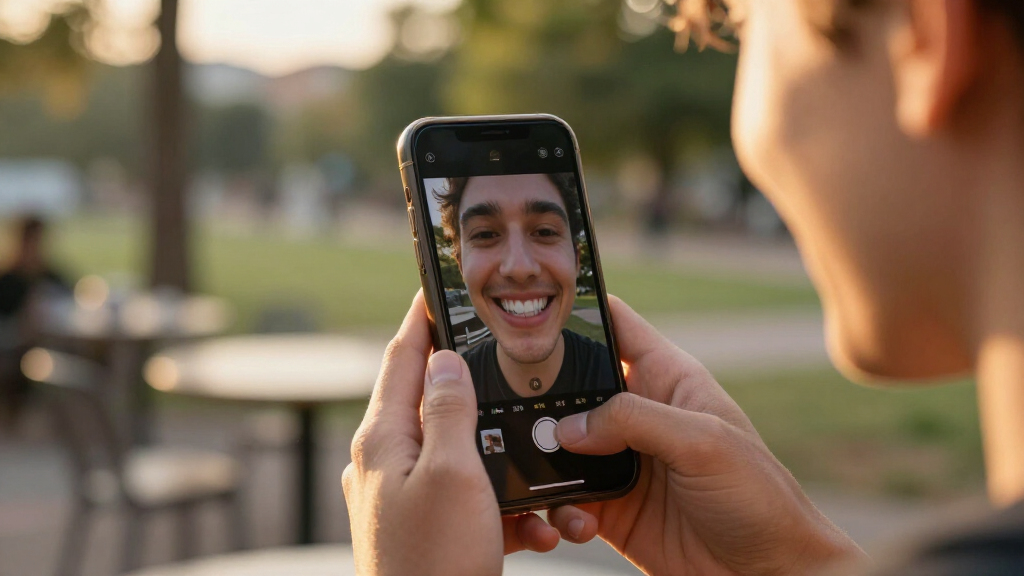
Researchers are testing phone camera-based shade scoring as a tool for home teeth whitening. Confirmed studies show potential, but accuracy and reliability remain under evaluation. This development could influence consumer choices and product marketing.
Researchers are testing a new method that uses phone cameras with guided lighting to objectively measure teeth shade, aiming to improve the effectiveness tracking of home whitening products. This approach could help consumers better understand which products actually work, addressing longstanding issues with subjective visual assessments.
The concept involves creating a guided-lighting photo flow that captures images of teeth and compares the shade against a calibrated dental color scale. This system aims to track changes over weeks, providing users with data on how their teeth respond to whitening products such as strips, trays, or LED kits.
Initial validation efforts are focused on benchmarking app-based shade scores against dentist VITA readings, with a goal to establish a strong correlation. Such validation is critical to ensure the method’s reliability before wider adoption.
Market experts see this as a potential first step toward integrating objective measurement tools into consumer oral-care routines, which could influence product marketing, consumer confidence, and subscription-based models. Revenue strategies include subscriptions and affiliate sales of proven whitening products.
Potential Impact on Home Whitening Market
This development could significantly alter how consumers approach at-home teeth whitening by providing an objective, easy-to-use measurement tool. Currently, most users rely on subjective visual assessments in bathroom mirrors, which can be inaccurate and lead to unnecessary product cycling.
If validated, phone camera shade scoring could reduce trial-and-error, improve consumer satisfaction, and help manufacturers demonstrate product efficacy more transparently. It also opens new revenue streams for companies offering subscription services and product recommendations based on measurable results.
As an affiliate, we earn on qualifying purchases.
Advances in Consumer Oral-Care Tech
The idea of using digital tools to measure teeth shade is not new, but recent advances in smartphone camera technology and guided-lighting systems have made it more feasible. Currently, professional dental shade matching relies on calibrated devices and trained technicians, but efforts are underway to develop consumer-friendly alternatives.
Previous attempts at home shade measurement have been limited by inconsistent lighting and subjective judgment. The new approach aims to overcome these limitations by providing standardized lighting conditions and calibrated measurements, similar to professional tools.
Market interest is driven by the expanding home whitening industry, which is valued in the billions globally. Consumers often cycle through multiple products without clear feedback on effectiveness, creating demand for objective measurement solutions.
“Using phone cameras combined with guided lighting could approximate professional shade readings, offering a new level of accuracy for consumers.”
— an anonymous researcher
As an affiliate, we earn on qualifying purchases.
Validation and Reliability Challenges
While initial studies show promise, it is not yet confirmed that phone camera-based shade scores can reliably match dentist-grade VITA readings across diverse users and lighting conditions. The correlation strength and consistency are still being tested in ongoing validation efforts.
It remains unclear whether the technology will prove robust enough for widespread consumer use without calibration issues or user error, which could limit its current applicability.
As an affiliate, we earn on qualifying purchases.
Next Steps in Development and Testing
Researchers plan to conduct larger-scale validation studies involving at least fifty users, comparing app-based shade scores with professional dental measurements. These results will determine whether the technology can be reliably integrated into commercial products.
Simultaneously, developers are refining guided-lighting systems and user interfaces to improve measurement consistency. If successful, pilot programs could launch within the next year, followed by broader market testing and potential product launches.
smartphone teeth shade measurement device
As an affiliate, we earn on qualifying purchases.
As an affiliate, we earn on qualifying purchases.
Key Questions
Can phone cameras accurately measure teeth shade?
Current research suggests that with guided lighting and calibration, phone cameras can approximate professional shade readings, but full validation is still underway.
Will this technology reduce the trial-and-error in home whitening?
Potentially, yes. An objective measurement tool could help consumers identify effective products more quickly and accurately, minimizing unnecessary product cycling.
When might this technology be available to consumers?
If validation proves successful, pilot programs could begin within the next year, with broader market availability possibly following in 1-2 years.
Are there any risks or limitations to using phone cameras for shade measurement?
Yes. Variations in lighting, user technique, and device quality could affect accuracy. Ongoing testing aims to address these issues.
How could this impact the dental industry?
It could introduce a new consumer tool for monitoring whitening progress, potentially reducing demand for in-office shade matching but increasing transparency and product efficacy claims in the market.
Source: IdeaNavigator AI
Halloween Picks
halloween
As an affiliate, we earn on qualifying purchases.