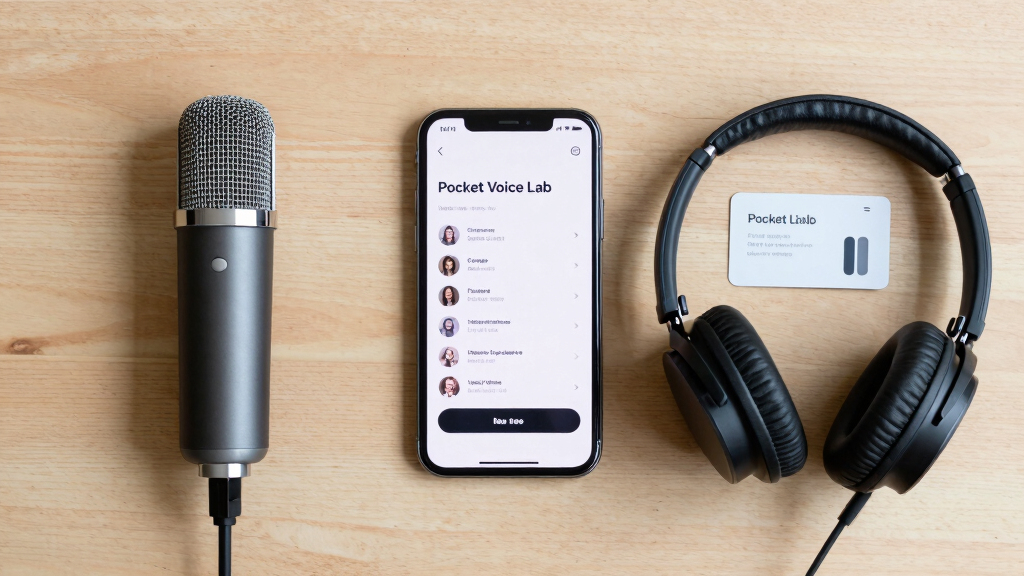

📊 Full opportunity report: Voice Health And Gender Expression: The Power Of Pocket Voice Lab on IdeaNavigator AI — validation score, market gap, and execution plan.

Get business pricing on tech for your team
- Business-only prices and quantity discounts
- Tax-exempt purchasing
- Multiple users, one account, clear invoices
TL;DR
A prototype mobile app, Pocket Voice Lab, is being tested to provide real-time voice feedback for individuals seeking gender-affirming voice changes. It aims to address gaps in access to objective, ongoing voice coaching, especially for transgender and gender-nonconforming people.
Researchers are developing a mobile app prototype called Pocket Voice Lab that provides real-time acoustic biofeedback to individuals working on voice feminization or masculinization. This innovation aims to fill a significant gap in accessible, objective voice training, especially for transgender and gender-nonconforming people, as well as public speakers and singers seeking ongoing coaching.
The app is designed to record short voice samples and deliver immediate visual feedback on fundamental pitch, resonance, and strain indicators, based on on-device analysis. It offers guided exercises tailored for gender-affirming voice work, along with progress tracking and shareable reports for clinicians. The initiative responds to the current challenge: many users lack consistent, objective feedback between sessions due to high costs, geographic limitations, and the absence of longitudinal data.
The development leverages advances in smartphone microphone technology, acoustic analysis, and peer-reviewed research that treats voice as a clinical biomarker. The prototype is part of a broader effort to validate whether scalable, app-based voice training can meet the needs of underserved populations. The team plans to run a 4-week paid pilot, measuring user engagement and willingness to pay, with initial targets including 40% of users completing multiple sessions in the first week and over 25% opting for paid subscriptions.
Impact of Pocket Voice Lab on Voice Training Accessibility
This development could significantly improve access to objective, continuous voice training for transgender and gender-nonconforming individuals, who currently face limited options for affordable, effective coaching. By enabling users to track progress and share data with clinicians remotely, it may also enhance the quality of gender-affirming care and reduce reliance on costly in-person sessions. Additionally, the app’s potential to serve public speakers and singers expands its market impact, addressing a broader demand for scalable voice health tools.
Products Worth Considering

Bose Smart Dolby Atmos Soundbar, All-in-One Soundbar for TV, A.I. Dialogue Mode, Voice Control and Amazon Alexa Built-in, Supports Bluetooth

Apple MacBook Air 15-inch Laptop with M5 Chip, 16GB Memory, 512GB SSD, Midnight

LG UltraGear 32GX850A-B 32-inch 4K UHD OLED Gaming Monitor
As an affiliate, we earn on qualifying purchases.
Growing Need for Accessible Voice-Affirming Solutions
Despite the recognized importance of voice in gender expression, there remains a significant gap in accessible, objective voice training tools for transgender and gender-nonconforming populations. Current options are often limited to intermittent sessions with speech-language pathologists or vocal coaches, which are expensive and geographically constrained. Recent advances in smartphone-based acoustic analysis and peer-reviewed research have demonstrated that real-time feedback is feasible outside lab settings. Several free prototypes like TruVox and Attuned have validated the scientific approach and consumer demand, with over 4 million downloads for AI-driven voice apps like Vocal Image. The new Pocket Voice Lab project aims to leverage this momentum by creating a user-friendly, scalable mobile solution for ongoing voice health management.
“Advances in smartphone microphone technology and acoustic analysis now make real-time biofeedback practical for everyday users.”
— an anonymous researcher
Uncertainties About App Adoption and Efficacy
It is not yet clear how well the prototype will perform in real-world settings or whether users will find it sufficiently engaging and effective. The success of the pilot, including user retention and willingness to pay, remains to be seen. Additionally, the extent to which clinicians will incorporate the app into their practice is still uncertain, as is the long-term impact on voice health outcomes for users.
Next Steps in Testing and Scaling the Voice Feedback App
The development team plans to launch a 4-week pilot involving trans voice training and public-speaking communities, measuring user engagement and subscription conversion rates. Positive results could lead to further refinement, broader testing, and eventual commercialization. Future updates may include expanded exercises, multi-persona support, and integration with clinical workflows.
Key Questions
How does the app provide voice feedback?
The app records a voice sample and uses on-device analysis to display real-time visual feedback on pitch, resonance, and strain indicators, helping users adjust their voice accordingly.
Who is the target user for this app?
The primary users are transgender and gender-nonconforming individuals seeking voice feminization or masculinization, as well as public speakers and singers interested in ongoing voice training.
Will this replace in-person voice coaching?
No, the app is designed as a supplementary tool to provide objective feedback between sessions, making in-person coaching more effective and accessible.
When will the app be available to the public?
The prototype is currently in testing; a full commercial release depends on pilot results and further development, expected within the next year.
How will the app handle privacy and data sharing?
Users will be able to share progress reports with clinicians securely; privacy protocols will be implemented to protect voice data, though specifics are still being finalized.
Source: IdeaNavigator AI