📊 Full opportunity report: Discover What’s Nearby Through Audio That Follows Your Route on IdeaNavigator AI — validation score, market gap, and execution plan.

Get business pricing on tech for your team
- Business-only prices and quantity discounts
- Tax-exempt purchasing
- Multiple users, one account, clear invoices
TL;DR
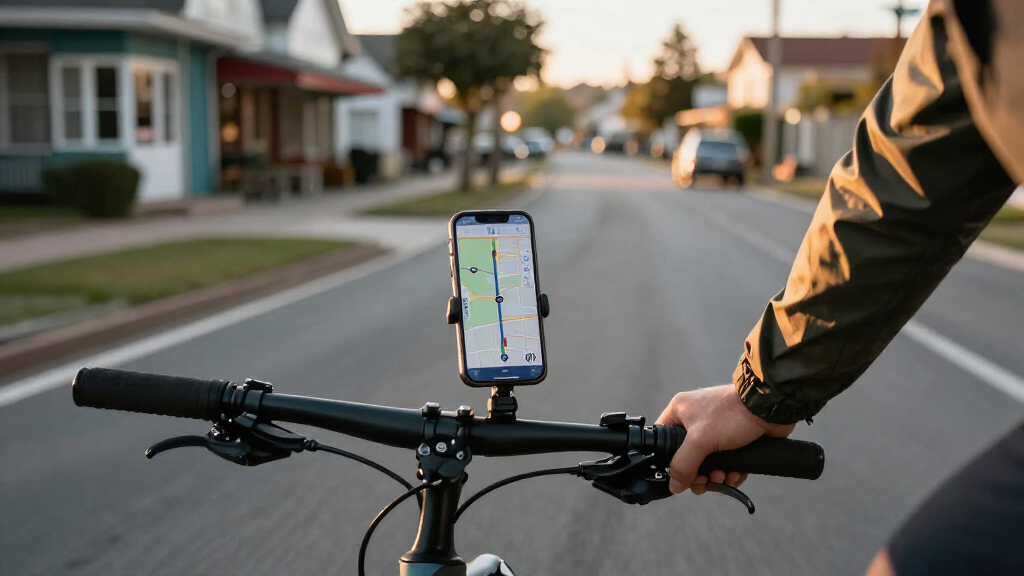
IdeaNavigator AI has outlined a proposed audio walking app that would generate narration based on a user’s live route, including local history, architecture and nature. The concept has not been presented as a launched product; its suggested test is a two-city pilot measuring week-four retention and auditing narration accuracy.
IdeaNavigator AI has proposed testing an audio walking app that generates narration around a user’s route, rather than limiting audio tours to established landmark districts. The concept is an early product proposal, not an announced launch: its suggested first test is to operate in two cities and track repeat use and the accuracy of the generated descriptions.
The proposed app would let a user start a walk and hear narration tied to the route as it unfolds. Suggested content includes local history, building details and unusual features, with the audio reacting at corners or landmarks. The plan also includes selectable themes such as history, architecture and nature, alongside the ability to save favorite routes.
IdeaNavigator AI frames the initial audience narrowly: walkers who want their neighborhoods and travels narrated. Its proposal argues that existing podcasts generally do not respond to a listener’s location, while conventional tour apps tend to focus on designated visitor areas. These are the proposal’s market assumptions; no user research or comparative product data is included.
The suggested business model combines a consumer subscription with a licensing tier for tourism boards. To test the idea, the proposal recommends launching in two cities, measuring walks per week and retention at week four, and reviewing a sample of routes for narration accuracy. No cities, pricing, development schedule or pilot findings are specified.
IdeaNavigator AI · Early Product Proposal
Discover What’s Nearby Through Audio That Follows Your Route
A proposed walking app would generate narration about local history, architecture and nature as a walk unfolds—bringing audio discovery to everyday streets as well as established visitor routes.
This is a concept, not an announced launch. No app, developer, pilot cities or results have been reported.
01 / The proposed experience
A guide that moves with you
A walker starts a route and hears location-aware narration as it develops. The proposed experience combines generated stories, selectable themes and saved routes for residents and travelers curious about their surroundings.
Route-reactive audio
Narration could respond at corners and landmarks, connecting the walker’s location to nearby stories and details.
Three possible themes
Switch between local history, architecture and nature to shape what the route brings into focus.
Saved favorite routes
Keep routes worth revisiting. The proposal centers on walkers who want neighborhoods and travel destinations narrated.
02 / Why this might matter
Between a podcast and a landmark tour
The proposal’s market thesis is that general podcasts do not react to a listener’s location, while conventional tour apps often concentrate on designated visitor areas. Route-generated audio might bring local discovery to ordinary streets, too. These assumptions have not been supported by user research or comparative product data.
Potential listener value
Relevant stories could make familiar blocks or unfamiliar neighborhoods more engaging. Regular use will depend on accuracy, timing and whether the audio adds value without distracting from walking or navigation.
Possible revenue paths
The suggested model pairs a consumer subscription with licensing for tourism boards. No pricing, partners or commercial agreements are specified.
03 / The product thesis
Generate stories for the street ahead
IdeaNavigator AI suggests that language models could draw on public information—such as historical records, architecture data and place listings—to create narration on demand. This could reduce the need to record separate guides for every route, but the technical approach has not been demonstrated.
A focused first use case
The proposed first version serves one need: a walker wants to hear about the surroundings along a route. A small test could help determine whether this workflow deserves further development.
04 / Proposed validation
A two-city test, with clear questions
The suggested pilot would track repeat use and examine whether the generated descriptions are dependable. Cities, schedule, audit standard and acceptable error rate remain unannounced.
Choose two cities
Test a limited set of walking routes. No locations are named.
Count weekly walks
Track how often participants return to take another walk.
Review week four
Measure how many users remain active at the fourth week.
Review route samples
Check generated descriptions for factual accuracy.
05 / What is known
Proposal status, plainly stated
No app name, release date, developer, operating city or pilot result is given. The concept has not been reported as launched, and there is no confirmation that a pilot or development has begun.
06 / Key questions
What readers should know
Has the app launched?
No launch is reported. IdeaNavigator AI describes a proposed product and a recommended two-city test, without naming an app or release date.
How would narration work?
Audio would follow the walker’s route and describe nearby history, buildings and local features, with themes such as architecture and nature.
How would the idea be tested?
The proposed pilot would track walks per week and week-four retention, then audit a sample of route narration for factual accuracy. No results are available.
What remains unknown?
Cities, schedule, developer, pricing and tourism-board partners are unspecified. The proposal does not establish whether users want the service or explain how claims would be verified.
The logic chain
From a walk to a product decision
A Test of Everyday Audio Tours
The proposal addresses a gap between general audio listening and destination-specific tours. If narration can be generated reliably for ordinary streets, an app could make local discovery available beyond the landmark routes that typically receive professionally produced guides. That may appeal both to residents and visitors, although the proposal does not establish demand or show that people would use the service regularly.
The product’s value would depend on more than producing a steady stream of speech. Route-aware narration must be relevant to where someone is, accurate about places and timed so it does not distract from walking or navigation. Measuring repeat walks could indicate whether users find enough value to return; an accuracy audit could expose factual errors before broader deployment.
The proposed tourism-board tier offers a possible institutional revenue stream in addition to subscriptions. But no tourism organizations are identified as partners, and no commercial agreements are reported. The two-city test is presented as a way to examine the concept, not evidence that either revenue model is already working.
Products Worth Considering

Bose QuietComfort Ultra Wireless Noise-Cancelling Over-Ear Headphones with Spatial Audio, White Smoke

Jackery Explorer 300 Portable Power Station, 292Wh

Anker SOLIX C1000 Gen 2 Portable Power Station with 200W Solar Panel
As an affiliate, we earn on qualifying purchases.
Why Route-Generated Audio Now
IdeaNavigator AI argues that advances in large language models could make it possible to generate location-grounded narration on demand from open information such as historical records, architecture data and place listings. The proposal says this could reduce the cost of producing separate recordings for every route, a constraint it associates with audio tours focused on well-known landmarks.
That rationale remains a product thesis rather than a demonstrated technical result in the information provided. No particular model, data provider, mapping system or method for checking generated facts is named. The proposal also does not describe how the app would handle gaps in public records, competing accounts of local history or changes to a location.
The suggested first version is deliberately limited to a single use case: a walker seeking narrated surroundings. The recommended test in two cities would assess whether this narrow workflow merits further development, rather than establish that the wider audio-content market is ready for a new service.
Accuracy, Demand and Pilot Status
No app name, developer, release date or operating cities are given, and there is no confirmation that development or a pilot has begun. The proposal does not provide user interviews, market-size estimates, subscription pricing, tourism-board commitments or results from testing.
Important product questions also remain open: how the app would verify its narration, cite or distinguish uncertain historical details, respond when location data are imprecise, and keep audio useful without distracting walkers. The suggested route audit acknowledges accuracy as a test, but no audit standard or acceptable error rate is set out. Whether the service can provide dependable narration across ordinary neighborhoods is therefore unproven.
Two-City Validation Plan
The next step proposed by IdeaNavigator AI is a two-city test focused on a limited set of walking routes. The plan calls for tracking how many walks users take each week and how many remain active at week four, while reviewing generated narration on a sample of routes for factual accuracy.
No timetable or specific cities have been announced. Any future update would need to clarify whether the pilot went ahead, what criteria were used in the accuracy review, and whether people returned to the app often enough to support a subscription or tourism-board offering. Until those details are available, the concept remains an early proposal rather than a verified product launch.
Source: IdeaNavigator AI
Key Questions
Has the audio walking app launched?
No launch is reported. IdeaNavigator AI describes a proposed product and recommends testing it in two cities; it does not name an app or give a release date.
How would the app’s narration work?
The proposed app would generate audio tied to a walker’s route, with details about history, buildings and local features. It is also envisioned with themed modes such as architecture and nature.
How would the idea be tested?
The suggested pilot would run in two cities, track walks per week and week-four retention, and audit narration accuracy on a sample of routes. No test results are available.
What remains unknown about the proposal?
The cities, schedule, app developer, pricing and any tourism-board partners have not been identified. The proposal also does not explain how generated claims would be verified or report whether users want this service.
Source: IdeaNavigator AI