When architecting for fault tolerance and disaster recovery, you should incorporate redundancy at multiple levels—servers, networks, and data storage—so failures don’t cause system-wide outages. Use load balancing to distribute traffic and automate failover processes for quick recovery. Keep your infrastructure flexible and scalable, backed by regular backups and data replication across regions. Planning and testing recovery procedures regularly help you minimize downtime, ensuring your system stays resilient. Further strategies can enhance your resilience even more.
Key Takeaways
- Incorporate multiple layers of redundancy across hardware, software, and network components to prevent single points of failure.
- Implement load balancing to distribute workloads evenly and reroute traffic during component failures.
- Regularly simulate failure scenarios to test and refine fault tolerance and disaster recovery plans.
- Maintain flexible, scalable infrastructure with automated failover and recovery mechanisms for rapid response.
- Develop and continuously update comprehensive disaster recovery procedures to ensure swift, coordinated responses during incidents.

In today’s digital landscape, building systems that can withstand failures and recover quickly from disasters is vital. You need to design your architecture with resilience in mind, guaranteeing that a single point of failure doesn’t cripple your entire operation. Fault tolerance isn’t just a feature; it’s a fundamental aspect of reliable system design. When you architect for fault tolerance, you create a framework where components work together redundantly, so if one fails, others seamlessly take over. This approach minimizes downtime and maintains service availability, even under adverse conditions. You should incorporate multiple layers of redundancy, such as duplicate servers, storage, and network paths, to prevent outages caused by hardware or software failures. Load balancing plays a pivotal role here, distributing workloads across multiple resources to avoid overloading any single component. When a failure occurs, load balancers can reroute traffic instantly, keeping your system operational without interruption.
You also need to anticipate various failure scenarios—hardware crashes, network outages, power failures, or software bugs—and prepare your system to handle these gracefully. Regular testing of your fault tolerance measures is essential; simulate failures to identify weaknesses and refine your response strategies. Implement health checks and automatic failover mechanisms that detect issues in real-time and trigger swift recovery processes. These mechanisms should be automated, so your team isn’t bogged down by manual intervention during critical moments. It’s equally important to keep your infrastructure flexible and scalable. As demand fluctuates, your system should adapt without compromising resilience. Cloud-based solutions often provide the agility needed for this, allowing you to spin resources up or down quickly based on need.
To further enhance system robustness, consider integrating redundant components like backup power supplies and multiple data centers to ensure continuous operation during unexpected disruptions. Another key aspect is data durability. You must guarantee that your data is protected from corruption or loss. Regular backups, replication across multiple regions, and versioning help safeguard your information. When disaster strikes, your recovery plan should kick in immediately, restoring data and services with minimal delay. You should document your disaster recovery procedures clearly, so everyone on your team knows their role during an incident. Also, review and update these plans periodically to account for changes in your infrastructure or business requirements. By proactively architecting for fault tolerance and disaster recovery, you reduce risks and enhance your system’s resilience. This foresight not only keeps your operations running smoothly but also builds trust with your users and stakeholders, knowing your infrastructure can handle unexpected challenges confidently.

Basic Setup and Securing of Citrix NetScaler ADC
As an affiliate, we earn on qualifying purchases.
As an affiliate, we earn on qualifying purchases.
Frequently Asked Questions
How Do Costs Impact Fault Tolerance and Disaster Recovery Strategies?
Costs considerably influence your fault tolerance and disaster recovery strategies. Higher expenses often mean investing in redundant systems, data replication, and backup solutions, which can improve resilience. However, budget constraints might limit these options, forcing you to prioritize critical systems and adopt cost-effective measures. Balancing costs with desired availability levels is essential; too little investment risks downtime, while excessive spending may strain your resources.
What Are the Latest Tools for Automating Disaster Recovery?
Think of disaster recovery tools as your safety net, catching you when systems fall. You can now automate recovery with tools like Zerto, Veeam, and Azure Site Recovery, which streamline failover processes and minimize downtime. These platforms offer real-time replication, orchestration, and testing, ensuring your business stays resilient. By leveraging these advanced tools, you turn chaos into controlled recovery, keeping your operations running smoothly even when disaster strikes.
How to Prioritize Data Recovery in Critical Systems?
You should prioritize data recovery for critical systems by identifying their core functions and dependencies first. Focus on restoring essential data that supports these functions, ensuring minimal downtime. Use automated recovery tools to speed up the process. Establish clear recovery time objectives (RTOs) and recovery point objectives (RPOs). Regularly test your recovery plans to confirm you can quickly and effectively restore your most crucial systems and data during an outage.
What Are Common Pitfalls in Designing Fault-Tolerant Architectures?
You might be walking a tightrope when designing fault-tolerant architectures, risking pitfalls like overcomplicating systems or neglecting testing. You could fall into the trap of assuming hardware will always work perfectly or underestimate recovery times. Overlooking scalability and ignoring cost implications also hampers resilience. To avoid these pitfalls, plan thoroughly, test rigorously, and keep your architecture flexible enough to adapt to unforeseen failures.
How Does Compliance Influence Disaster Recovery Planning?
Compliance requirements crucially influence your disaster recovery planning by dictating specific standards and procedures you must follow. You need to guarantee your plans align with legal and regulatory mandates, which may involve data encryption, regular backups, and detailed documentation. Failing to incorporate compliance can lead to penalties or data breaches. As a result, you carefully design your DR strategies to meet these standards, balancing risk management with operational continuity.

Silverstone Technology RM43-324-RS 4U 24-Bay 2.5" / 3.5" HDD/SSD rackmount Storage Server Chassis with Mini-SAS HD SFF-8643 12 Gb/s Interface, SST-RM43-324-RS
Backplane support for 24 port SAS / SATA, 2.5" / 3.5" drives and 12 Gb/s Mini-SAS HD SFF-8643…
As an affiliate, we earn on qualifying purchases.
As an affiliate, we earn on qualifying purchases.
Conclusion
By embracing fault tolerance and disaster recovery strategies, you craft a resilient system that gracefully navigates unforeseen challenges. While perfection remains elusive, your proactive approach guarantees minimal disruption and steady performance. Remember, building in subtle layers of protection allows your infrastructure to gently recover from setbacks, maintaining trust and stability. In this way, your thoughtful architecture becomes a quiet guardian—steadily supporting your goals, even when the unexpected whispers its presence.
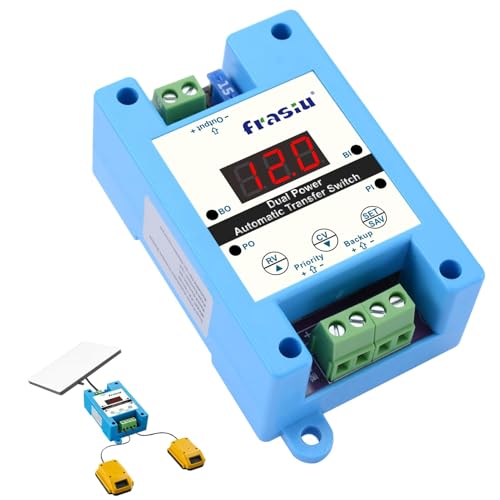
DC Automatic Transfer Switch 5–40V 13A,Seamless Failover Power Switch for Starlink Mini & Router, Dual Battery Auto Backup for RV Solar & CCTV, Prevent Reboot, Reverse & Overload Protection
【≤300μs Seamless Switching】:Stop Router Reboots During Power Cuts. With a lightning-fast switching speed of ≤300μs (0.3ms), your devices…
As an affiliate, we earn on qualifying purchases.
As an affiliate, we earn on qualifying purchases.

Windows 10 Recovery: Complete Guide: Build 50 Backup Solutions | Including Disaster Recovery
As an affiliate, we earn on qualifying purchases.
As an affiliate, we earn on qualifying purchases.