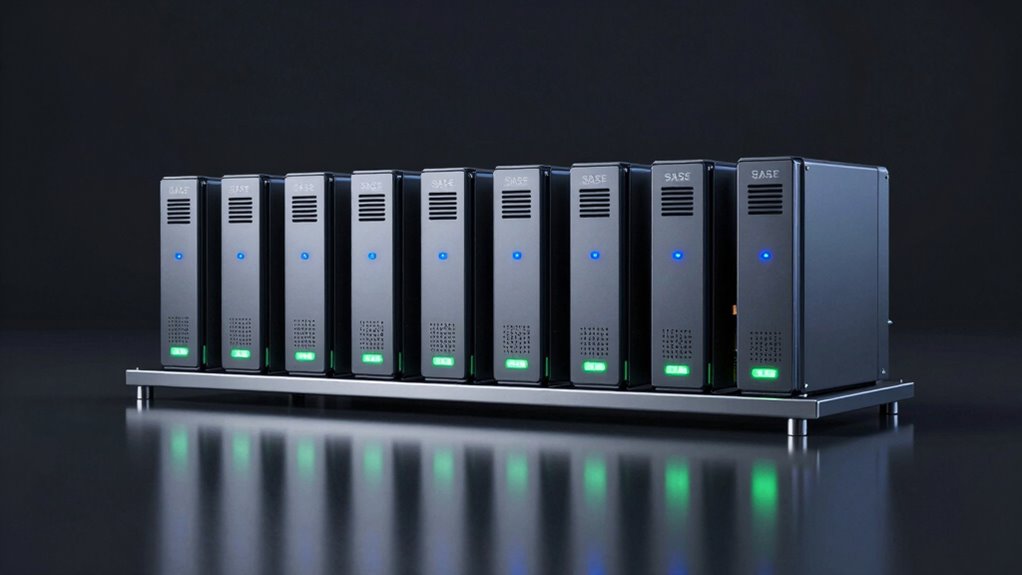

You’re noticing more attention on SASE edge appliances because they help secure and improve network performance at the edge, simplifying the management of complex, cloud-driven data flows. They protect remote workers, branch offices, and IoT devices with unified security functions like secure web gateways and zero-trust access. By reducing latency and supporting faster local data processing, they enhance user experience and security. Keep exploring to see how these solutions can transform your network security and efficiency.
Key Takeaways
- They consolidate multiple security functions into a single platform, simplifying management and reducing complexity.
- They enhance network performance by minimizing latency and enabling local data processing at the edge.
- They improve security for remote workers, IoT devices, and branch offices through unified, consistent policies.
- They support rapid data flow and cloud adoption, addressing modern organizations’ evolving network demands.
- They provide real-time visibility and threat mitigation, strengthening overall security posture.
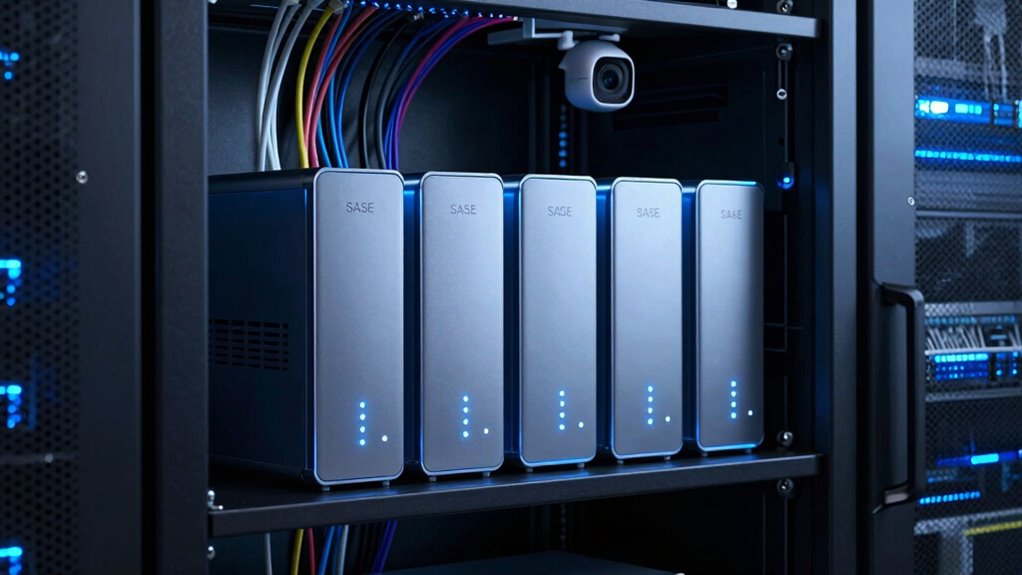
As organizations increasingly shift to cloud-first strategies, SASE edge appliances have become essential for securing and optimizing network access at the edge. You need solutions that can handle the complexities of modern networks, where data flows rapidly between users, devices, and cloud services. SASE, or Secure Access Service Edge, consolidates security functions and networking capabilities into a single, cloud-delivered platform. This integration simplifies management, reduces latency, and enhances overall security. It’s no wonder that more organizations are turning to SASE edge appliances to meet their evolving needs.
One of the key reasons for the rising attention to SASE edge appliances is their ability to amplify cloud security. As you connect remote workers, branch offices, and IoT devices to cloud resources, traditional security models struggle to keep pace. SASE appliances provide a unified security approach that includes secure web gateways, cloud access security brokers (CASB), data loss prevention, and zero-trust network access. By deploying these appliances at the network edge, you guarantee that security policies are enforced consistently, regardless of where users or devices are located. This reduces the risk of breaches, insider threats, and malware infiltration, giving you peace of mind as your organization expands its cloud footprint.
In addition to enhancing cloud security, SASE edge appliances markedly improve network optimization. You no longer need to route all traffic through central data centers, which can introduce latency and bottlenecks. Instead, these appliances process and secure data locally at the edge, enabling faster access to cloud applications and services. This local processing decreases the load on your core network, improves user experience, and boosts productivity. You get real-time visibility into network activity, allowing you to quickly identify and resolve issues before they impact end-users. By understanding the underlying security architecture of SASE solutions, organizations can implement more effective security measures at the edge and adapt to emerging threats. Moreover, understanding the underlying security architecture of SASE solutions helps organizations implement effective security measures at the edge, especially as cloud adoption continues to grow.
As an affiliate, we earn on qualifying purchases.
Frequently Asked Questions
How Do SASE Edge Appliances Differ From Traditional Security Solutions?
SASE edge appliances differ from traditional security solutions by offering seamless cloud integration and centralized management, making security more flexible and scalable. They prioritize user authentication and real-time threat detection directly at the network edge, reducing latency and improving performance. Unlike conventional setups that rely on separate, on-premises tools, SASE appliances deliver unified security that adapts to your modern, cloud-first environment, simplifying your security posture.
What Are the Deployment Costs of SASE Edge Appliances?
Deploying SASE edge appliances is like planting a seed—you’ll see costs grow over time. You should perform a thorough cost analysis and vendor comparison to understand upfront expenses, ongoing maintenance, and scalability. While initial costs may vary based on hardware and deployment size, many vendors offer scalable solutions that reduce expenses as your network grows. Careful planning helps you balance investment with long-term security benefits.
Can SASE Edge Appliances Integrate With Existing Network Infrastructure?
Yes, SASE edge appliances can integrate with your existing network infrastructure. They support cloud integration seamlessly, allowing you to extend security and access controls across on-premises and cloud environments. You’ll find it easier to manage user access from various locations, ensuring security policies are consistently applied. This integration helps streamline your network operations while enhancing security, boosting efficiency for remote and hybrid work setups.
How Scalable Are SASE Edge Appliances for Growing Businesses?
Like a chameleon adapting to its environment, SASE edge appliances scale effortlessly for growing businesses. You can expand your network seamlessly, leveraging cloud integration to accommodate more users and devices without sacrificing user experience. Their modular design ensures adaptability, making it easy to add or upgrade features as your needs evolve. This flexibility keeps your network agile and ready for future growth, all while maintaining ideal security and performance.
What Are the Maintenance Requirements for SASE Edge Appliances?
You need to perform regular maintenance on SASE edge appliances, which includes remote management to monitor and troubleshoot devices efficiently. Firmware updates are vital for security and performance; you should schedule them periodically to keep the appliances current. Additionally, check logs and system health reports regularly. This proactive approach guarantees your appliances operate smoothly, stay secure, and minimize downtime, making remote management and firmware updates fundamental parts of your maintenance routine.
As an affiliate, we earn on qualifying purchases.
Conclusion
So, next time you’re marveling at the cutting-edge tech in your office, just thank your SASE edge appliances. They’re the silent superheroes, tirelessly keeping your data safe while you binge your favorite shows without a hiccup. Who knew that tiny devices tucked away in corners could be the real MVPs of cybersecurity? As cyber threats grow bolder, these appliances are here to save the day—probably with a cape and a secret handshake too.
As an affiliate, we earn on qualifying purchases.
As an affiliate, we earn on qualifying purchases.