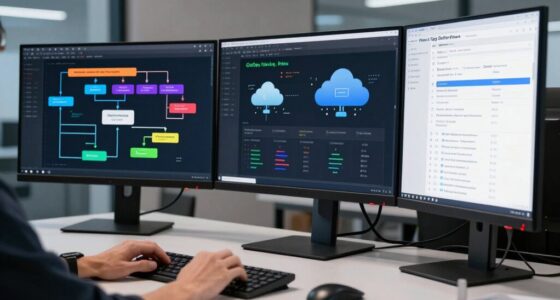
AI feature flags let you control model deployment in real time, so you can turn models on or off without full redeployments. They help you test new features with smaller user groups, monitor performance, and quickly disable problematic models—reducing risks and enhancing user experience. With feature flags, you gain confidence in your rollout process and can make data-driven decisions. Want to discover how they can transform your deployment strategies? Keep exploring to find out more.

Get tech for your team delivered free — and shop member deals
- Fast, free delivery on millions of items
- Access to Prime Big Deal Days deals on October 6–7
- Prime Video, Amazon Music and more included
Key Takeaways
- Enable quick toggling of models to address issues without full redeployments, reducing downtime.
- Support targeted rollouts to specific user segments, allowing safer and more controlled deployment.
- Improve user experience by minimizing disruptions through immediate disablement of underperforming models.
- Facilitate real-time performance monitoring and data-driven decisions during deployment.
- Reduce deployment risks and simplify rollback processes, ensuring safer and more stable model releases.
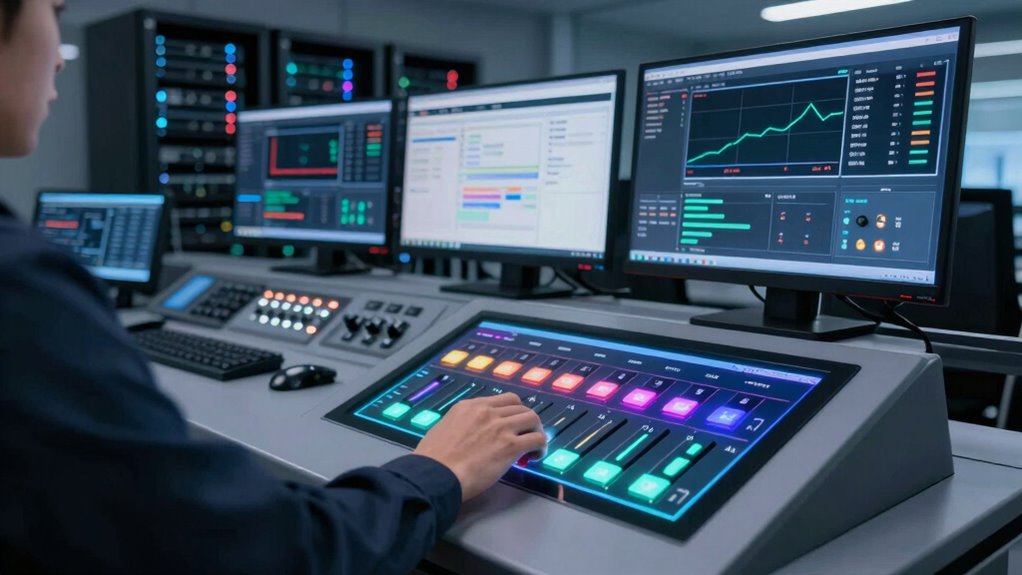
Implementing AI feature flags in production allows you to control and deploy machine learning models more safely and efficiently. These flags give you the power to toggle features on or off without needing to redeploy your entire application, which directly impacts your deployment speed. When you can disable a problematic model instantly, you avoid prolonged outages or degraded user experience, guaranteeing your application remains reliable and responsive. This agility is especially critical in AI-driven environments where models continuously evolve, and swift adjustments are often necessary to maintain performance and accuracy.
By integrating feature flags into your AI deployment process, you gain granular control over how and when models are active for different user segments. This targeted rollout means you can test new features or models with smaller user groups first, gathering feedback and monitoring performance without risking your entire user base’s experience. As a result, your deployment speed improves because you’re not waiting for lengthy, full-scale releases. Instead, you can make incremental updates, quickly turning features on or off based on real-time data. This iterative approach helps you respond faster to issues and refine models before a broader launch. Additionally, model performance can be closely tracked and adjusted in real-time to ensure optimal results.
From a user experience perspective, AI feature flags are indispensable. They allow you to deliver a seamless experience by minimizing disruptions caused by model errors or unexpected behavior. If a new model isn’t performing as expected, you can disable it immediately, preventing negative impacts on your users. Conversely, if a model demonstrates promising results, you can enable it gradually, gradually enhancing the user experience without startling your audience with sudden changes. This controlled rollout ensures your users encounter a stable, high-quality product, fostering trust and satisfaction. Incorporating continuous monitoring further ensures that any issues are detected early, allowing for swift corrective actions.
Furthermore, feature flags help you manage risk more effectively. Instead of deploying a new AI model blindly, you can monitor its performance in real-world conditions, making data-driven decisions to keep or disable it. This reduces the chances of deploying models that might unintentionally harm user experience or lead to biased or inaccurate outcomes. It also simplifies rollback procedures, saving you time and resources compared to traditional deployment methods. Incorporating early model evaluation strategies can further enhance your confidence in deploying new models safely.
In essence, AI feature flags in production are crucial for balancing innovation with stability. They enable faster deployment cycles, improve user experience by reducing potential disruptions, and provide the flexibility needed to adapt quickly to changing conditions. Incorporating comprehensive model monitoring ensures you stay informed about model performance and safety, making your deployment process more robust. By adopting feature flags, you transform your AI deployment process into a more controlled, responsive, and user-centric operation, which ultimately leads to better results for both your team and your users.
AI feature flag management software
As an affiliate, we earn on qualifying purchases.
As an affiliate, we earn on qualifying purchases.
Frequently Asked Questions
How Do AI Feature Flags Differ From Traditional Feature Flags?
AI feature flags differ from traditional ones because they manage model deployment and adapt to continuous integration. You can toggle AI features on or off based on model performance, data quality, or user feedback, which isn’t common with standard flags. This flexibility helps you control complex AI behaviors in real-time, ensuring smoother updates and better reliability during production rollouts. It’s all about maintaining control over evolving AI models seamlessly.
What Are Common Challenges in Managing AI Feature Flags?
Managing AI feature flags can be challenging because you need to monitor for bias detection and data drift constantly. Bias detection helps you identify unfair outcomes, while data drift reveals changes in input data that could impact model performance. You must implement robust systems to adjust flags dynamically, ensuring your AI behaves ethically and accurately. Balancing these concerns requires ongoing vigilance and fine-tuning to maintain reliable, fair AI in production.
Can AI Feature Flags Improve Model Interpretability?
Did you know that 60% of AI projects see improved model transparency with feature flags? You can use AI feature flags to enhance interpretability by enabling or disabling features dynamically, which helps you pinpoint sources of bias and understand model behavior better. This approach allows for real-time bias detection and fosters more transparent, trustworthy models, ultimately boosting your confidence in deploying AI solutions safely and ethically.
How Do AI Feature Flags Impact User Experience?
AI feature flags enhance user experience by enabling you to tailor personalization optimization and quickly adjust features based on user feedback. They allow you to mitigate bias by toggling sensitive model behaviors, ensuring fairer interactions. With feature flags, you can test new AI functionalities incrementally, reducing disruptions and maintaining seamless experiences. This flexibility helps you deliver more relevant content and improve user satisfaction without risking widespread issues.
What Tools Are Best for Implementing AI Feature Flags?
You should consider tools like LaunchDarkly, Flagsmith, and Optimizely for implementing AI feature flags. These platforms support AI governance by allowing you to control and monitor feature rollouts, ensuring ethical considerations are met. They enable you to activate or disable features dynamically, reducing risks and maintaining compliance. Using these tools helps you manage AI features responsibly while delivering a seamless user experience during production rollouts.
machine learning model deployment tools
As an affiliate, we earn on qualifying purchases.
As an affiliate, we earn on qualifying purchases.
Conclusion
By using AI feature flags, you gain the flexibility to control and refine your AI features in real-time, minimizing risks and maximizing user satisfaction. Imagine deploying a new recommendation engine but instantly disabling it if it causes unexpected results, just like a major e-commerce platform did during a holiday sale. This agility guarantees you stay adaptable, responsive, and confident in your AI rollout, ultimately leading to smoother launches and happier users.
real-time AI model monitoring tools
As an affiliate, we earn on qualifying purchases.
As an affiliate, we earn on qualifying purchases.
As an affiliate, we earn on qualifying purchases.
Halloween Picks
halloween
As an affiliate, we earn on qualifying purchases.