

Chaos engineering helps you build resilient systems by deliberately introducing failures to uncover vulnerabilities before they lead to outages. You start with small, controlled experiments that test how your system responds under stress, gradually increasing complexity. Automated tools assist in running these scenarios efficiently, fostering a proactive culture focused on learning from failures. By adopting this approach, you reinforce your system’s robustness and ensure reliable service even amid unpredictable disruptions—discover more about this powerful strategy below.
Key Takeaways
- Chaos engineering intentionally introduces failures to identify vulnerabilities and improve system resilience before real outages occur.
- It employs a systematic, incremental testing approach to safely simulate failures and assess system responses.
- Automation tools facilitate regular, controlled chaos experiments, enabling rapid detection and response to potential issues.
- Building a resilient system involves forming hypotheses, conducting controlled failures, and iteratively refining architecture.
- Promoting a proactive failure management culture helps teams design robust systems capable of withstanding unpredictable disruptions.

Have you ever wondered how companies guarantee their systems can withstand unexpected failures? The answer lies in a practice called chaos engineering. This approach involves intentionally introducing failures into a system to observe how it responds. Instead of waiting for a real outage to reveal vulnerabilities, you proactively test your system’s resilience. By doing so, you identify weaknesses and improve the system before a crisis occurs. Chaos engineering helps you understand the limits of your infrastructure, ensuring it can handle unpredictable conditions.
Chaos engineering proactively tests system resilience by intentionally introducing failures to identify weaknesses before crises occur.
When you implement chaos engineering, you start by forming hypotheses about how your system should behave under stress. For example, you might suspect that shutting down a particular server won’t impact the overall performance. Then, you simulate the failure in a controlled environment. You might disable a server, cut off network connections, or overload a component. The goal is to see if your system can adapt, recover, and continue functioning smoothly. If it doesn’t, you gather data to pinpoint the specific issues causing the failure.
It’s important to approach chaos engineering systematically. You don’t want to cause widespread disruptions; instead, you perform these tests gradually. Start with small, low-risk experiments in a testing environment or during off-peak hours. As you gain confidence, you can escalate to more complex failures or run simulations in production. This iterative process helps you build trust in your system’s resilience and ensures your team is prepared for real-world disruptions.
Another key aspect is automation. You can use tools to run chaos experiments automatically, continuously testing different failure scenarios. These tools can kill processes, simulate network latency, or even introduce resource constraints. Automation makes it easier to conduct regular tests, monitor outcomes, and quickly respond to issues. It also allows your team to focus on fixing vulnerabilities rather than manually orchestrating failure scenarios.
Additionally, integrating appliances connection strategies can enhance your resilience testing by ensuring that your infrastructure supports diverse hardware and configurations during chaos experiments. Ultimately, chaos engineering is about fostering a culture of resilience. It encourages you to think proactively about failures rather than reacting after they happen. By intentionally exposing your system to stress, you learn how to design more robust architectures. This mindset helps your organization deliver reliable services, even amid the chaos of real-world disruptions. With chaos engineering, you turn failures into opportunities for learning, strengthening your systems against the unexpected.

The Agentic AI Advantage: A Comprehensive Collection of Practical Methods, Real-World Projects and Deployment Tactics to Build Reliable AI Agents, Reduce Chaos & Take Control of Your Digital Future
As an affiliate, we earn on qualifying purchases.
As an affiliate, we earn on qualifying purchases.
Frequently Asked Questions
How Do You Measure Chaos Engineering Success?
You measure chaos engineering success by observing how quickly your system recovers from failures and how effectively it maintains performance under stress. Track metrics like downtime, error rates, and system latency before, during, and after experiments. Successful chaos engineering shows improved resilience over time, with your team identifying weaknesses early and implementing fixes. Regularly review these results to confirm your system becomes more robust and reliable with each test.
What Tools Are Best for Beginner Chaos Experiments?
You should start with tools like Chaos Monkey, which is simple to use and integrates well with cloud platforms, or Gremlin, offering user-friendly interfaces and guided experiments. Both tools provide easy setup and clear documentation, making them ideal for beginners. You can also explore LitmusChaos for Kubernetes environments. These tools help you learn chaos engineering fundamentals without overwhelming complexity, allowing you to build confidence before moving to more advanced experiments.
Can Chaos Engineering Cause System Downtime?
Yes, chaos engineering can cause system downtime if not done carefully. You might intentionally introduce failures to test resilience, which could temporarily disrupt services. However, with proper planning, monitoring, and controlled experiments, you can minimize risks. Always start in a staging environment, gradually increase scope, and have rollback plans ready. This approach helps you learn from failures without profoundly impacting your users or business operations.
How Often Should Chaos Tests Be Conducted?
You should conduct chaos tests regularly, ideally once a month or quarterly, depending on your system’s complexity and stability. Frequent testing helps identify vulnerabilities before they cause real issues. However, make certain your team is prepared to monitor and respond quickly. Start with controlled experiments and gradually increase frequency as your team gains confidence. Balancing testing frequency with system stability is key to building resilience without disrupting users.
What Industries Benefit Most From Chaos Engineering?
Think of your industry as a ship steering unpredictable seas; chaos engineering acts as your storm preparedness. Industries like finance, healthcare, and e-commerce benefit most because their systems must stay resilient amid constant disruptions. By intentionally testing failure scenarios, you identify weaknesses before real crises strike. This proactive approach keeps your operations steady, your customers trusting, and your business sailing smoothly through turbulent waters.
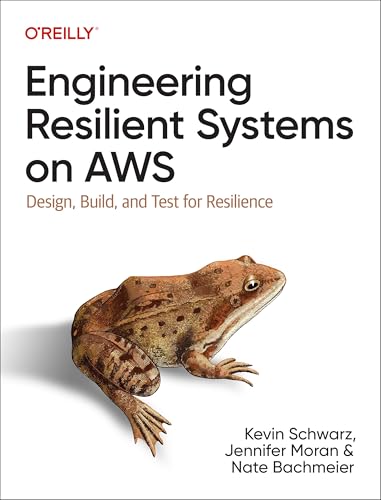
Engineering Resilient Systems on AWS: Design, Build, and Test for Resilience
As an affiliate, we earn on qualifying purchases.
As an affiliate, we earn on qualifying purchases.
Conclusion
Embracing chaos engineering might feel risky, but it’s the key to building resilient systems. When you intentionally introduce failures, you discover weaknesses before they impact users. This proactive approach proves that resilient systems aren’t built by avoiding failure—they’re built by learning from it. So, trust in the process. By questioning the theory that failure is harmful, you unleash the power to create systems that endure through anything, turning chaos into strength.

Gaobige Network Tool Kit for Cat5 Cat5e Cat6, 11 in 1 Portable Ethernet Cable Crimper Kit with a Ethernet Crimping Tool, 8p8c 6p6c Connectors rj45 rj11 Cat5 Cat6 Cable Tester, 110 Punch Down Tool
Complete Network Tool Kit for Cat5 Cat5e Cat6, Convenient for Our Work: 11-in-1 network tool kit includes a…
As an affiliate, we earn on qualifying purchases.
As an affiliate, we earn on qualifying purchases.
Cloud Platform Reliability Engineering: Stepwise Exploration of Monitoring Failover and Recovery (Applied Game, Embedded & Cloud Systems Series)
As an affiliate, we earn on qualifying purchases.
As an affiliate, we earn on qualifying purchases.