🔍 Read the full analysis: 10 Graphics Cards To Consider For Gaming And Pro Projects In 2027 on ThorstenMeyerAI.com

Get business pricing on tech for your team
- Business-only prices and quantity discounts
- Tax-exempt purchasing
- Multiple users, one account, clear invoices
TL;DR
A buyer’s guide from ThorstenMeyerAI.com compares 10 graphics cards, from the ASUS ROG Astral RTX 5080 to older, low-cost display adapters. Its rankings and performance descriptions are editorial assessments, not independently verified benchmark results; several 2027 product and support claims need confirmation.
ThorstenMeyerAI.com has published a 10-card graphics-card guide for gaming and professional projects, ranking current-generation models alongside older budget and workstation options. It names the ASUS ROG Astral GeForce RTX 5080 its overall pick, but the material supplied does not include benchmark data, prices or independent testing to substantiate the ranking.
The guide compares cards by GPU architecture, memory, cooling, power needs and connectivity. It favors newer NVIDIA RTX 50-series and AMD RX 9000-series hardware for features such as ray tracing and AI-assisted image reconstruction, while describing several older models as better suited to display output or specific legacy setups than modern games. For another graphics-card shortlist, see these graphics cards for gaming, AI, and creative work.
Its recommendations include the RTX 5080, RTX 5060 Ti, RX 9070 XT, RX 9070, RTX 3060, RX 580, RX 550 and GT 730, plus a PNY RTX 5080 and a VisionTek RX 580 variant. The source identifies 16GB of memory on the ASUS Dual RTX 5060 Ti series as a benefit, and points to the VisionTek card’s multiple mini-DisplayPort connections for workstation use.
The source says its selection considered memory bandwidth, thermal efficiency and form factor, alongside architecture. It does not provide a scoring method, test setup, prices or frame-rate comparisons. The buying advice should consequently be read as an editorial shortlist rather than a controlled comparison of measured performance or value. Buyers focused on AI workloads can also review graphics cards for AI efficiency.
The 10 picks
- 1
 ASUS ROG Astral GeForce RTX 5080 OC Edition 16GB GDDR7 Graphics CardView on Amazon →
- 2
 PNY NVIDIA GeForce RTX 5080 OC Triple-Fan Graphics CardView on Amazon →
- 3
 ASUS Prime Radeon RX 9070 XT 16GB GDDR6 OC Edition Gaming Graphics CardView on Amazon →
- 4
 ASUS Prime Radeon RX 9070 EVO 16GB GDDR6 OC Gaming Graphics CardView on Amazon →
- 5
 ASUS Dual GeForce RTX 5060 Ti 16GB GDDR7 White OC Edition Graphics CardView on Amazon →
- 6
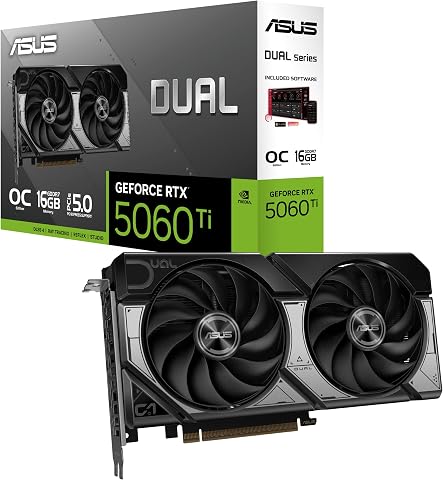 ASUS Dual GeForce RTX 5060 Ti 16GB GDDR7 OC Edition Gaming Graphics CardView on Amazon →
- 7
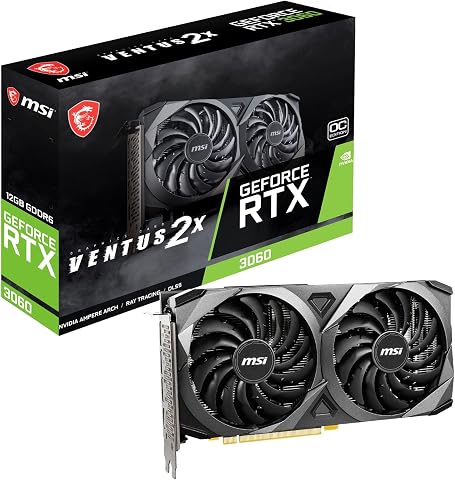 MSI GeForce RTX 3060 Ventus 2X 12G OC V1 Graphics CardView on Amazon →
- 8
 VisionTek AMD Radeon RX 580 8GB Graphics Card with 6 Mini DisplayPort OutputsView on Amazon →
- 9
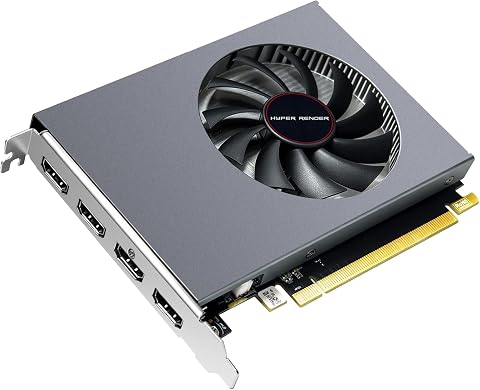 RX 550 4GB GDDR5 Graphics Card 4 HDMI GPU Tarjeta Gráfica 4 Port Video cardView on Amazon →
- 10
 Vandossy GeForce GT 730 4GB GDDR5 Graphics Card with 4 HDMI PortsView on Amazon →
Match the GPU to the Workload
The list highlights a practical buying divide: high-end gaming and creative workloads can benefit from newer features and more memory, while basic multi-monitor use may not justify an expensive gaming card. A GPU that suits one task may be a poor fit for another; professional software can depend on vendor-specific acceleration, and gaming performance varies by resolution and settings.
Compatibility can also change the real cost of an upgrade. The guide warns that large, power-hungry cards may require case clearance, stronger cooling and a suitable power supply. Buyers should check the exact card’s dimensions and manufacturer requirements rather than relying on broad wattage figures or assumptions about a model family.
Products Worth Considering

Samsung Galaxy Tab A11+ 11-Inch Tablet, 6GB RAM, 128GB Storage, Expandable Storage, Gray

Samsung 32-Inch Odyssey G5 (G51F) QHD 180Hz Gaming Monitor

Sonos Roam Portable Bluetooth and Wi-Fi Speaker, Black
As an affiliate, we earn on qualifying purchases.
How the Ten Picks Differ
The guide places the ASUS ROG Astral RTX 5080 in the premium category, citing its cooling and overclocking headroom, and presents the ASUS Dual RTX 5060 Ti series as a less costly option with 16GB of GDDR7. It describes AMD’s RX 9070 XT as an alternative for rasterization-heavy gaming. These are the source’s assessments; no comparative test results accompany them.
At the other end, the RX 550 and GT 730 are framed as display-output cards for light workloads, not recommendations for demanding new games. The RX 580 is included for particular multi-display or legacy needs. The source also says older cards may lack newer features or support for recent games, but gives no model-specific driver end dates or current compatibility documentation.
The guide argues that 16GB of VRAM can help with higher-resolution games and creative workloads. Actual requirements depend on the application, resolution, quality settings and project size. Memory capacity alone does not establish that a card will deliver a particular frame rate or professional-workflow performance.
“The main tradeoff lies between paying for cutting-edge architecture and accepting older technology for cost savings.”
— ThorstenMeyerAI.com guide
Prices and Benchmarks Are Missing
The source material does not state when the guide was tested, what prices were used, or whether the listed models are currently available in each market. It offers no benchmark methodology, game list, workload results or direct measurements of temperatures, noise and power draw. Its descriptions of cooling, performance and value therefore remain editorial claims rather than independently demonstrated results.
Some forward-looking language also needs caution: the guide is framed around 2027 buying decisions, but provides no dated product roadmap or confirmation of future availability. Its statements about driver support and the growing importance of 16GB of memory are not paired with vendor documentation or application-specific testing. Buyers should verify current specifications and support with manufacturers and software providers.
Verify Before You Buy
The practical next step is to compare the exact card model against current retail prices, independent benchmarks and vendor specifications. Check whether the intended games or applications use features such as ray tracing, CUDA or video encoding, then confirm case dimensions, connector requirements and recommended power supply capacity.
Because the guide supplies no price or testing updates, its rankings should be treated as a starting shortlist, not a final purchasing verdict. Availability and software support may change; readers should recheck those details close to purchase.
Key Questions
Which graphics card does the guide rank first?
ThorstenMeyerAI.com names the ASUS ROG Astral GeForce RTX 5080 its overall pick, citing cooling and overclocking headroom. The supplied material includes no benchmark results to independently verify that ranking.
Does the guide recommend the RX 550 or GT 730 for gaming?
No. It describes both as cards for display output and light tasks, rather than modern gaming. Check current software requirements before using either for a specific application.
Is 16GB of VRAM necessary?
Not for every user. The guide presents 16GB as useful for some high-resolution gaming and creative workloads, but requirements depend on the game, settings, resolution and project. Capacity alone does not determine performance.
Are the guide’s rankings based on benchmark testing?
The provided source describes selection criteria but gives no test setup, scores, game comparisons or prices. Its rankings should be treated as editorial recommendations, not a published benchmark comparison.
Source: ThorstenMeyerAI.com