
📊 Full opportunity report: How Men Can Monitor Skincare Habits With A Glow-Up Tracker on IdeaNavigator AI — validation score, market gap, and execution plan.

Get business pricing on tech for your team
- Business-only prices and quantity discounts
- Tax-exempt purchasing
- Multiple users, one account, clear invoices
TL;DR
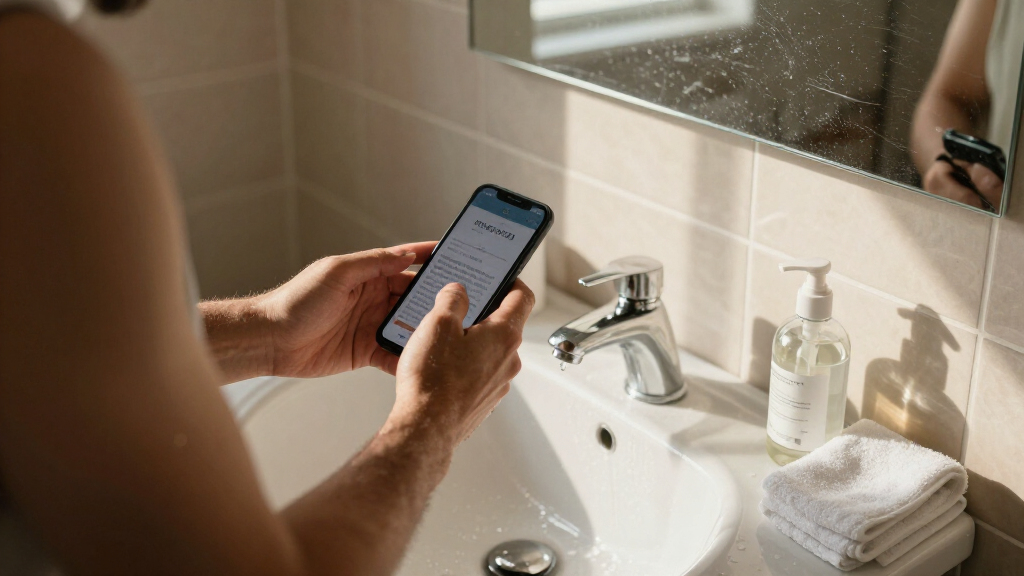
IdeaNavigator AI has outlined a proposed app concept for men who want to track whether a skincare routine is working. The suggested first test compares men’s-training branding with neutral branding; no app launch, user results or market data are reported.
IdeaNavigator AI has proposed a skincare-tracking app for men built around weekly guided selfies, routine logs and visual progress reports. The concept is aimed at men newly investing in skincare who want a way to judge whether their routines are helping, but the proposal describes an idea to validate, not a launched product or a tested business.
The proposed first version would ask users to take weekly guided selfies and track three visible measures: skin clarity, texture and dark circles. It would pair those photos with routine logging and streaks, then present progress cards using language closer to training metrics than conventional beauty marketing. The material does not specify how the scores would be calculated or whether they would be generated by software, human review or a combination.
The intended user is a man who has recently started caring for his skin and wants a clear way to answer, “Is this working?” The proposal argues that existing beauty apps may not appeal to that audience because of their design, tone and marketing. That is a product hypothesis, not a documented finding from user research: no interviews, survey results or conversion data are included.
The suggested business model combines a subscription with affiliate recommendations for products linked to gaps identified in a user’s tracking. IdeaNavigator AI recommends validating demand before building a fuller product: present the same photo-capture concept with men’s-training branding and with neutral branding, then compare conversion and retention across audience segments. No test has been reported, and no pricing, product partners or launch schedule are given.
Testing Whether Metrics Attract Men
The proposal focuses on a specific adoption question: whether men who are new to skincare will engage more with progress tracking presented as a scoreboard or training plan than with familiar beauty language. If validated, that positioning could help a product distinguish itself in a crowded personal-care app landscape. If it is not, the core obstacle may be less about branding and more about whether users want to photograph and monitor their skin regularly.
The idea also ties its commercial model to the measurements it offers. Recommendations based on tracked concerns could make product discovery more relevant, while affiliate links create a potential revenue stream alongside subscriptions. That arrangement could also affect users’ trust: a recommendation connected to a commercial link is not automatically an independent assessment. The proposal does not explain how recommendations would be selected, disclosed or separated from any scoring.
For readers, the key distinction is between a suggested workflow and evidence of effectiveness. Weekly photos and routine records could help users notice changes over time, but the concept provides no clinical validation that its proposed categories or scores can measure skin health, identify causes, or show that a particular product worked. Those details would matter before treating an app’s progress card as more than a tracking aid.
Products Worth Considering

LG UltraGear 25G590B-B 25-Inch Full HD 1000Hz Gaming Monitor

LG UltraGear 27-inch QHD OLED Gaming Monitor, 240Hz

LG UltraGear 32GX850A-B 32-inch 4K UHD OLED Gaming Monitor
As an affiliate, we earn on qualifying purchases.
A Narrow First Skincare Workflow
The concept frames the opportunity as men’s grooming technology and recommends starting with one buyer rather than attempting to serve every skincare user. Its initial audience is not all men, but people newly committed to a routine who want visible feedback. This narrow framing shapes the proposed minimum viable product: a repeated photo, a small set of tracked features, and a record of what the user applied.
IdeaNavigator AI says men’s skincare is a fast-growing grooming segment and links the opportunity to looksmaxxing culture, which it characterizes as receptive to metrics and gamification. The proposal supplies no market-size figures, growth rates or supporting research, so those statements should be understood as the idea’s rationale rather than independently established market measurements.
The proposed branding test is intended to separate the appeal of the tracking feature from the appeal of its presentation. Keeping the capture technology consistent while changing the brand framing could help establish whether training-oriented language attracts or retains different users. The outline does not specify sample size, test duration, recruitment method or the threshold that would count as success.
Demand, Scoring and Trust
No product launch or validation results are reported. It remains unclear whether the intended users would use weekly photo tracking over time, whether training-oriented branding would improve sign-ups or retention, and what user segments would respond best. The proposal also gives no evidence for its broader market-growth claim.
Important product questions remain open: how photographs would be scored, how consistent assessments would be across lighting and camera conditions, what privacy protections would apply to face images, and whether the app would make health-related claims. The outline does not describe data storage, deletion controls or safeguards against users interpreting cosmetic tracking as medical advice.
The subscription price, affiliate partners, recommendation criteria and disclosure practices are also unspecified. Until those points and the proposed branding test are addressed, the app’s likely usefulness, commercial viability and ability to earn user trust cannot be assessed.
Run the Branding Test
The next step proposed by IdeaNavigator AI is a comparison of men’s-training and neutral branding for the same capture workflow. The test would track conversion and retention by audience segment, rather than assuming that a men-focused presentation will work. No dates or planned results are available.
If that test shows sustained interest, the concept could be developed into a limited version with weekly guided selfies, routine tracking and progress cards. Further decisions would still be needed on score design, image privacy, recommendation disclosures and the subscription model. For now, the development is a product proposal awaiting validation, not an announcement of an available app.
Source: IdeaNavigator AI
Key Questions
Has a men’s skincare glow-up tracker been launched?
No launch is reported. IdeaNavigator AI describes a proposed app and a way to test demand, not an available product.
What would the proposed tracker measure?
The suggested first version would use weekly guided selfies to track skin clarity, texture and dark circles, alongside routine logs and streaks. The scoring method has not been specified.
How does the proposal suggest testing demand?
It recommends presenting the same photo-capture concept with men’s-training branding and neutral branding, then comparing conversion and retention by audience segment. No test results are provided.
How might the app make money?
The proposed model combines a subscription with affiliate product recommendations. Pricing, partners and recommendation disclosures remain unspecified.
Source: IdeaNavigator AI