
Your AI infrastructure relies on well-planned power management to stay reliable. By ensuring energy efficiency, you reduce costs and prevent system failures. Incorporating redundant backup sources like UPS and generators helps your system stay online during outages. Monitoring power quality and managing loads proactively prevent overheating and damage. Overall, thorough power planning supports continuous, high-performance operation and prepares your infrastructure for future growth. Keep exploring to discover how to optimize your power strategy effectively.

Get tech for your team delivered free — and shop member deals
- Fast, free delivery on millions of items
- Access to Prime Big Deal Days deals on October 6–7
- Prime Video, Amazon Music and more included
Key Takeaways
- Proper power planning ensures continuous AI system operation despite power disruptions through redundancies and fault-tolerant design.
- Accurate energy forecasting and smart distribution optimize resource use, minimizing downtime and preventing overloads.
- Power quality monitoring detects anomalies early, maintaining system stability and preventing hardware damage.
- Energy-efficient infrastructure reduces thermal stress and prolongs hardware lifespan, enhancing reliability.
- Preparedness for future demand growth depends on comprehensive power management, supporting scalable and resilient AI systems.
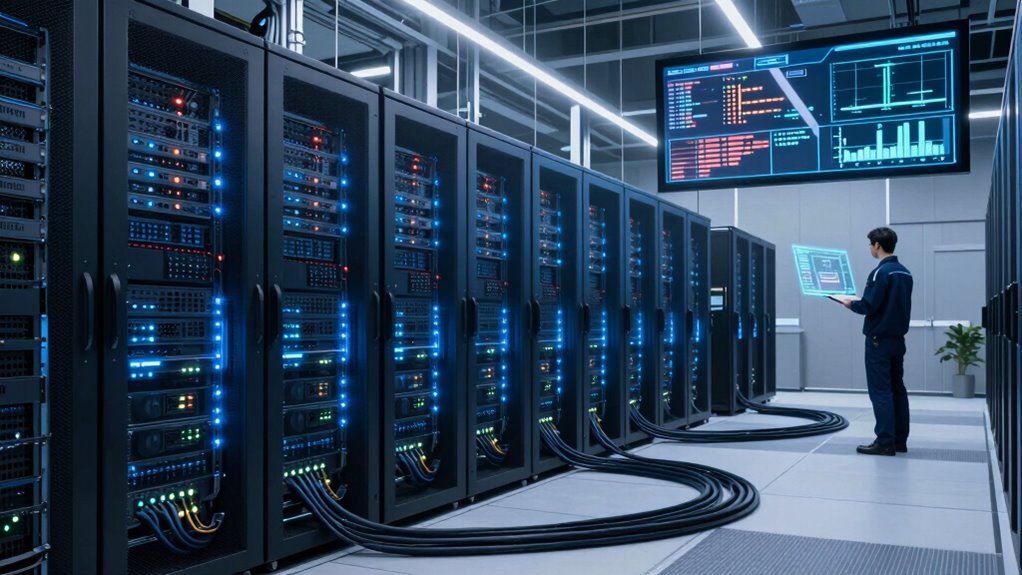
Have you ever wondered what keeps AI systems running smoothly behind the scenes? It all comes down to solid power planning—making sure that the infrastructure supporting these systems is reliable and efficient. When you think about AI infrastructure, energy optimization plays an essential role. Data centers and servers consume massive amounts of electricity, and without careful planning, this can lead to wasted energy and increased costs. By implementing energy-efficient hardware, optimizing cooling systems, and managing workloads smartly, you can substantially reduce power consumption. Not only does this make the infrastructure more sustainable, but it also enhances overall reliability, since stable power supplies minimize the risk of interruptions.
Fault tolerance is another critical aspect that depends heavily on power planning. If the power supply falters or fails, it can cause system crashes, data loss, or even hardware damage. To prevent such issues, you need to design systems with redundancy in mind. This means having backup power sources like uninterruptible power supplies (UPS) and generators ready to step in the moment your main power source encounters a problem. When your infrastructure incorporates fault-tolerant features, it can continue functioning seamlessly despite power disruptions, keeping AI operations steady and dependable. Fault tolerance also involves monitoring power quality and swiftly addressing anomalies before they escalate into failures, which requires proactive planning and robust infrastructure.
Power planning isn’t just about safeguarding against failures; it’s also about proactive energy management. By accurately forecasting energy needs and aligning them with supply capabilities, you can avoid overloading systems and reduce the risk of outages. Smart power distribution systems help balance loads across different servers and hardware, preventing overheating and ensuring that each component receives the right amount of power. This not only prolongs hardware lifespan but also guarantees consistent performance. When you prioritize energy optimization and fault tolerance in your power planning, you create a resilient environment where AI systems can operate continuously without interruption. Additionally, understanding the importance of contrast ratio in related visual systems underscores how critical clear and detailed visual outputs are for system diagnostics and monitoring. Moreover, power quality monitoring can further enhance system stability by detecting and mitigating issues before they affect operations. Proper power distribution design also plays a vital role in maintaining system resilience and efficiency. Implementing comprehensive power management strategies enables organizations to optimize operational costs while maintaining high reliability standards.
Ultimately, dependable AI infrastructure hinges on meticulous power planning. You need to think ahead about how to optimize energy use while building in redundancies that protect against failures. By doing so, you make sure that your AI systems run efficiently, sustainably, and without unexpected downtime. This level of preparedness not only boosts system performance but also builds confidence that your infrastructure can handle future demands, no matter how complex or extensive they become.
Uninterruptible Power Supply (UPS) for data centers
As an affiliate, we earn on qualifying purchases.
As an affiliate, we earn on qualifying purchases.
Frequently Asked Questions
How Does Power Planning Affect AI System Scalability?
Power planning directly impacts your AI system’s scalability by ensuring energy efficiency and effective power optimization. When you plan carefully, you prevent outages and reduce energy waste, allowing your infrastructure to grow smoothly. Proper power strategies mean your AI systems can handle increased workloads without risking downtime or inefficiency. Ultimately, good power planning provides a reliable foundation that supports ongoing expansion and performance improvements.
What Are Common Power Failures Impacting AI Infrastructure?
You might think power failures are rare, but outages from the power grid are common and can severely disrupt AI infrastructure. Power surges, outages, or fluctuations often stem from grid issues or inadequate outage management systems. These failures halt data processing, damage hardware, and cause downtime. Ensuring robust backup power sources and effective outage management strategies minimizes risks, keeping your AI systems reliable and operational even during grid disruptions.
How to Predict Future Power Demands for AI Projects?
To predict future power demands for your AI projects, focus on analyzing energy consumption patterns and employing demand forecasting techniques. Track historical data to identify trends, seasonal variations, and growth trajectories. Use advanced modeling tools, like machine learning algorithms, to project future energy needs accurately. Regularly update your forecasts as new data becomes available, ensuring your power planning adapts to changing project requirements and helps prevent outages.
What Role Do Renewable Energy Sources Play in AI Reliability?
Renewable energy sources play a crucial role in AI reliability through renewable integration, reducing dependence on fossil fuels and enhancing sustainability metrics. When you incorporate renewables, you create a more resilient power supply that minimizes interruptions and environmental impact. This sustainable approach not only supports long-term AI operations but also aligns with global efforts to combat climate change, ensuring your AI infrastructure remains reliable and eco-friendly over time.
How Can Backup Power Systems Enhance AI Uptime?
Backup power systems can drastically boost your AI uptime, turning potential outages into mere blips. Emergency preparedness and power redundancy are your secret weapons, ensuring your AI stays operational even during disasters. By investing in reliable generators or uninterruptible power supplies, you minimize risks of data loss and downtime. This proactive approach guarantees your AI infrastructure remains resilient, no matter what challenges come your way, keeping your systems running smoothly around the clock.
AI infrastructure backup generators
As an affiliate, we earn on qualifying purchases.
As an affiliate, we earn on qualifying purchases.
Conclusion
Ensuring reliable AI infrastructure truly hinges on smart power planning. Did you know that data centers consume about 1% of global electricity, and their energy needs are projected to triple by 2030? This highlights how critical resilient power systems are for AI performance and uptime. By prioritizing efficient energy management, you can prevent costly outages and support sustainable growth. Remember, reliable power isn’t just a technical requirement—it’s the backbone of your AI success.
Power quality monitoring devices
As an affiliate, we earn on qualifying purchases.
As an affiliate, we earn on qualifying purchases.
Energy-efficient server hardware
As an affiliate, we earn on qualifying purchases.
As an affiliate, we earn on qualifying purchases.
Halloween Picks
halloween
As an affiliate, we earn on qualifying purchases.