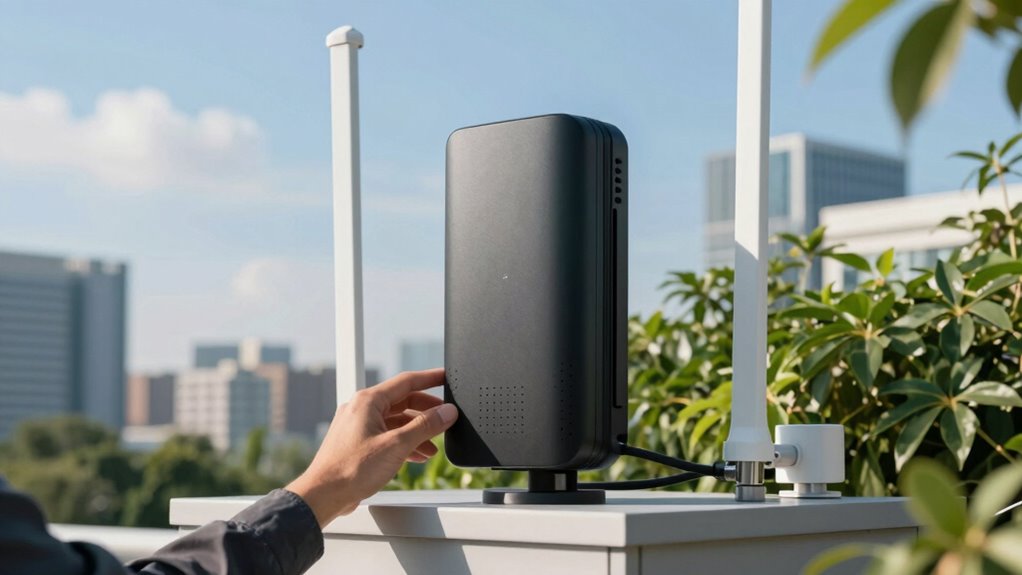

When selecting an outdoor enterprise access point, the goal is reliable, high-speed Wi-Fi coverage across large or challenging environments. The Omada AX3000 (EAP650-Outdoor) stands out as the best overall, offering robust Wi-Fi 6 performance and ease of deployment. The U6-Mesh-Pro excels in high-density areas with its dual-band Wi-Fi 6, while the Grandstream GWN7664ELR provides excellent long-range coverage for expansive outdoor spaces. Readers face tradeoffs between coverage, speed, weather resistance, and cost—this guide breaks down these factors to help you find the best fit. Keep reading for a detailed comparison and recommendations tailored to different needs.
Open a free Amazon Business account
Business pricing, bulk buying and tax-exempt orders.
Create a free accountAs an affiliate, we earn on qualifying purchases.
Key Takeaways
- Wi-Fi 6 models like the Omada AX3000 and U6-Mesh-Pro deliver faster speeds and better device handling, ideal for high-density outdoor environments.
- Weatherproofing standards such as IP67 are essential for durability but can add to cost; not all high-performance models include this feature.
- Long-range coverage depends heavily on antenna design and power output—choose models like the GWN7664ELR for large outdoor spaces.
- Ease of installation and management varies; integrated PoE and simplified setup can save time and reduce costs.
- Balancing upfront investment with ongoing performance needs is key—more expensive options often offer better durability and scalability.
| Omada AX3000 Outdoor Wireless Access Point with PoE Injector (EAP650-Outdoor) |  | Best Overall for Enterprise Outdoor Networks | Wi-Fi Technology: Wi-Fi 6 | Speed: up to 2976 Mbps | Weatherproof Rating: IP67 | VIEW ON AMAZON | See Our Full Breakdown |
| U6-Mesh-Pro Outdoor WiFi 6 Access Point – Dual-Band, Weatherproof, US Version with 3ft Slim Cat6A Patch Cable |  | Best for High-Capacity Outdoor Mesh Networks | Frequency Band: Dual-Band | Wi-Fi Standard: WiFi 6 (802.11ax) | Speed: 2.4Gbps (5GHz), 573Mbps (2.4GHz) | VIEW ON AMAZON | See Our Full Breakdown |
| Grandstream GWN7664ELR Outdoor Long Range Wi-Fi 6 Access Point |  | Best for Long-Range Outdoor Coverage | Wireless Standard: Wi-Fi 6 (802.11ax) | Max Throughput: 6 Gbps | Ports: 2x 2.5G | VIEW ON AMAZON | See Our Full Breakdown |
| EnGenius ENH1350EXT Wi-Fi 5 AC1300 Outdoor Access Point – IP67 Weatherproof, Dual-Band, MU-MIMO, PoE Included |  | Best Rugged Wi-Fi 5 Outdoor Access Point | IP Rating: IP67 | Wireless Standard: Wi-Fi 5 (802.11ac) | Speed: Up to 867 Mbps on 5GHz and 400 Mbps on 2.4GHz | VIEW ON AMAZON | See Our Full Breakdown |
| Omada AX1800 Outdoor Wireless Access Point with PoE Injector |  | Best for Cost-Effective Outdoor Wi-Fi 6 Coverage | Wi-Fi Speed: up to 1.8 Gbps | Bands: Dual-band (2.4 GHz and 5 GHz) | Weatherproof Rating: IP65 | VIEW ON AMAZON | See Our Full Breakdown |
| Ubiquiti UniFi nanoHD Compact 802.11ac Wave2 MU-MIMO Enterprise Access Point | 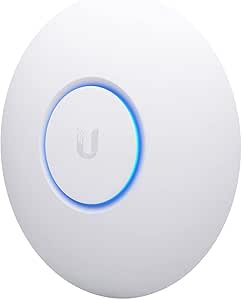 | Best Compact Design for Discreet Indoor Deployment | Technology: 802.11ac Wave2 | Concurrent Users: 200+ | PoE Compatibility: 802.3af | VIEW ON AMAZON | See Our Full Breakdown |
| Omada 7 Outdoor BE5000 WiFi Access Point (EAP725-Outdoor) |  | Best for High-Speed Outdoor Coverage with Flexibility | Antenna Modes: Switchable directional and omnidirectional | Wi-Fi Standard: Wi-Fi 7 | Maximum Speed: 5 Gbps | VIEW ON AMAZON | See Our Full Breakdown |
More Details on Our Top Picks
Omada AX3000 Outdoor Wireless Access Point with PoE Injector (EAP650-Outdoor)
The Omada AX3000 Outdoor stands out for its high-speed Wi-Fi 6 performance, reaching up to 2976 Mbps, and its weatherproof IP67 enclosure, making it a versatile choice for both indoor and outdoor deployments. Unlike the EnGenius ENH1350EXT, which is limited to Wi-Fi 5 and slightly lower speeds, the AX3000 offers future-proof technology suited for demanding enterprise environments. However, its reliance on Omada SDN controllers for full mesh features introduces a setup complexity that might deter non-technical users. This model is best suited for organizations seeking centralized, cloud-managed outdoor wireless coverage with top-tier speeds, where advanced network control outweighs the initial configuration effort.
Pros:- High-speed Wi-Fi 6 performance up to 2976 Mbps
- Weatherproof IP67 enclosure for outdoor durability
- Centralized management via Omada SDN platform and cloud access
Cons:- Requires Omada SDN controllers for full mesh functionality
- Advanced setup may be complex for non-technical users
Best for: Large outdoor enterprise deployments requiring high throughput and centralized management
Not ideal for: Small businesses or users seeking simple, plug-and-play solutions without SDN overhead
- Wi-Fi Technology:Wi-Fi 6
- Speed:up to 2976 Mbps
- Weatherproof Rating:IP67
- Use:Indoor/Outdoor
- Management:Omada SDN, Cloud Access
- Features:Mesh WiFi, Seamless Roaming, Band Steering, Load Balancing, Airtime Fairness, Beamforming
Our verdict“This is ideal for enterprises needing robust, high-speed outdoor Wi-Fi with centralized control despite a steeper setup curve.”
U6-Mesh-Pro Outdoor WiFi 6 Access Point – Dual-Band, Weatherproof, US Version with 3ft Slim Cat6A Patch Cable
The U6-MESH-PRO-US excels in supporting large outdoor environments with its dual-band Wi-Fi 6 speeds up to 2.4Gbps and over 250 simultaneous clients. Compared with the Omada AX3000, it offers comparable speeds but emphasizes mesh flexibility and ease of deployment, making it suitable for expansive outdoor areas. Its IPX6 weatherproof housing and flexible mounting options cater to various harsh conditions, yet it demands a PoE power source and might be complex for users unfamiliar with enterprise networking. This pick is best for organizations needing reliable, high-capacity outdoor Wi-Fi that can serve many devices across wide areas.
Pros:- Supports over 250 clients in mesh configuration
- Weatherproof IPX6 housing for outdoor durability
- Fast dual-band Wi-Fi 6 speeds up to 2.4Gbps
- Flexible mounting for various outdoor environments
Cons:- Requires PoE power source, adding setup complexity
- Designed mainly for enterprise environments, less user-friendly for novices
Best for: Large outdoor campuses or event spaces with high client density needs
Not ideal for: Small offices or residential users wanting simple installation without extensive networking setup
- Frequency Band:Dual-Band
- Wi-Fi Standard:WiFi 6 (802.11ax)
- Speed:2.4Gbps (5GHz), 573Mbps (2.4GHz)
- Weatherproof Rating:IPX6
- Supported Clients:250+
- Power:PoE
Our verdict“This device is perfect for large-scale outdoor installations needing high capacity and mesh flexibility, with some setup complexity.”
Grandstream GWN7664ELR Outdoor Long Range Wi-Fi 6 Access Point
The GWN7664ELR is designed specifically for expansive outdoor spaces, offering up to 300 meters of coverage with Wi-Fi 6 speeds up to 6 Gbps. Its dual 2.5G ports and robust security protocols make it a strong choice for medium to large outdoor environments where long-distance connectivity is critical. While its high throughput and security features surpass many competitors like the EnGenius ENH1350EXT, it requires PoE+ power and is limited to outdoor use, with no indoor variant. This model makes the most sense for network providers or large properties needing reliable, high-capacity long-range coverage, but it demands a more complex installation and power setup.
Pros:- Long-range coverage up to 300 meters
- High throughput up to 6 Gbps
- Multiple ports and advanced security
- Supports many device types with high reliability
Cons:- Requires PoE+ power supply, adding to installation complexity
- Limited to outdoor use, not suitable for indoor environments
Best for: Large outdoor areas requiring long-range, high-throughput Wi-Fi coverage
Not ideal for: Small outdoor patios or indoor environments, due to its size and focus on outdoor use
- Wireless Standard:Wi-Fi 6 (802.11ax)
- Max Throughput:6 Gbps
- Ports:2x 2.5G
- Coverage Range:up to 300 meters
- Security Protocols:WPA2, WPA3
- Supported Devices:Gaming Console, PC, Printer, Security Camera, Smart TV, Thermostat, Smartphone, Tablet
Our verdict“This long-range Wi-Fi 6 access point is best for large outdoor areas needing extensive coverage and high capacity at a distance.”
EnGenius ENH1350EXT Wi-Fi 5 AC1300 Outdoor Access Point – IP67 Weatherproof, Dual-Band, MU-MIMO, PoE Included
The EnGenius ENH1350EXT offers a durable solution with its IP67 weatherproof housing, supporting dual-band AC1300 speeds and MU-MIMO technology. While it is more affordable and simpler to deploy than high-end Wi-Fi 6 options like the Omada AX3000, it sacrifices some speed and future-proofing in favor of proven reliability in harsh environments. Its external antennas and multiple operation modes provide versatility, but setup complexity may be a hurdle for less experienced users. This device is best suited for outdoor environments where durability and reliable Wi-Fi 5 performance are prioritized over cutting-edge speeds.
Pros:- IP67 weatherproof and rugged design for harsh environments
- Dual-band AC1300 speeds with MU-MIMO
- Multiple operation modes including client bridge and WDS
- Includes PoE injector and external antennas for extended coverage
Cons:- Limited to Wi-Fi 5 speeds, less future-proof
- Installation can be complex for non-technical users
Best for: Outdoor facilities needing rugged, reliable Wi-Fi 5 coverage without the latest Wi-Fi 6 features
Not ideal for: Environments requiring future-proofing or the highest speeds available, such as enterprise campuses or dense urban deployments
- IP Rating:IP67
- Wireless Standard:Wi-Fi 5 (802.11ac)
- Speed:Up to 867 Mbps on 5GHz and 400 Mbps on 2.4GHz
- Antenna Count:4
- Maximum Data Rate:1000 Mbps
- Security Protocols:WPA2-PSK, WPA2-Enterprise
Our verdict“This access point suits outdoor settings demanding durability and solid Wi-Fi 5 performance, with some speed limitations for future-proofing.”
Omada AX1800 Outdoor Wireless Access Point with PoE Injector
The Omada AX1800 combines reliable Wi-Fi 6 technology with an IP65 weatherproof design, making it a practical choice for outdoor environments where budget and performance balance matter. While it offers lower speeds—up to 1.8 Gbps—compared to the AX3000, it still provides robust cloud management and flexible mounting options that simplify deployment. Unlike the U6-MESH-PRO-US, which emphasizes mesh capacity and client support, the AX1800 focuses on straightforward coverage for smaller outdoor areas. Its main tradeoff involves slightly reduced speed and a higher price point than basic Wi-Fi 5 models, making it suitable for those seeking a reliable, future-proof outdoor Wi-Fi solution without overspending.
Pros:- Wi-Fi 6 speeds up to 1.8 Gbps for modern devices
- Weatherproof IP65 design suitable for outdoor use
- Easy setup with cloud management and flexible mounting
- Supports passive PoE for power options
Cons:- Requires PoE injector for operation, adding setup steps
- Higher cost compared to basic outdoor Wi-Fi 5 access points
Best for: Medium-sized outdoor areas needing reliable Wi-Fi 6 with budget-conscious flexibility
Not ideal for: Very large outdoor campuses or environments demanding maximum throughput and client density
- Wi-Fi Speed:up to 1.8 Gbps
- Bands:Dual-band (2.4 GHz and 5 GHz)
- Weatherproof Rating:IP65
- Operating Temperature:-40°F to 158°F
- Lightning Protection:6kV
- Power Options:802.3at PoE+ or Passive PoE
Our verdict“This device offers a balanced mix of Wi-Fi 6 performance and outdoor durability for medium-sized deployments at a reasonable price point.”
Ubiquiti UniFi nanoHD Compact 802.11ac Wave2 MU-MIMO Enterprise Access Point
The Ubiquiti UniFi nanoHD stands out for its ability to support over 200 concurrent users in a compact, discreet form factor, making it ideal for indoor environments where space and aesthetics matter. Compared with the Omada AX3000 Outdoor, which offers Wi-Fi 6 and outdoor durability, the nanoHD is better suited for indoor settings but lacks the outdoor weatherproofing and higher Wi-Fi standards. Its support for 802.3af PoE makes installation straightforward, yet the need to purchase covers separately can add to costs. While coverage details are limited, its MU-MIMO technology ensures efficient handling of multiple devices simultaneously, making it a reliable choice for dense indoor networks. However, its coverage area is less flexible, and it’s not designed for outdoor use. This pick makes the most sense for businesses needing a high-capacity indoor access point with a sleek profile, but not for outdoor deployments or high-speed Wi-Fi 6 needs.
Pros:- Supports over 200 concurrent users, ideal for dense environments
- Compact, discreet design blends into indoor settings
- PoE compatibility simplifies installation
Cons:- Covers sold separately, adding extra cost
- Limited coverage details and outdoor durability
Best for: Indoor enterprise environments requiring high user density and discreet installation
Not ideal for: Outdoor venues or locations demanding Wi-Fi 6 and weatherproofing, due to its indoor focus and limited coverage options
- Technology:802.11ac Wave2
- Concurrent Users:200+
- PoE Compatibility:802.3af
- Coverage:Optional covers sold separately
- Design:Compact, discreet
- Installation:PoE supported
Our verdict“This access point is best for indoor spaces prioritizing capacity and aesthetics over outdoor resilience or Wi-Fi 6 features.”
Omada 7 Outdoor BE5000 WiFi Access Point (EAP725-Outdoor)
The Omada 7 Outdoor BE5000 excels in delivering high-speed outdoor connectivity with support for Wi-Fi 7, offering up to 5 Gbps. Its switchable directional and omnidirectional antennas provide unmatched flexibility—compared to the Ubiquiti nanoHD, which is more limited in outdoor coverage. Automatic antenna detection simplifies setup, while the PoE port with 2.5G capability reduces additional cabling costs, making it ideal for large outdoor spaces. The ability to switch antenna modes allows focused coverage for specific zones or broad coverage for open areas, but it does require a separate PoE injector, adding an extra step and cost. Its weatherproof design is tailored for outdoor use only, making it unsuitable for indoor environments. This model is perfect for outdoor venues needing versatile, high-speed Wi-Fi, but less so for indoor applications or where PoE injectors are inconvenient.
Pros:- Supports high-speed Wi-Fi 7 at up to 5 Gbps
- Switchable antenna modes for tailored coverage
- Automatic antenna detection simplifies setup
- PoE port with 2.5G speed reduces cabling needs
Cons:- Does not include PoE injector, increasing setup complexity
- Limited to outdoor use only
Best for: Outdoor venues demanding fast Wi-Fi 7 with flexible antenna configurations
Not ideal for: Indoor spaces or environments where PoE power supplies are not readily available, due to its outdoor-only design and PoE requirements
- Antenna Modes:Switchable directional and omnidirectional
- Wi-Fi Standard:Wi-Fi 7
- Maximum Speed:5 Gbps
- Coverage Area:Omnidirectional: 3,229 ft² (300 m²); Directional: 5,500 ft² (510 m²)
- PoE Port:1× 2.5G PoE
- Design:Weatherproof, outdoor
Our verdict“This access point is ideal for outdoor installations needing fast, flexible Wi-Fi coverage, but less suited for indoor or simple deployments.”
How We Picked
Our evaluation focused on key factors like performance, durability, ease of deployment, and value. We prioritized Wi-Fi standards (Wi-Fi 6 vs. Wi-Fi 5), weatherproof ratings, and antenna design to assess coverage capabilities. Cost-to-performance ratios and management features also influenced rankings, ensuring selections meet real-world enterprise needs. The products are ordered based on their overall balance of these attributes, with premium options ranking higher for demanding environments and budget-friendly picks suitable for smaller deployments or less critical scenarios.Factors to Consider When Choosing Outdoor Enterprise Access Point
Choosing the right outdoor enterprise access point requires understanding several core factors that impact performance and longevity. Beyond basic Wi-Fi speed, considerations like weather resistance, coverage area, and management complexity play vital roles. Making the wrong choice can result in poor connectivity, costly replacements, or security vulnerabilities, so weighing these factors carefully is essential.Weatherproofing and Durability
Outdoor access points must withstand weather elements, so look for IP ratings like IP65 or IP67. Higher ratings mean better resistance to dust, rain, and temperature fluctuations. Skipping weatherproofing can lead to hardware failure, especially in harsh climates. Investing in well-rated models may cost more upfront but can dramatically reduce maintenance costs over time.
Coverage Range and Antenna Design
Long-range coverage depends on antenna type, placement, and power output. Omnidirectional antennas are suited for broad coverage, while directional ones focus signals for specific areas. Consider your space size; larger outdoor venues require high-gain antennas or multiple access points. Remember, increasing coverage often means tradeoffs with speed and capacity.
Wi-Fi Standard and Speed
Wi-Fi 6 (802.11ax) offers faster speeds and better device management, especially in dense environments. However, it may come at a higher cost and require compatible client devices. Wi-Fi 5 (802.11ac) still provides ample performance for less demanding setups and tends to be more budget-friendly. Match your choice with your current and future device ecosystem.
Management and Deployment Ease
Enterprise-grade features like centralized management, easy setup, and firmware updates simplify ongoing maintenance. Some models include cloud-based management, reducing the need for onsite hardware. Poor management tools can lead to increased downtime and operational complexity, so evaluate these features against your technical resources.
Cost and Scalability
Initial investment varies widely, but consider total cost of ownership, including maintenance and future expansion. Cheaper models might require frequent replacements or upgrades, whereas premium units often include better warranties and support. Plan your network size carefully to avoid over- or under-provisioning, which can impact performance and budget.
Frequently Asked Questions
How do I choose between Wi-Fi 5 and Wi-Fi 6 outdoor access points?
Choosing between Wi-Fi 5 and Wi-Fi 6 depends on your environment and device compatibility. Wi-Fi 6 offers higher speeds, lower latency, and better performance in crowded areas, making it ideal for enterprise settings with many connected devices. However, Wi-Fi 5 units can be more affordable and sufficient for smaller or less demanding outdoor spaces. Consider your current device ecosystem and future scalability when making this decision.
Are outdoor access points worth investing in weatherproof models?
Yes, weatherproof models like IP67-rated units are designed to withstand rain, dust, and extreme temperatures, which are common outdoor challenges. While they may cost more initially, their durability reduces maintenance and replacement expenses over time. Skipping weatherproofing can lead to hardware failure and network downtime, especially in exposed environments.
What is the best way to extend coverage in a large outdoor area?
To extend coverage, deploying multiple access points with overlapping ranges is often necessary. Using high-gain antennas and ensuring proper placement can maximize coverage and minimize dead zones. Long-range models like the GWN7664ELR are suited for large open spaces, but for complex environments, a mesh setup with multiple units provides better seamless coverage.
How important is management software for outdoor enterprise access points?
Management software simplifies deployment, monitoring, and troubleshooting, making it especially valuable for larger networks. Cloud-based solutions allow remote oversight and easier firmware updates, reducing onsite technical needs. For smaller setups, basic management features might suffice, but scalability favors integrated, centralized management tools.
Can I mix different brands or models in my outdoor network?
Mixing brands is possible but can introduce compatibility issues, especially with management features and firmware updates. It’s generally recommended to choose a single vendor for easier integration, consistent performance, and simplified management. If mixing is necessary, ensure the devices support standard protocols and management interfaces to minimize operational headaches.
Conclusion
For those seeking the best overall performance, the Omada AX3000 (EAP650-Outdoor) provides a balanced mix of speed, durability, and management features. Budget-conscious buyers or smaller outdoor deployments will find the Omada AX1800 or EnGenius ENH1350EXT fitting their needs without overspending. Large-scale or long-range projects should consider the Grandstream GWN7664ELR for its coverage capabilities. Beginners or those prioritizing ease of setup might prefer plug-and-play options like the Ubiquiti nanoHD, while enterprise users with demanding environments will benefit from investing in premium models like the U6-Mesh-Pro. Your choice hinges on balancing coverage, durability, speed, and budget based on your specific outdoor networking needs.
As an affiliate, we earn on qualifying purchases.NFL season / tailgating Picks
team gear