TL;DR
The FCC authorized SpaceX to deploy as many as 1 million satellites intended to operate as data centers in orbit. The authorization covers backup and emergency radio links, sets deployment milestones through 2040 and leaves SpaceX’s disposal plans for satellites above 600 kilometers unresolved. The FCC did not assess whether the system is technically or commercially viable.
The Federal Communications Commission on November 25 authorized SpaceX to deploy up to 1 million satellites intended to operate as data centers in orbit, a plan the company calls Starmind. The order grants most of SpaceX’s application, sets deadlines for deploying the system and leaves the company’s disposal plans for satellites above 600 kilometers unresolved. No satellites have been launched under this authorization, and the FCC did not determine whether orbital data centers will work or be commercially viable.

Get business pricing on tech for your team
- Business-only prices and quantity discounts
- Tax-exempt purchasing
- Multiple users, one account, clear invoices
The FCC’s Space Bureau authorized radio use for backup and emergency control links in two bands. The source material says SpaceX intends to carry the main data traffic between satellites using laser links, with radio serving as a fallback. The authorization therefore addresses communications and deployment conditions; it is not a certification of the computing system’s performance.
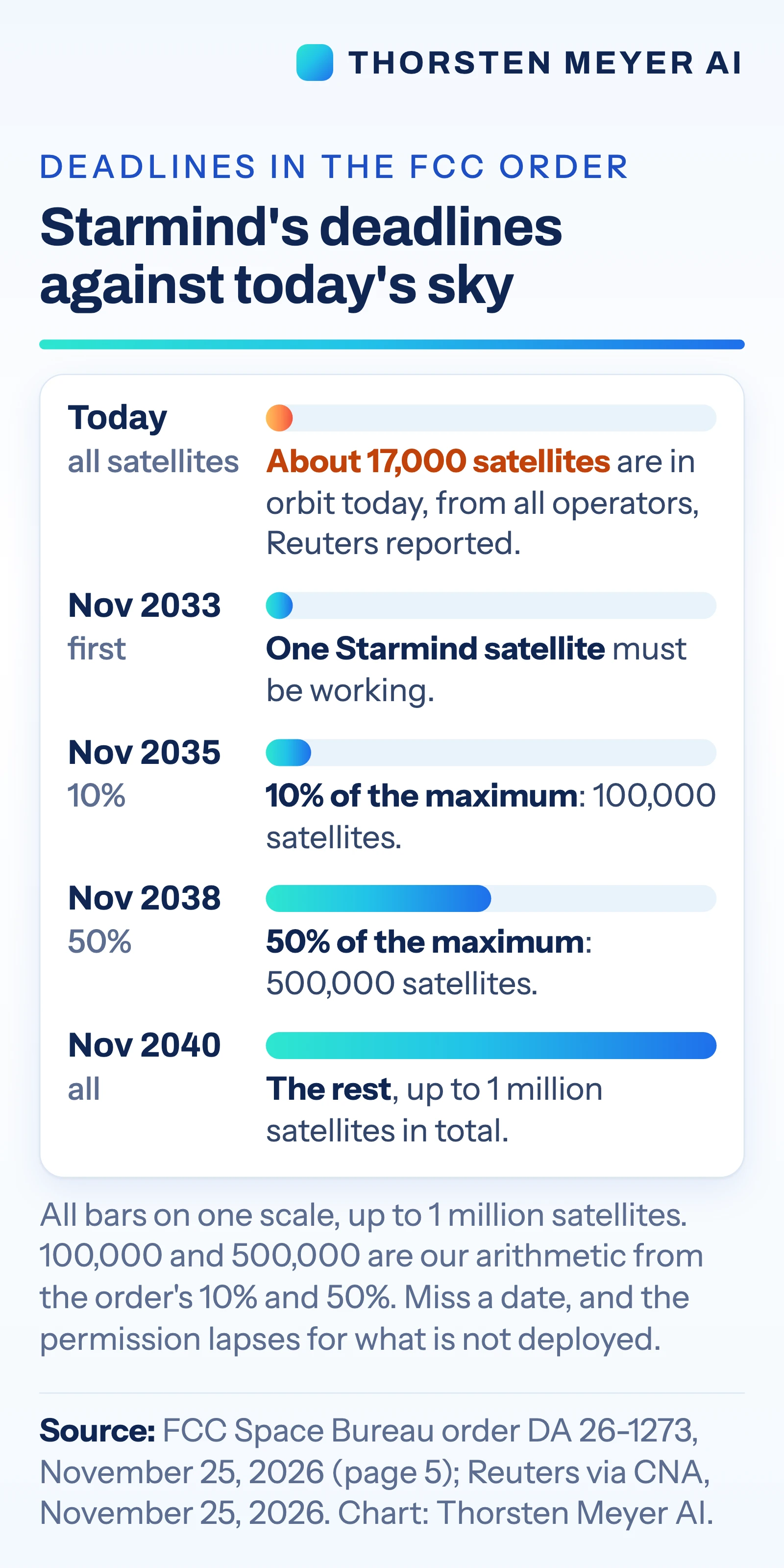
The satellites are authorized in orbital shells between 500 and 1,002 kilometers above Earth. The FCC set deployment milestones: at least one satellite must be operating by November 25, 2033; half of the authorized fleet must be deployed by 2038; and the full authorized number must be deployed by 2040. According to the source material, missing those milestones could cause the authorization to lapse.
The commission granted most of the application, denied petitions seeking to block it and deferred SpaceX’s request concerning disposal of satellites above 600 kilometers. SpaceX must provide further detail before placing satellites at those altitudes into disposal orbits. The source material identifies Amazon’s satellite unit, Viasat and the American Astronomical Society among the parties that asked the FCC to deny the plan.
A Long Road to Orbital Computing
The decision gives SpaceX regulatory permission to pursue a large orbital computing network, but it does not create a service customers can use now. The first deployment milestone is 2033, and the authorization spans years of potential development. Businesses buying AI computing and operators building terrestrial data centers should treat orbital computing as a proposal until satellites are launched and the system’s capabilities are demonstrated.
The plan addresses pressures that SpaceX says affect data centers on Earth, including electricity demand. SpaceX has argued that satellites could use solar energy in orbit to power AI computing. Those are company claims about the system’s potential; the FCC order did not evaluate the engineering case, operating costs or financial returns. The authorization settles a regulatory question about radio and deployment conditions, not those technical and economic questions.
The scale also puts satellite operations and orbital disposal in focus. The FCC’s deferral means an important part of the plan remains subject to further information. The American Astronomical Society raised concerns about heat and light from a large satellite population, according to the source material. The FCC did not add conditions addressing those concerns in the described decision.
Products Worth Considering

Logitech MX Master 4 for Mac

LG UltraGear 34G600A-B 34-Inch Curved WQHD Gaming Monitor, 160Hz, FreeSync Premium, HDR10

Logitech MX Mechanical Wireless Illuminated Keyboard, Tactile Quiet, Graphite
As an affiliate, we earn on qualifying purchases.
What the FCC Licensed
The FCC regulates access to radio spectrum, including radio links used by satellites. In this case, its Space Bureau’s order authorizes backup and emergency radio control for the proposed system. SpaceX says laser links would carry the primary data between satellites. The distinction matters: approval of radio use and deployment milestones does not amount to an FCC finding that orbital data centers can deliver AI services.
The FCC described its action as the first U.S. authorization for a constellation of data centers in space. That description is the agency’s characterization of the decision. SpaceX’s project is called Starmind, and the permitted satellites would occupy multiple shells, each described in the source material as 50 kilometers thick, across altitudes from 500 to 1,002 kilometers.
The FCC decision followed objections from satellite operators and an astronomy organization. Amazon’s satellite unit, Viasat and the American Astronomical Society sought denial, but the commission denied their petitions, according to the source material. It did, however, defer the disposal request for satellites above 600 kilometers rather than resolve that part of the application.
“The first authorization in U.S. history for a constellation of data centers in space.”
— Federal Communications Commission
Disposal and Performance Remain Open
The FCC has not decided the disposal request for satellites above 600 kilometers. SpaceX must provide additional details before using disposal orbits at those heights. The source material does not specify when the company must submit that information or what conditions the FCC might impose after reviewing it.
It is also unknown whether the proposed satellites can provide reliable, useful computing at the scale described, how much the system would cost to build and operate, or whether customers would pay for it. The FCC said those questions were outside its role in this proceeding. There are no launched satellites under this authorization, so the system’s performance remains unproven.
The source material says astronomers raised concerns about heat and light from the planned constellation, but it does not give the full technical evidence or the FCC’s detailed response to each concern. The authorization, as described, adds no conditions addressing those effects. How they will be measured or managed remains unclear.
SpaceX Faces 2033 Milestone
The first stated deployment deadline is November 25, 2033, when at least one satellite must be operating. The later milestones call for half of the authorized fleet by 2038 and the full fleet by 2040. Those dates make the authorization a long-term pathway rather than an announcement of near-term service.
Before satellites above 600 kilometers can be placed into disposal orbits under the deferred part of the request, SpaceX must provide the FCC with further information. The commission’s next action on that issue, and any additional requirements it may set, are not specified in the source material. For now, the practical next steps are the company’s technical development, any further regulatory review of disposal plans and progress toward the first deployment deadline.
Key Questions
What did the FCC approve for SpaceX?
The FCC authorized SpaceX to deploy up to 1 million satellites intended to operate as orbital data centers and approved backup and emergency radio links. The order also sets deployment milestones.
Are the satellites in orbit or available to customers?
No. The source material says none has been launched under this authorization. The first required operating satellite is due by November 25, 2033, so the approval does not mean orbital computing is currently available as a service.
How will the satellites communicate?
The authorization covers backup and emergency control over radio. SpaceX says laser links will carry the main data traffic between satellites, with radio as a fallback.
What part of SpaceX’s request did the FCC defer?
The FCC deferred SpaceX’s request concerning disposal of satellites above 600 kilometers. The company must provide more detail before placing satellites at those heights into disposal orbits.
Did the FCC confirm that space data centers will work?
No. The commission did not assess whether orbital data centers are technically feasible or commercially worthwhile. Those questions remain unresolved, and SpaceX’s statements about solar power and operating costs are company claims.
Source: Thorsten Meyer AI