

AI-driven monitoring and alerting help you guarantee your machine learning models perform reliably over time. By tracking key metrics like accuracy and detecting data or concept drift, you can catch issues early. Advanced tools provide explanations for anomalies and automate alerts, saving you time and effort. These systems can scale across multiple models, enabling proactive management and faster troubleshooting. Keep exploring to discover how such solutions can boost your model’s effectiveness and trustworthiness.

Get business pricing on tech for your team
- Business-only prices and quantity discounts
- Tax-exempt purchasing
- Multiple users, one account, clear invoices
Key Takeaways
- AI-driven tools automatically track key metrics like accuracy and detect deviations using predefined thresholds.
- They identify data and concept drift early, preventing the deployment of ineffective models.
- Advanced monitoring provides explanations and root cause analysis for anomalies, speeding up troubleshooting.
- These solutions seamlessly integrate with existing infrastructure, managing multiple models across various environments.
- Proactive alerts and predictive analytics enable timely interventions, ensuring model reliability and operational continuity.
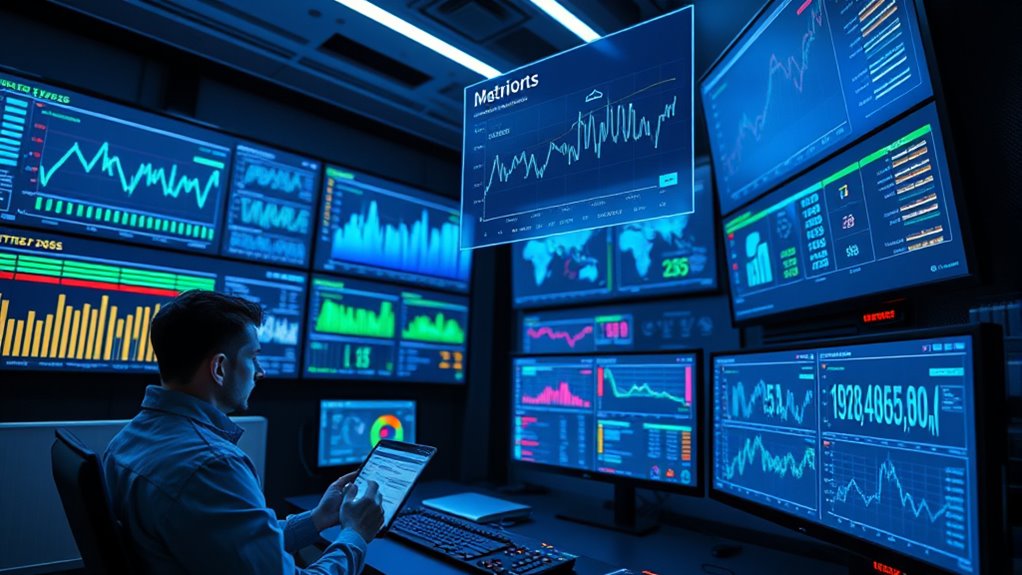
As machine learning models become more integral to business operations, maintaining their performance and reliability is essential. You need to guarantee that these models continue to deliver accurate results, especially as data patterns evolve and new challenges emerge. AI-driven monitoring and alerting systems help you keep a close eye on model behavior in real time, allowing you to identify issues before they impact your operations. These systems continuously track key metrics such as accuracy, precision, recall, and other domain-specific indicators. When these metrics drift outside predefined thresholds, you receive instant alerts, enabling you to respond swiftly and minimize potential damage.
Implementing AI-driven monitoring means automating the detection of anomalies and performance degradation. Instead of manually sifting through logs or relying on periodic reviews, you benefit from automated systems that analyze data streams and model outputs continuously. This ongoing scrutiny helps you catch problems like data drift, where the input data shifts from the original training data, or concept drift, where the relationship between input features and output labels changes over time. Early detection of these issues saves you from deploying outdated or unreliable models, which could lead to faulty decisions or operational failures. Recognizing the importance of aligning model monitoring with bedroom design principles can also enhance user experience and comfort in AI applications.
Automated systems continuously analyze data and model outputs to detect drift and performance issues early.
You also gain the advantage of contextual insights. Advanced monitoring tools not only notify you of issues but also provide explanations and root causes for anomalies. For example, if your model’s accuracy drops suddenly, the system can highlight whether it’s due to a change in data distribution, a missing feature, or a specific subset of inputs. This targeted information accelerates your troubleshooting process, helping you implement corrective measures faster. Furthermore, these tools often integrate with your existing infrastructure, allowing seamless deployment within your workflows.
Another key benefit is scalability. As your models grow in complexity and number, manual oversight becomes impractical. AI-driven alerting systems scale effortlessly, managing multiple models across different environments with minimal human intervention. They adapt to new models and data sources, ensuring consistent monitoring without requiring exhaustive manual configuration. With predictive analytics embedded into these systems, you can even forecast potential issues before they occur, giving you a proactive edge over reactive management.
Ultimately, AI-driven monitoring and alerting empower you to maintain higher model reliability, reduce downtime, and ensure your AI initiatives deliver sustained value. You become better equipped to respond promptly to issues, optimize model performance, and uphold trust in your AI-driven solutions. By leveraging these intelligent systems, you turn data into actionable insights, securing your models’ effectiveness and your organization’s competitive advantage.
Products Worth Considering

Samsung 32-Inch Odyssey OLED G8 (G80SH) 4K Gaming Monitor

LG 34GX90SA-W 34-inch Ultragear WQHD OLED Curved Gaming Monitor

Samsung 27-inch Odyssey OLED G6 QD-OLED QHD Gaming Monitor
As an affiliate, we earn on qualifying purchases.
Frequently Asked Questions
How Does AI Monitoring Handle False Positives?
You can handle false positives by tuning your AI monitoring system to set more precise thresholds and incorporate multiple data sources for validation. When alerts occur, review the context to determine if they’re genuine issues or false alarms. Regularly adjusting your models and thresholds helps improve accuracy, reducing unnecessary alerts. Additionally, implementing feedback loops allows the system to learn from false positives and refine its detection capabilities over time.
Can Monitoring Systems Adapt to Model Updates Automatically?
Like a chameleon changing colors, your monitoring system can adapt to model updates automatically. When you implement dynamic monitoring, it adjusts thresholds, retrains detection algorithms, and updates alerts without manual intervention. This allows you to stay ahead of model changes, ensuring continuous accuracy. By integrating automated adaptation, you save time, reduce errors, and keep your system reliable—even as your models evolve, you’re always in control.
What Are the Costs Associated With Ai-Driven Alerting Tools?
The costs of AI-driven alerting tools vary depending on features, scale, and provider. You might face subscription fees, infrastructure expenses, and integration costs. Some tools charge based on data volume or number of alerts, so larger models or frequent alerts can increase expenses. Additionally, training staff and maintaining the system add to total costs. Carefully evaluate your needs to balance benefits with budget constraints before choosing a solution.
How Is Data Privacy Maintained in Monitoring Processes?
Imagine you’re in a sci-fi movie, but instead of robots, you’re safeguarding data. You maintain privacy by encrypting data in transit and at rest, ensuring only authorized systems access it. You also anonymize sensitive information, minimizing exposure. Regular audits and strict access controls act like your security team, protecting privacy. These measures keep your monitoring processes compliant, trustworthy, and focused on ethical data use.
What Are Best Practices for Integrating Alerts With Existing Workflows?
You should automate alerts to seamlessly fit into your existing workflows, using integrations like Slack, email, or incident management tools. Establish clear escalation protocols and prioritize alerts based on severity, ensuring prompt responses. Regularly review and refine your alert rules to prevent fatigue and false positives. Training your team on handling alerts efficiently helps maintain smooth operations. By aligning alerts with your current processes, you enhance responsiveness and minimize disruptions.
Conclusion
By implementing AI-driven monitoring and alerting, you stay ahead of potential issues before they escalate. It’s like having a vigilant guard watching over your models, ready to alert you at the first sign of trouble. Without it, you risk silent failures and unseen drifts, like a ship sailing into stormy waters blindfolded. Embrace these tools to navigate your machine learning journey confidently, turning uncertainty into clarity and ensuring your models perform at their best.