

The right AI-powered workflow automation resource can save you months of trial and error — but the category splits sharply between hands-on builder guides and tool-specific mastery books. My top overall pick is Building AI Agents for Network Operations, which pairs LLM-powered agents with real Python, Ollama, and MCP tool-calling in production-grade workflows. Close behind are n8n AI Automation for readers who want a broad, project-driven automation platform guide, and Agentic Coding with Claude Code for developers automating software work end to end. The main tradeoff you’ll face: deeper technical control versus no-code accessibility, and generalist automation books versus titles locked to a single ecosystem like Claude or Excel. Keep reading for the full ranked breakdown and who each pick suits best.

Get business pricing on tech for your team
- Business-only prices and quantity discounts
- Tax-exempt purchasing
- Multiple users, one account, clear invoices
Key Takeaways
- n8n dominates this lineup: four of the fifteen picks center on it, and it emerged as the most complete platform for building AI agents without heavy coding — the main difference between them is depth, from crash course to advanced systems design.
- Claude-focused titles (four in total) are best treated as ecosystem plays: they reward readers already committed to Anthropic’s tools and feel narrow for anyone wanting platform-agnostic automation skills.
- The most technically demanding pick, Building AI Agents for Network Operations, also delivered the most transferable skills — Python, Ollama, and MCP knowledge that outlives any single tool’s feature set.
- Role-specific titles for accountants, email marketers, and agency builders trade breadth for immediacy; they’re the fastest path to results if the role matches yours, and a poor fit otherwise.
- Beginner-oriented guides consistently oversell ‘no coding required’ — readers who want durable automation skills should budget for at least light technical learning regardless of the pick.
| Building AI Agents for Network Operations | 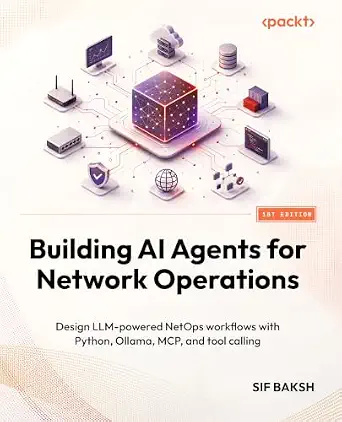 | Best for Network Engineers | Format: Technical book | Primary tools: Python, Ollama, MCP, LLM tool calling | Domain: Network operations (NetOps) | VIEW LATEST PRICE | See Our Full Breakdown |
| AI-Powered Accounting with Excel and Power BI |  | Best for Finance Professionals | Format: Practical guide / case-study book | Primary tools: Excel, Power BI, Claude, Copilot | Domain: Accounting and finance | VIEW LATEST PRICE | See Our Full Breakdown |
| n8n AI Automation: Build Smarter Workflows, Agents & Intelligent Systems with Real-World Projects |  | Best for Hands-On Builders | Format: Project-based guide | Primary tool: n8n | Domain: General workflow automation and AI agents | VIEW LATEST PRICE | See Our Full Breakdown |
| The Agentic Workflow: A Practical Guide to AI-Powered Automation and n8n |  | Best for Strategic Thinkers | Format: Practical guide | Primary tool: n8n | Domain: AI-powered automation and decision systems | VIEW LATEST PRICE | See Our Full Breakdown |
| n8n AI Automation Crash Course: Build No-Code Workflows and Smart Agents for AI-Powered Productivity |  | Best for Beginners | Format: Crash course / beginner guide | Primary tool: n8n | Domain: No-code AI automation and productivity | VIEW LATEST PRICE | See Our Full Breakdown |
| AI-Powered Excel with Python: Automate Data, Reports, and Business Workflows |  | Best for Hands-On Technical Automation | Format: Digital book (Kindle) | Primary tools covered: Excel, Python, AI-powered automation tools | Skill level: Intermediate — Python knowledge required | VIEW LATEST PRICE | See Our Full Breakdown |
| Claude AI Automation & Monetization: Build AI-Powered Systems, Automate Workflows, and Generate Income |  | Best for Monetizing AI Skills | Format: Digital book (Kindle) | Series: Claude AI Mastery Series | Primary focus: AI system building, workflow automation, monetization | VIEW LATEST PRICE | See Our Full Breakdown |
| Your First AI Implementation & Automation Agency: A Beginner’s Playbook to Build, Launch, and Scale a Profitable AI Automation Agency Using No-Code Tools, Workflows |  | Best for Non-Technical Beginners | Format: Digital book (Kindle) | Primary tools covered: No-code automation platforms and workflows | Skill level: Beginner — no coding required | VIEW LATEST PRICE | See Our Full Breakdown |
| The AI-Powered Accountant: How to Use ChatGPT, AI Tools, and Smart Automation to Save Time, Win Clients, and Future-Proof Your Practice |  | Best Vertical Pick for Accounting Practices | Format: Digital book (Kindle) | Primary tools covered: ChatGPT and smart automation tools | Skill level: Beginner to intermediate — AI familiarity helpful | VIEW LATEST PRICE | See Our Full Breakdown |
| Claude Cowork Automation: Build AI-Powered Workflows, Delegate Repetitive Tasks, and Automate Your Work |  | Best for Personal Productivity Automation | Format: Digital book (Kindle) | Primary tool covered: Claude AI | Skill level: Beginner to intermediate | VIEW LATEST PRICE | See Our Full Breakdown |
| The AI-Powered Email Marketing Specialist |  | Best for Marketing Teams | Format: Kindle eBook / Paperback | Primary Tool Focus: ChatGPT and related AI tools | Topic: AI-driven email marketing and automation | VIEW LATEST PRICE | See Our Full Breakdown |
| Mastering Perplexity AI |  | Best for Research Workflows | Format: Kindle eBook / Paperback | Primary Tool Focus: Perplexity AI | Topic: AI-powered research and productivity | VIEW LATEST PRICE | See Our Full Breakdown |
| Agentic Coding with Claude Code (5-in-1) |  | Best for Developers | Format: Kindle eBook / Paperback | Structure: 5-in-1 bundled handbook | Primary Tool Focus: Claude Code and agentic AI workflows | VIEW LATEST PRICE | See Our Full Breakdown |
| The AI Playbook: Mastering Claude |  | Best Claude Reference | Format: Kindle eBook / Paperback | Primary Tool Focus: Claude (full feature set) | Topic: Claude features, workflows, and AI-powered tools | VIEW LATEST PRICE | See Our Full Breakdown |
| Claude Mastery: Claude AI for Beginners |  | Best for Beginners | Format: Kindle eBook / Paperback | Primary Tool Focus: Claude AI | Topic: Beginner prompts, skills, and AI agent workflows | VIEW LATEST PRICE | See Our Full Breakdown |
| AI-powered workflow automation tool | Format | Skill level | Approach |
|---|---|---|---|
| Building AI Agents for Network | Technical book | Advanced | Code-first agent development |
| AI-Powered Accounting with Exc | Practical guide / case-study book | Intermediate | Real-world case studies |
| n8n AI Automation: Build Smart | Project-based guide | Intermediate | Real-world projects |
| The Agentic Workflow: A Practi | Practical guide | Intermediate to advanced | Concept-led with practical application |
| n8n AI Automation Crash Course | Crash course / beginner guide | Beginner | No-code, quick-start lessons |
| AI-Powered Excel with Python: | Digital book (Kindle) | Intermediate — Python knowledge required | Hands-on, code-based tutorials |
| Claude AI Automation & Monetiz | Digital book (Kindle) | Intermediate to advanced | Strategy and system design |
| Your First AI Implementation & | Digital book (Kindle) | Beginner — no coding required | Step-by-step playbook |
| The AI-Powered Accountant: How | Digital book (Kindle) | Beginner to intermediate — AI familiarity helpful | Profession-specific strategy guide |
| Claude Cowork Automation: Buil | Digital book (Kindle) | Beginner to intermediate | Practical personal-automation guide |
| The AI-Powered Email Marketing | Kindle eBook / Paperback | Intermediate marketing professionals | — |
| Mastering Perplexity AI | Kindle eBook / Paperback | Intermediate professionals and researchers | — |
| Agentic Coding with Claude Cod | Kindle eBook / Paperback | Experienced developers | — |
| The AI Playbook: Mastering Cla | Kindle eBook / Paperback | Enthusiast to professional | — |
| Claude Mastery: Claude AI for | Kindle eBook / Paperback | Absolute beginner | — |
More Details on Our Top Picks
Building AI Agents for Network Operations
Most titles in this roundup aim at general business automation, but this one carves out a tightly specialized niche: AI agents built specifically for NetOps. Where n8n AI Automation teaches you to wire together visual workflows, this book goes deeper into Python, Ollama, and MCP tool calling — meaning you get locally hosted LLMs and real programmatic control rather than drag-and-drop building blocks.
The tradeoff is steep: this is the most technically demanding entry in the lineup, and readers without a networking and scripting background will struggle. Compared with The Agentic Workflow, which stays at the no-code abstraction level, this pick demands coding fluency but rewards it with agents that can actually touch network infrastructure.
Pros:- Deep coverage of LLM agents applied to a specialized domain (NetOps)
- Teaches local model hosting with Ollama, avoiding cloud API costs
- Practical Python examples with MCP and tool calling
- Focuses on production-relevant network workflows rather than toy demos
Cons:- Steepest learning curve in the roundup — not beginner material
- Narrow domain focus makes it largely irrelevant outside network operations
Best for: Network engineers and DevOps professionals with Python experience who want AI agents that interact directly with network operations
Not ideal for: Non-technical business users — the Python, Ollama, and MCP stack assumes real scripting comfort and networking knowledge
- Format:Technical book
- Primary tools:Python, Ollama, MCP, LLM tool calling
- Domain:Network operations (NetOps)
- Skill level:Advanced
- Approach:Code-first agent development
- Key topics:LLM agents, tool calling, NetOps workflow design
Our verdict“If you run network infrastructure and can write Python, this is the rare AI automation resource that speaks your language — everyone else should pick a broader title.”
AI-Powered Accounting with Excel and Power BI
Where most picks here chase generic productivity gains, this book anchors AI automation to tools finance teams already live in: Excel, Power BI, Claude, and Copilot. That framing matters — instead of learning a new platform like n8n, readers enhance existing reporting and reconciliation workflows with AI layered on top.
Compared with The AI-Powered Accountant elsewhere in this roundup, this title leans more analytical and case-driven, walking through real finance scenarios rather than client-winning tactics. The compromise is depth: it skims the technical mechanics of how the AI actually works, which frustrates readers who want to build rather than use. Beginners may also find the blend of BI concepts and AI tooling a lot to absorb at once.
Pros:- Built around tools finance teams already know, reducing adoption friction
- Real-world case studies rather than abstract theory
- Covers both Claude and Copilot for breadth across AI ecosystems
- Directly targets accounting workflows like reporting and analysis
Cons:- Limited technical depth — more application guide than engineering manual
- Assumes existing Excel and Power BI proficiency
- Complex for complete beginners to AI
Best for: Accountants and finance analysts who already use Excel and Power BI and want to add AI to existing processes without learning new platforms
Not ideal for: Readers wanting deep technical instruction on building automations — the focus is applying tools, not engineering them
- Format:Practical guide / case-study book
- Primary tools:Excel, Power BI, Claude, Copilot
- Domain:Accounting and finance
- Skill level:Intermediate
- Approach:Real-world case studies
- Key topics:AI-enhanced finance workflows, reporting, automation
Our verdict“The smartest pick for finance staff who want AI gains inside the spreadsheets they already use, not another platform to learn.”
n8n AI Automation: Build Smarter Workflows, Agents & Intelligent Systems with Real-World Projects
Of the three n8n-focused titles in this roundup, this is the most project-driven option. Rather than explaining concepts in the abstract, it teaches through real-world builds — agents, intelligent systems, and end-to-end workflows the reader constructs rather than just reads about.
Compared with The Agentic Workflow, which emphasizes design thinking and decision systems, this book is more workshop than lecture: you build more, theorize less. Against Building AI Agents for Network Operations, it trades programmatic depth for accessibility — n8n’s visual canvas means no heavy coding, though complex agent logic still gets fiddly. The main gap is validation: with no ratings or detailed specs, buyers are betting on the project structure alone.
Pros:- Learning by doing — full real-world projects, not snippets
- Covers both workflows and AI agents in n8n
- No heavy coding required thanks to n8n’s visual builder
- Transfers directly to freelance or consulting automation work
Cons:- No customer reviews yet to verify quality
- Thin on underlying concepts — weak if you want to understand why workflows work
- n8n specifics can shift with fast-moving platform updates
Best for: Self-directed learners who retain best by building complete projects and want a structured, example-rich path through n8n
Not ideal for: Readers who want foundational theory first — the projects move fast and assume comfort with experimentation
- Format:Project-based guide
- Primary tool:n8n
- Domain:General workflow automation and AI agents
- Skill level:Intermediate
- Approach:Real-world projects
- Key topics:Workflows, agents, intelligent systems
Our verdict“The strongest choice for builders who learn best by shipping complete projects rather than reading theory.”
The Agentic Workflow: A Practical Guide to AI-Powered Automation and n8n
This is the concept-first n8n title in the lineup. Where n8n AI Automation throws you into projects, this book spends more time on how AI-driven decision systems are designed — the logic of when an agent should act, branch, or escalate — before getting to the build.
That framing makes it the better fit for planners and technical leads who need to architect automations others will maintain, and it pairs well as a companion read before the project-heavy alternative. The cost is pacing: concept-heavy chapters and advanced material make it a rough entry point for newcomers, and like its n8n sibling it ships without detailed specs or reader feedback to vouch for it.
Pros:- Strong coverage of AI-driven decision logic, not just tool mechanics
- Practical n8n guidance grounded in design principles
- Suits readers planning maintainable, long-term automation systems
- Bridges strategy and hands-on implementation
Cons:- Advanced framing can lose beginners early
- Less hands-on than project-based alternatives
- No ratings or detailed technical documentation available
Best for: Technical leads and automation architects who want to understand agent decision design before building
Not ideal for: First-time automators — the systems-design framing assumes prior comfort with automation concepts
- Format:Practical guide
- Primary tool:n8n
- Domain:AI-powered automation and decision systems
- Skill level:Intermediate to advanced
- Approach:Concept-led with practical application
- Key topics:Agentic workflows, AI-driven decision systems
Our verdict“Read this before the project books if you’d rather design intelligent systems thoughtfully than copy builds blindly.”
n8n AI Automation Crash Course: Build No-Code Workflows and Smart Agents for AI-Powered Productivity
The third n8n entry is the friendliest on-ramp in the entire roundup. It commits fully to the no-code path, teaching smart agents and productivity workflows without demanding programming background — a deliberate contrast to Building AI Agents for Network Operations, which requires Python fluency.
Compared with n8n AI Automation, the ‘crash course’ framing means breadth over depth: you’ll get productive quickly, but won’t reach the sophisticated agent systems the project-based book builds. Some sections still assume light technical comfort — API keys, credentials, webhooks — so ‘no code’ isn’t ‘no learning’. With no reviews yet, the value bet rests on its beginner-first structure paying off.
Pros:- Genuinely beginner-oriented with a no-code approach
- Fast time-to-first-result, which keeps motivation high
- Covers both workflows and smart agents at entry level
- Affordable, low-commitment way to test interest in automation
Cons:- Shallow coverage — quickly outgrown once basics click
- Some technical concepts still assumed despite no-code framing
- No customer reviews to confirm quality
Best for: Complete beginners and non-technical professionals who want their first working automations within days, not weeks
Not ideal for: Experienced automators — the pace and scope will feel shallow next to intermediate and advanced n8n titles
- Format:Crash course / beginner guide
- Primary tool:n8n
- Domain:No-code AI automation and productivity
- Skill level:Beginner
- Approach:No-code, quick-start lessons
- Key topics:No-code workflows, smart agents, task automation
Our verdict“The cheapest, fastest way for a total beginner to go from zero to working AI automations — just plan to graduate to a deeper n8n book soon after.”
AI-Powered Excel with Python: Automate Data, Reports, and Business Workflows
Among the titles in this roundup that stay conceptual, this one stands out for getting its hands dirty with actual working code. It teaches how to pair Python with AI tools to kill off the most soul-draining Excel work — recurring reports, data cleaning, and consolidation — which is exactly the outcome most buyers of a workflow automation book actually want.
Compared with Claude AI Automation & Monetization, which stays at the business-strategy level, this book demands you write and modify scripts, so the payoff is deeper and more durable. The tradeoff is a real one: unlike Your First AI Implementation & Automation Agency, it assumes you already know some Python, and readers hoping for no-code shortcuts will stall early.
Pros:- Teaches practical, repeatable automation of real Excel tasks like reporting and data cleaning
- Combines Python scripting with AI assistance rather than treating AI as a black box
- Skills transfer directly to daily business workflows, so time saved compounds
- More concrete and applied than strategy-focused titles in this lineup
Cons:- Requires working knowledge of Python before you can get value from it
- No coverage of no-code platforms, so it duplicates effort for teams already using tools like n8n
Best for: Analysts, finance ops staff, and data-savvy professionals who live in spreadsheets and want to replace manual reporting with scriptable, AI-assisted pipelines
Not ideal for: Non-technical readers or anyone seeking no-code solutions — the Python prerequisite is real and there is no gentle on-ramp
- Format:Digital book (Kindle)
- Primary tools covered:Excel, Python, AI-powered automation tools
- Skill level:Intermediate — Python knowledge required
- Focus areas:Report automation, data management, business workflows
- Approach:Hands-on, code-based tutorials
- Audience:Data analysts, operations and finance professionals
Our verdict“If you can write basic Python and want to automate spreadsheet drudgery for good, this is the most directly useful technical title in the batch.”
Claude AI Automation & Monetization: Build AI-Powered Systems, Automate Workflows, and Generate Income
Most books in this roundup stop at building automations; this one pushes through to the question readers quietly care about — how to turn those systems into income. It covers building scalable Claude-powered setups and then packaging them as products or services, which positions it as the monetization-focused counterpart to the more execution-oriented titles.
Where Claude Cowork Automation shows you how to delegate tasks to Claude for personal productivity, this book treats Claude as the engine of a scalable business. The catch: it assumes you have already built some comfort with AI tooling. Next to Your First AI Implementation & Automation Agency, it goes deeper on intelligent-system design but offers less hand-holding, and the lack of stated prerequisites means complete novices may misjudge the difficulty.
Pros:- One of the few titles that connects automation to actual revenue generation
- Strategies for scaling AI systems rather than one-off task hacks
- Part of the Claude AI Mastery Series, so it can serve as a continuation path
- Frames AI as a business asset, not just a productivity tool
Cons:- No stated technical prerequisites, making it hard to gauge fit before buying
- Too advanced for readers without prior Claude or automation experience
Best for: Freelancers, consultants, and side-hustle builders who already use AI tools and want to productize that skill into recurring revenue
Not ideal for: Complete beginners who have never built an AI workflow — the systems-thinking content will land over their heads
- Format:Digital book (Kindle)
- Series:Claude AI Mastery Series
- Primary focus:AI system building, workflow automation, monetization
- Skill level:Intermediate to advanced
- Approach:Strategy and system design
- Audience:Entrepreneurs, consultants, AI-savvy side hustlers
Our verdict“This pick makes the most sense for readers who already automate with Claude and want a playbook for earning from it, not learning it.”
Your First AI Implementation & Automation Agency: A Beginner’s Playbook to Build, Launch, and Scale a Profitable AI Automation Agency Using No-Code Tools, Workflows
This is the entry ramp the rest of the lineup lacks. By building everything on no-code tools, it removes the programming barrier that makes AI-Powered Excel with Python a non-starter for many readers, and it targets a concrete business outcome: launching an AI automation agency from scratch.
The sequencing is its real strength — build, launch, then scale — which mirrors how a beginner actually progresses rather than dumping advanced concepts upfront. Compared with Claude AI Automation & Monetization, it trades depth for accessibility; where that book assumes competence, this one assumes nothing. That same accessibility is the limitation: experienced practitioners will find the content thin, and it skews toward agency business mechanics over technical automation craft.
Pros:- No-code focus makes AI automation genuinely accessible to non-technical readers
- Step-by-step structure walks beginners from build through launch to scale
- Targets a specific, actionable business model rather than vague productivity gains
- Includes practical workflows and scaling strategies, not just theory
Cons:- Too basic for anyone with prior automation or agency experience
- Light on technical depth, which may leave readers underprepared for complex client work
Best for: Career-changers and aspiring entrepreneurs with no coding background who want to start an AI automation agency using no-code platforms
Not ideal for: Developers or experienced automation professionals — the no-code, beginner-level content will feel redundant
- Format:Digital book (Kindle)
- Primary tools covered:No-code automation platforms and workflows
- Skill level:Beginner — no coding required
- Focus areas:Agency launch, client workflows, scaling strategies
- Approach:Step-by-step playbook
- Audience:Non-technical aspiring agency owners
Our verdict“If you want to enter the AI automation agency space without writing a line of code, this is the gentlest and most structured starting point in the roundup.”
The AI-Powered Accountant: How to Use ChatGPT, AI Tools, and Smart Automation to Save Time, Win Clients, and Future-Proof Your Practice
Generalist automation books ask readers to translate examples into their own jobs; this one skips that step by speaking directly to accountants. It covers embedding ChatGPT and AI tools into daily practice workflows, then goes further into client acquisition and practice resilience — the business-side concerns that pure tool books ignore.
Where AI-Powered Excel with Python would serve a technically inclined finance analyst, this book suits the practitioner who wants outcomes without scripting. Compared with Your First AI Implementation & Automation Agency, it is narrower but more applicable to its audience on day one. The tradeoff is generality: accountants outside small-to-mid practices, and any reader wanting hands-on technical depth, will find it stays at the strategy level and assumes some existing familiarity with AI tools.
Pros:- Tailored to accounting workflows, so examples apply immediately rather than abstractly
- Covers client-winning and practice strategy alongside automation
- Emphasizes future-proofing, which matters in a profession facing AI disruption
- Accessible to non-technical readers already using common AI tools
Cons:- No technical implementation detail for readers who want to build automations themselves
- Assumes some baseline familiarity with AI tools like ChatGPT
- Narrow vertical focus limits usefulness outside accounting
Best for: Small-firm accountants, bookkeepers, and solo practitioners who want to automate client work and future-proof their practice without learning to code
Not ideal for: Non-accounting professionals or technical readers seeking implementation detail — the vertical focus and strategy-level content will not translate
- Format:Digital book (Kindle)
- Primary tools covered:ChatGPT and smart automation tools
- Skill level:Beginner to intermediate — AI familiarity helpful
- Focus areas:Practice efficiency, client acquisition, workflow integration
- Approach:Profession-specific strategy guide
- Audience:Accountants, bookkeepers, practice owners
Our verdict“For practicing accountants worried about falling behind on AI, this is the most directly relevant title here; everyone else should pick a generalist option.”
Claude Cowork Automation: Build AI-Powered Workflows, Delegate Repetitive Tasks, and Automate Your Work
Not every buyer wants to build an agency or a business — some just want their own workload to shrink. This title targets exactly that: turning Claude into a personal AI coworker that absorbs repetitive tasks and runs workflows on your behalf.
Compared with Claude AI Automation & Monetization, which aims outward at building income-generating systems, this book aims inward at day-to-day productivity, making it the lighter, more personal entry in the Claude cluster. Relative to Your First AI Implementation & Automation Agency, it shares the accessibility instinct but skips the business-building scaffolding. The drawbacks are practical: setup guidance and specifications are thin, so readers hitting friction will need outside resources, and there is a genuine learning curve for anyone new to delegating work to an AI.
Pros:- Focused on a clear, relatable goal: offloading repetitive personal work
- Frames Claude as an ongoing AI assistant rather than a one-off tool
- Lighter and faster to act on than business-building titles in this lineup
- Directly translates into saved hours for everyday knowledge work
Cons:- Lacks detailed specifications and setup instructions, leaving gaps when things break
- Learning curve for users new to AI delegation concepts
Best for: Busy professionals and knowledge workers who want to offload repetitive daily tasks to Claude without building anything for clients
Not ideal for: Readers who want detailed, step-by-step setup instructions or business-oriented automation strategies — this stays personal in scope
- Format:Digital book (Kindle)
- Primary tool covered:Claude AI
- Skill level:Beginner to intermediate
- Focus areas:Task delegation, personal workflow automation, productivity
- Approach:Practical personal-automation guide
- Audience:Knowledge workers, solo professionals
Our verdict“This pick makes the most sense for individuals who want Claude working alongside them daily, not for builders chasing clients or revenue.”
The AI-Powered Email Marketing Specialist
Most titles in this roundup teach generic workflow automation, but this one narrows the lens to a single business function — email — and that focus pays off. Where Mastering Perplexity AI spreads itself across research and productivity, this guide goes deep on deliverability, campaign automation, and conversion-focused copywriting with ChatGPT. Readers walk away with campaign strategies rather than tool tours, which is what a marketer actually needs on a Monday morning.
The tradeoff is depth over hand-holding: the book assumes you already run email campaigns and skips step-by-step technical setup. Compared with Claude Mastery, which starts from zero, this one starts from intermediate. That makes it the right middle-rung pick for practitioners who want AI to sharpen a channel they already understand.
Pros:- Practical, campaign-ready strategies rather than generic AI theory
- Covers deliverability optimization, a topic most AI marketing books ignore
- Directly connects AI output to revenue metrics like conversions
- Focused scope keeps the material actionable for busy marketers
Cons:- Lacks detailed technical instructions for implementing the workflows
- Assumes existing marketing knowledge, which can leave novices behind
Best for: Marketing managers and email specialists who already run campaigns and want AI to lift open rates and conversions
Not ideal for: Complete beginners who need button-by-button instructions for setting up their first email platform
- Format:Kindle eBook / Paperback
- Primary Tool Focus:ChatGPT and related AI tools
- Topic:AI-driven email marketing and automation
- Skill Level:Intermediate marketing professionals
- Key Coverage:Copywriting, deliverability, campaign workflows
- Coding Required:No
Our verdict“Buy this if email is your primary channel and you want AI tactics tied directly to conversion outcomes, not a general automation primer.”
Mastering Perplexity AI
This is the only entry in the lineup built around Perplexity AI, and that alone carves out a distinct niche: while the n8n-focused titles elsewhere in this roundup are about building automations, this one is about accelerating research and information workflows inside an AI-native search engine. Compared with The AI Playbook: Mastering Claude, which trains you on a general-purpose assistant, this book targets a tool whose whole value is cited, sourced answers — a different muscle entirely.
The practical, application-driven structure suits professionals who live in research: analysts, consultants, writers. The catch is that Perplexity’s feature set evolves quickly, so portions of any printed guide risk aging fast, and the book leans too specialized for someone who just wants casual search tips. It earns its slot as the research-productivity pick, not an all-rounder.
Pros:- Only book in this roundup dedicated to Perplexity AI’s unique search capabilities
- Grounded in real-world productivity applications rather than feature lists
- Strong fit for evidence-based research workflows needing citations
- Covers learning techniques alongside search, broadening its usefulness
Cons:- No detailed technical specifications or hands-on exercises provided
- Content risk of becoming dated as Perplexity rapidly adds features
- Too specialized for general-purpose automation seekers
Best for: Analysts, consultants, and academics who want to fold AI-powered search into their daily research process
Not ideal for: Casual users or developers wanting to build automated pipelines — this is a research tool guide, not an automation engineering manual
- Format:Kindle eBook / Paperback
- Primary Tool Focus:Perplexity AI
- Topic:AI-powered research and productivity
- Skill Level:Intermediate professionals and researchers
- Key Coverage:Search techniques, learning workflows, real-world applications
- Coding Required:No
Our verdict“Pick this if your bottleneck is finding and synthesizing information, and skip it if you’re building automated systems — that’s n8n territory.”
Agentic Coding with Claude Code (5-in-1)
Everything else in this roundup is aimed at no-code or low-code readers; this 5-in-1 handbook is the developer-first outlier. It treats Claude Code as an engineering collaborator — building, automating, and scaling real software projects with agentic workflows — which puts it in a different weight class from Claude Mastery, where coding is explicitly optional. The bundling of five books into one volume makes it the densest technical value per dollar here.
That density cuts both ways. Where The AI Playbook: Mastering Claude reads like a guided tour, this reads like a working manual — newcomers to software development will feel the pace immediately, and the absence of stated prerequisites means you’re left to judge your own readiness. For working developers, though, that assumed competence is precisely why the material lands: it skips past prompt basics and gets to architecture, scaling, and agent orchestration.
Pros:- Five volumes of material covering building, automating, and scaling in one package
- Only roundup entry written specifically for professional developers
- Goes beyond prompts into agent orchestration and project architecture
- Practical orientation toward shipping real software, not toy examples
Cons:- Dense and paced for experienced developers — steep for beginners
- No stated technical prerequisites, so self-selection is required
Best for: Working software developers who want to integrate Claude Code into real build, test, and deployment pipelines
Not ideal for: Non-coders and beginners — the no-code path is better served by Claude Mastery or the n8n crash course titles
- Format:Kindle eBook / Paperback
- Structure:5-in-1 bundled handbook
- Primary Tool Focus:Claude Code and agentic AI workflows
- Topic:AI-assisted software development, automation, scaling
- Skill Level:Experienced developers
- Coding Required:Yes
- Key Coverage:Agent workflows, project automation, scaling techniques
Our verdict“The clear choice if you write code for a living; everyone else should start with a no-code alternative like Claude Mastery.”
The AI Playbook: Mastering Claude
Sitting between the beginner-friendly Claude Mastery and the developer-heavy Agentic Coding with Claude Code, this playbook positions itself as the middle-path Claude reference — broad enough for enthusiasts, practical enough for professionals. Its strength is coverage: features, workflows, and AI-powered tools are cataloged in one place, making it the title to reach for when you want to know what Claude can do before deciding how to use it.
That breadth is also its compromise. Unlike the 5-in-1 handbook, it doesn’t drill into code-level implementation; unlike Mastering Perplexity AI, it isn’t organized around one concrete job-to-be-done. It’s a map, not a route. Readers who want a structured curriculum may find the catalog style meandering, and with no user reviews yet published, there’s little community signal on execution quality. Still, as a single-volume orientation to Claude’s full feature set, it fills a gap nothing else in this lineup occupies.
Pros:- Widest Claude feature coverage of any non-technical book in this roundup
- Practical workflows included, not just feature descriptions
- Serves as a useful orientation before choosing a specialization
- Accessible to both enthusiasts and working professionals
Cons:- Breadth over depth — light on detailed technical specifications
- No user reviews yet, making quality hard to verify before buying
Best for: AI enthusiasts and professionals who want one broad reference covering Claude’s full feature set before committing to a specialty
Not ideal for: Readers wanting deep, single-domain instruction — email marketing, coding, or research each have a more focused pick here
- Format:Kindle eBook / Paperback
- Primary Tool Focus:Claude (full feature set)
- Topic:Claude features, workflows, and AI-powered tools
- Skill Level:Enthusiast to professional
- Key Coverage:Features, practical workflows, tool integrations
- Coding Required:No
Our verdict“A solid starting map of Claude’s capabilities if you’re undecided on a focus area; specialists should pick the deeper title matching their field.”
Claude Mastery: Claude AI for Beginners
This is the on-ramp of the roundup. Where Agentic Coding with Claude Code assumes you can already ship software and The AI-Powered Email Marketing Specialist assumes you run campaigns, this book starts with nothing but curiosity: no coding required, just prompts, skills, and agent workflows built step by step. Its promise — workflows that run without you — is the same end goal as the advanced titles, delivered at a pace a first-timer can actually follow.
The obvious tradeoff is a low ceiling. Once you’ve internalized prompt construction and basic agent setup, you’ll outgrow it, and developers will find nothing here at the technical depth of the 5-in-1 handbook. Compared with The AI Playbook: Mastering Claude, it trades breadth for approachability. But as a zero-to-functional first book on AI automation, it’s the gentlest entry point in this entire lineup, and that role matters.
Pros:- Genuinely accessible — no coding or technical background assumed
- Builds toward autonomous agent workflows, not just one-off prompts
- Structured progression from prompts to skills to running systems
- Practical focus on tasks that continue working after setup
Cons:- Beginner ceiling — experienced users will outgrow it quickly
- Little technical content for developers needing implementation detail
Best for: Complete beginners and non-technical professionals who want to build working AI prompts and agent workflows without touching code
Not ideal for: Advanced users and developers who need technical depth beyond foundational prompt and workflow concepts
- Format:Kindle eBook / Paperback
- Primary Tool Focus:Claude AI
- Topic:Beginner prompts, skills, and AI agent workflows
- Skill Level:Absolute beginner
- Key Coverage:Prompt building, skill development, autonomous agent workflows
- Coding Required:No
Our verdict“Start here if you’ve never automated anything with AI; graduate to the Claude Code handbook or an n8n title once the basics click.”

How We Picked
Because these fifteen titles cover the same promise — AI-powered workflow automation — from very different angles, I judged each against four buyer-relevant criteria: skill accessibility (can a non-developer follow it, or does it assume engineering background), practical applicability (whether projects and examples translate to real work rather than toy demos), platform longevity (how tied the material is to one tool’s current interface versus durable concepts like agents and tool calling), and value for money relative to the depth offered.
Ranking favored titles that build transferable skills over ones that merely document a tool’s menus. That’s why the network operations agent guide ranks highly despite its technical demands — its Python, Ollama, and MCP coverage stays relevant even if you switch platforms — and why broad, project-based n8n books outrank narrower single-workflow primers. Role-specific books were ranked on how well they serve their exact audience, not general appeal, since a book of accountants’ automation recipes is either perfect or irrelevant depending on who’s buying.
Factors to Consider When Choosing AI-powered Workflow Automation Tools
Choosing among AI workflow automation resources comes down to matching the book’s assumptions to your actual situation. Before picking, work through the factors below — they explain more of the outcome than any single feature list.No-Code Convenience vs. Durable Skills
The biggest fork in this category is between visual, no-code platforms and code-first approaches. No-code tools like n8n get you building within an afternoon, which matters if your goal is automating your own tasks quickly. The catch is that no-code skills depreciate when the platform changes its interface or pricing — a real risk in a space moving this fast. Code-based approaches using Python and open models like Ollama have a steeper entry curve but teach concepts that transfer across every tool you’ll ever touch. My honest advice for anyone planning to use automation professionally: learn a little code even if you start no-code, because the debugging and logic skills are what separate people who build reliable systems from people who build fragile ones that break silently.
Single-Ecosystem Books Are a Commitment, Not a Shortcut
Several of the strongest titles in this space — particularly the Claude-focused ones — are excellent only if you’re already committed to that ecosystem. A book that teaches prompt structure, skills, and agent workflows inside Claude will make you fast inside Claude and slower everywhere else. Before buying, check whether your organization or clients already standardize on that tool; if so, ecosystem depth is an advantage, not a limitation. If not, platform-agnostic material on agents, tool calling, and orchestration patterns will age better. A common mistake is buying the most popular ecosystem book first, then discovering mid-project that the platform lacks an integration or pricing tier your workflow actually needs.
Match the Domain to Your Actual Job
Role-specific automation books — for accountants, email marketers, agency owners — compress your time-to-value dramatically when the domain matches, because the examples are pre-filtered to workflows you actually run. The tradeoff is that a book of accounting automation recipes teaches you almost nothing about automating sales operations, so the fit needs to be genuine, not aspirational. Ask yourself whether the workflows the book automates are ones you perform weekly or ones you only wish you performed. Generalist titles cost more learning time upfront but keep paying off across roles. If you’re buying for a team with mixed responsibilities, the generalist route is almost always the better investment.
Check the Publication Date and Tool Version
AI tools change interfaces and capabilities every few months, and a screenshot-heavy guide written against an old version can actively mislead you. Before buying, verify the publication or update date and look for signs the author maintains the material. Books built around durable concepts — agent design, tool calling, workflow orchestration logic — survive interface churn far better than step-by-step click-here guides. The safest buys pair conceptual chapters that won’t age with project chapters you accept may need small adaptations. This is also why I weighted conceptual depth so heavily in the rankings: it’s the difference between a book useful for two years versus two months.
Monetization Framing vs. Skill Building
A noticeable pattern in this category: several books lead with income promises — build an automation agency, monetize AI systems — rather than with the skills themselves. There’s nothing wrong with ambition, but monetization-first books tend to spend pages on client acquisition and pricing instead of on the technical depth that makes deliverables actually work. If you’re freelancing or starting an agency, that business framing has real value and justifies the pick. If you’re automating internal work, those pages are dead weight. Read the table of contents carefully and count how many chapters teach building versus selling; the ratio tells you what you’re actually paying for.
Frequently Asked Questions
Should I learn n8n or a coding-based approach like Python with Ollama?
It depends on what you’re automating and how long you want the skills to last. n8n gets you functional workflows within days and handles most business automation — CRM updates, email sequences, data syncing — without writing code. Python with Ollama and MCP-style tool calling takes weeks longer to learn but gives you local model control, finer debugging ability, and skills that transfer to any platform. If you’re automating routine business tasks, start with n8n and add code later. If you’re building agents for technical operations or want automation as a career skill, go code-first from the start. Many experienced builders end up doing both: n8n for speed, Python for anything n8n can’t handle cleanly.
Are the Claude-focused books worth it if I use ChatGPT or other models?
Roughly half of what Claude-specific books teach — prompt structure, agent design, workflow decomposition — transfers directly to other models. The other half, covering Claude’s particular features like Skills, artifacts, and Claude Code’s tooling, only pays off if you actually use Claude. If you’re on a free ChatGPT plan and happy there, a platform-agnostic automation book serves you better. If your team already pays for Claude or you write code (where Claude Code has distinct strengths), the ecosystem books earn their price quickly. A reasonable middle path: buy one general automation book first, then add a Claude-specific one only when you’ve committed to the platform.
Do I really need to know how to code for any of these?
For most of the no-code and n8n-focused titles, genuinely no — you can build working automations with visual editors and prebuilt nodes. The honest caveat is that ‘no coding required’ usually means ‘no coding required until something breaks,’ at which point reading a basic expression or debugging a failed node needs light technical comfort. The network operations and Python-based titles do assume programming background and will frustrate complete beginners. My suggestion: if you can copy a formula into Excel, the no-code books will work for you. If spreadsheets make you nervous, start with the most beginner-oriented Claude or n8n primer and build confidence before anything technical.
Which book should I buy if I want to start an automation agency?
The agency-focused playbook is the only one structured around the business itself — finding clients, scoping projects, pricing — so it’s the right primary purchase for that goal. Pair it with a solid technical title, because agency clients quickly see through deliverables built on shallow skills, and rework destroys your margin. The n8n project books make strong companion picks since most small-business automation work lives in that platform’s sweet spot. Skip the deep technical titles initially unless your target clients are technical companies. Realistically, expect to invest in two or three books rather than one; the business playbook alone won’t teach you to build what you sell.
How quickly will these AI automation books become outdated?
Tool-specific chapters age in months — interface screenshots, node configurations, and model capabilities all shift fast in this space. Conceptual chapters on agent design, tool calling, and orchestration patterns stay useful for years because those ideas carry across platforms. The books that hold value longest are the ones teaching through projects with explainable logic rather than click-by-click instructions, and the ones covering open-source tools like n8n and Ollama, which change more predictably than proprietary platforms. Before buying, check the edition date and whether the author has a history of revisions. Plan on a useful life of six to eighteen months for the tool-specific portions, and treat anything longer as a bonus.
Conclusion
For most readers, n8n AI Automation is the best overall pick — it balances accessibility, project-based learning, and a platform genuinely built for AI agents, which is why it anchors this list. The best value goes to The Agentic Workflow, which covers similar agent-building territory at a gentler price and pace. For the most premium, technically rewarding experience, Building AI Agents for Network Operations stands apart: it’s demanding, but it teaches Python, Ollama, and MCP skills that outlast any single tool. Beginners should start with Claude Mastery for Beginners or the n8n AI Automation Crash Course, both of which assume zero background. For specific needs, accountants should grab AI-Powered Accounting with Excel and Power BI or The AI-Powered Accountant, email marketers the Email Marketing Specialist guide, aspiring agency founders the AI Automation Agency playbook, and developers Agentic Coding with Claude Code. Whatever you pick, commit to actually building the projects — the difference between readers who automate their work and readers who just read about it is practice, not book choice.
Fall Picks
fall essentials
As an affiliate, we earn on qualifying purchases.