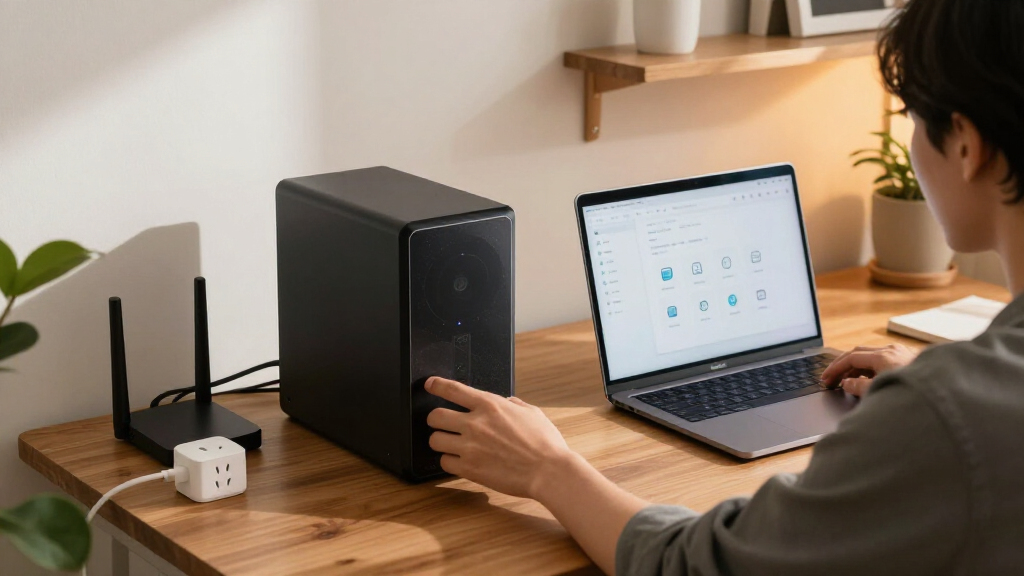

This checklist is for anyone putting together an AI automation home lab and deciding which parts to choose first. It covers storage, networking, backup power, and audio, alongside practical guidance for a mini PC and webcam.

Get business pricing on tech for your team
- Business-only prices and quantity discounts
- Tax-exempt purchasing
- Multiple users, one account, clear invoices
The sections follow the main equipment slots, with a named pick where one was provided and advice where the checklist has no product pick. Each section calls out what to consider, a suitable use case, and a key limitation.
Use the checklist to compare your planned setup with your actual devices and connections. Check ports, supported standards, physical space, and how each component will be used before you buy; product names alone do not confirm compatibility.
Mini PC
A mini PC can serve as the compute base for a home lab, but this checklist does not name a specific product. Start by listing the applications and automation tasks you expect to run, then compare candidate systems against their stated processor, memory, storage, and supported connections. Requirements depend on your workload, so avoid assuming that a compact system will suit every task.
Common mistakes include choosing by footprint alone, overlooking memory or storage upgrade limits, and assuming the device has the ports your peripherals need. Check the manufacturer’s specifications for the exact configuration, including networking, display, and USB connections. If you plan to connect external storage or a switch, confirm the mini PC has compatible ports and that you have the appropriate cables.
Also check the unit’s dimensions and cooling needs against the space where it will run. Leave room for its power connection and any attached devices. Before purchasing, make sure the operating system and software you intend to use are supported by the specific model.
What to look for:
- Processor and memory suited to your planned tasks
- Storage capacity and documented upgrade options
- Network and USB ports that match your devices
- Operating-system and software compatibility
- Dimensions and ventilation needs for the intended location
Network Attached Storage
The named pick is the Nimo AI NAS, Agentic Computer AI Server, AMD Ryzen 7 PRO, 32GB DDR5 RA. Its product name identifies it as an AI NAS and server and lists an AMD Ryzen 7 PRO processor and 32GB DDR5 RA. The listing name alone does not establish storage capacity, drive configuration, network ports, software support, or compatibility with your other equipment, so confirm those details before treating it as the right fit.
A common buying mistake is to assume that the word “NAS” guarantees a particular drive layout, backup feature, or connection speed. Check the exact configuration and supported drive types, then consider how it will connect to your network and what clients will access it. If your mini PC or switch has specific port requirements, compare those with the NAS specifications and plan for the matching cables.
Think through the intended role of the system before choosing: file storage, application hosting, or both may call for different capabilities. Review the vendor’s compatibility and expansion details, including any documented software requirements. Confirm what “RA” refers to in the listing before relying on it as a specification.
What to look for:
- Exact drive capacity and supported drive types
- Network ports and connection requirements
- Documented software and operating-system support
- Memory and storage expansion details
- Clarification of the listing’s “RA” wording
Nimo AI NAS, Agentic Computer AI Server, AMD Ryzen 7 PRO, 32GB DDR5 RAM
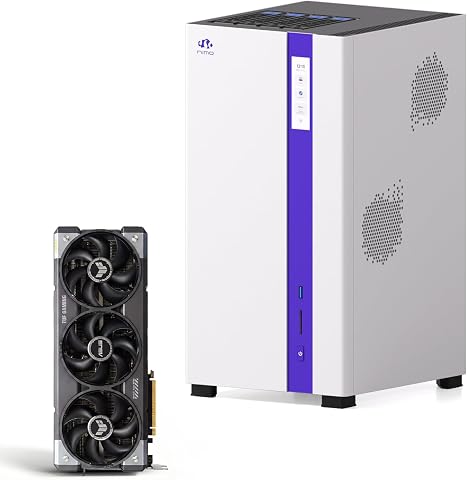
This high-performance AI server is designed for developers, researchers, and media professionals. It supports local large language models, 4K/8K video editing, 3D rendering, and virtualization, with expandable storage and robust networking capabilities.
Pros:
- Powerful hardware optimized for AI, media, and virtualization tasks
- Supports large storage capacity and high-speed networking
- Expandable and future-proof design
Cons:
- Complex setup may require technical expertise
- Potentially high cost for advanced features
- Limited consumer-oriented features
Best for: A buyer seeking a named AI NAS and server pick
Not ideal for: Anyone needing confirmed storage, network, or software specifications from the product name alone
Bottom line: Verify the complete configuration and compatibility details before choosing this NAS for your lab.
Gigabit Ethernet Switch
The listed pick is the NETGEAR MS510TXM 10-Port 10G Multi-Gigabit Smart Managed Switch. Its name specifies ten ports and describes it as a 10G multi-gigabit smart managed switch. Check the manufacturer’s port-by-port specifications to see which connection types and speeds are available, and compare them with the devices you plan to attach.
One common mistake is to treat “10G” in a product name as a guarantee that every port or connected device will operate at that speed. Actual links depend on the port used, the connected device, and the cable. Review the switch’s supported speeds and connector types, then verify that your NAS, mini PC, and other devices can use the planned connections. Also confirm that the cables you have match the selected ports.
The name also says “Smart Managed,” but it does not describe which management features or setup steps are included. Consult the product documentation if your network plan depends on a particular feature. Consider where the switch will sit, how many devices need wired connections, and whether your current equipment supports the links you intend to make.
What to look for:
- Port-by-port speed and connector specifications
- Compatibility with the network ports on each device
- Cables that match the selected connections
- Management features documented for this model
- Enough usable ports for planned wired devices
NETGEAR MS510TXM 10-Port 10G Multi-Gigabit Smart Managed Switch

The NETGEAR MS510TXM is a smart managed switch with eight Multi-Gigabit Ethernet ports and two 10G SFP+ fiber ports. It supports multiple connection speeds, remote management through NETGEAR Insight for one year, and desktop or rack mounting; its fanless design provides silent operation.
Pros:
- Supports connection speeds up to 10 Gbps
- Auto-negotiating ports work with existing Cat5e or Cat6 cables
- Fanless design operates silently
- Supports desktop and rack mounting
Cons:
- Only eight ports are RJ-45 Ethernet ports
- Remote management subscription is included for one year
Best for: A lab needing a named multi-gigabit smart managed switch
Not ideal for: Setups that have not confirmed device ports, cable types, or needed management features
Bottom line: Check each device’s port and speed against the switch documentation before planning connections.
Uninterruptible Power Supply
The named pick is the CyberPower PR1500LCDN 15A Smart App Sinewave UPS Battery Backup. The product name identifies a 15A unit and describes it as a smart app sinewave UPS battery backup. It does not provide enough information to determine runtime for your equipment or whether the connections and electrical requirements suit your location; check the full specifications and instructions for those details.
A common buying mistake is to select a UPS based only on the equipment list or a headline specification. Add up the devices you intend to connect, check their stated power needs, and compare the total with the UPS’s documented capacity. Review the available outlets and plug types so each planned device can connect appropriately. If the setup includes a NAS, mini PC, and network switch, decide which devices need backup power and which connections are required.
Check the product documentation for the supported load and runtime information relevant to your expected use. Confirm the unit’s dimensions and placement requirements, and follow the manufacturer’s guidance for setup and app compatibility. Do not assume the product name alone establishes how long it will power a particular lab.
What to look for:
- Documented capacity for the intended connected load
- Runtime information at a comparable load
- Outlet count, type, and plug compatibility
- Setup and app requirements in the documentation
- Dimensions and placement instructions
CyberPower PR1500LCDN 15A Smart App Sinewave UPS Battery Backup

The CyberPower PR1500LCDN is a 1500VA/1500W sinewave UPS designed to support active PFC and conventional power supplies. It features an extendable LCD panel, automatic voltage regulation, and multiple outlets for safeguarding servers and network devices.
Pros:
- Supports active PFC and conventional power supplies
- Removable LCD panel for easy viewing in hard-to-reach places
- Automatic voltage regulation extends battery life
- Includes a 3-year warranty and remote monitoring software
Cons:
- No specific price information available
- Requires installation space for LCD panel
- Limited to NEMA 5-15R outlets
Best for: A setup seeking a named sinewave UPS with smart app wording
Not ideal for: Buyers who need runtime certainty without checking load-specific documentation
Bottom line: Compare your equipment’s power needs with the UPS specifications and runtime guidance.
USB Microphone
The listed pick is the RØDE NT-USB+ Professional USB Condenser Microphone. Its name identifies it as a USB condenser microphone. Before choosing it, check the full product documentation for its connection requirements and supported operating systems, then compare those details with the computer you plan to use for calls, recordings, or other audio tasks.
A common mistake is to assume that any USB microphone works with every computer, hub, or recording application in the same way. Confirm the connection type and whether your chosen device has a compatible port. If you plan to connect through a hub or dock, check that arrangement against the manufacturers’ guidance. Also consider where you will place the microphone and whether your desk has room for the setup you intend.
Think about the setting where you will use it: the room, the distance from the speaker, and the applications involved can all affect your practical setup. Review the supported connections and controls in the product documentation rather than inferring them from the product name. If you need an accessory or a particular recording feature, verify that it is included or supported before purchasing.
What to look for:
- Connection type and required cable
- Operating-system and application compatibility
- Supported controls and audio features in the documentation
- Compatibility with any planned hub or dock
- Physical space and placement for your intended setup
RØDE NT-USB+ Professional USB Condenser Microphone

The RØDE NT-USB+ is a professional-grade USB condenser microphone featuring a studio-quality capsule, ultra-low-noise circuitry, and versatile controls. It offers high-resolution audio, zero-latency monitoring, and includes a pop filter and desktop stand, making it ideal for podcasting, music recording, and streaming.
Pros:
- High-quality studio-grade sound with low noise
- Versatile controls and audio processing features
- Includes pop filter and desktop stand for convenience
- Compatible with computers, tablets, and smartphones
Cons:
- Requires USB-C port, may need adapters for some devices
- Premium features may be complex for beginners
Best for: A lab user who wants a named USB condenser microphone
Not ideal for: Anyone relying on unverified accessory or application compatibility
Bottom line: Check the microphone’s documented connections and support against your computer and intended applications.
Webcam
This checklist does not name a webcam, so choose one by matching its documented capabilities to the way you plan to use it. Start with the computer and applications you expect to connect it to, then verify supported operating systems, connection type, and any stated software requirements. A product name or general category alone cannot confirm that it will work with your setup.
A common mistake is to focus on a headline video specification while overlooking the connection and mounting details. Check the available USB ports, cable length, and whether the webcam can be positioned where you need it. If you use a monitor, stand, or laptop lid, confirm the mounting method fits that placement. For a shared lab, consider how the camera will be connected and managed alongside your other devices.
Review the manufacturer’s information for the video modes and features you actually need, and check whether they depend on particular software. Avoid assuming that a feature is available across every application or operating system. Make sure the webcam’s mount and connection suit your workspace before settling on a model.
What to look for:
- Connection type and cable length
- Compatibility with the computer and intended applications
- Documented video modes and software requirements
- Mounting method suited to the intended placement
- Port availability alongside other lab devices
Build in a practical order: first identify the mini PC and storage needs, then confirm network ports and choose a compatible switch. Next check backup power against the connected load, followed by the microphone and webcam based on your computer, applications, and workspace. This buying order helps each choice reflect the devices already in your plan.
You do not need to settle every detail at once. Keep a list of required ports, software, physical space, and power needs, then verify each candidate against its documentation. With those checks in hand, you can assemble a well-matched home lab one component at a time.