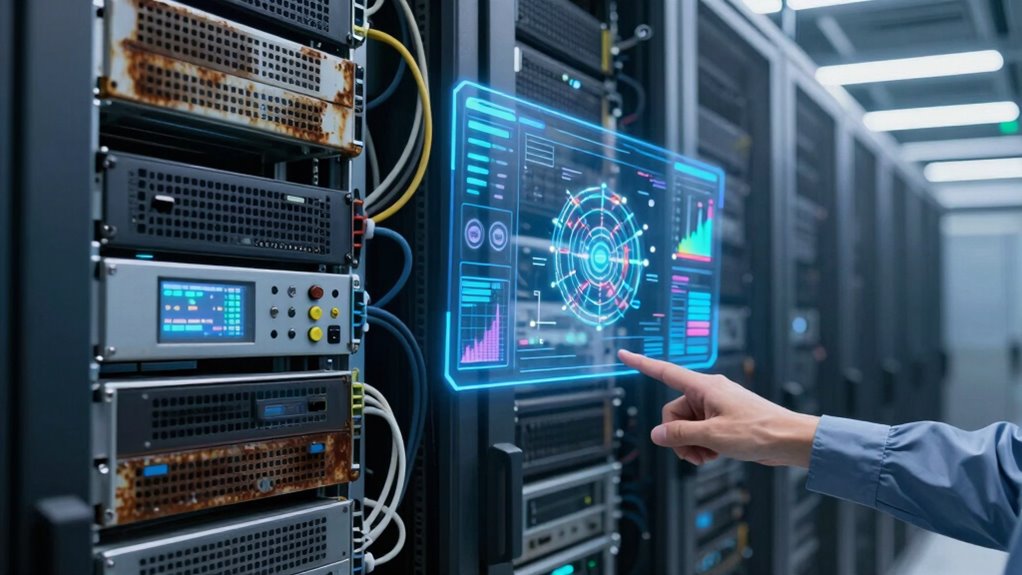

AI workflows often highlight vulnerabilities in outdated legacy infrastructure, making security gaps, scalability limits, and integration issues obvious. As AI demands grow, these old systems struggle to keep up, exposing data to breaches and causing performance bottlenecks. You’ll see how these weaknesses threaten operational stability and compliance. Staying aware of these issues is vital, and exploring further will reveal ways to modernize and secure your infrastructure effectively.
Key Takeaways
- AI workflows require real-time data processing, revealing security flaws in outdated legacy systems.
- Increasing data and processing demands expose scalability limitations of legacy infrastructures.
- Integration of new AI tools is hindered by legacy systems’ rigidity and lack of interoperability.
- Vulnerabilities in outdated infrastructure elevate operational risks and regulatory compliance issues.
- AI workflows highlight existing infrastructure weaknesses, emphasizing the need for modernization and future readiness.

As AI workflows become more integrated into daily operations, they often reveal vulnerabilities in outdated legacy infrastructure. You might find yourself facing unexpected issues related to data security, where legacy systems lack the protections needed to guard sensitive information against increasingly sophisticated cyber threats. These older infrastructures weren’t built with AI’s demands in mind, leaving gaps that can expose your data to breaches or leaks. When AI processes handle large volumes of data in real-time, the security flaws of legacy systems become glaringly obvious, forcing you to confront the urgent need for modernization.
AI workflows expose legacy system vulnerabilities, highlighting urgent needs for modernization to ensure data security and operational resilience.
Furthermore, these outdated systems pose significant scalability challenges. You may discover that your existing infrastructure simply can’t keep pace with the rapid growth of data and processing requirements that AI workflows demand. As AI models become more complex and require more computing power, legacy infrastructure often struggles to expand or adapt. This bottleneck hampers your ability to deploy AI at scale, leading to performance issues, increased latency, and higher operational costs. Instead of seamlessly integrating AI solutions, you’re left troubleshooting hardware limitations and software incompatibilities that slow down innovation. Recognizing the importance of system scalability is crucial for maintaining a competitive edge in AI-driven environments. Additionally, the lack of system resilience in many legacy setups can exacerbate downtime and data loss risks, undermining overall operational stability.
You’ll also notice that legacy systems often lack the flexibility needed for AI integration. They’re built for stability, not agility, which can make implementing new AI tools a cumbersome, resource-intensive process. This rigidity hampers your ability to iterate quickly or customize workflows, making it difficult to stay competitive in a fast-evolving landscape. As AI becomes more central to your business strategy, these limitations can cause delays and increase the risk of errors, especially when attempting to synchronize old systems with new AI frameworks. Additionally, the lack of system interoperability can further complicate efforts to modernize, creating silos that hinder seamless data exchange and workflow efficiency. Enhancing system compatibility can help mitigate these issues and streamline AI integration.
In addition, the security vulnerabilities associated with legacy infrastructure can extend beyond data breaches. They can introduce compliance risks if outdated systems don’t meet current regulatory standards for data protection. This can lead to legal repercussions and damage your reputation if sensitive customer or operational data is compromised. When AI workflows expose these weaknesses, it becomes clear that relying solely on legacy infrastructure is a risky approach. You need to prioritize modernization, not just to unlock AI’s full potential, but also to ensure your data remains secure and your infrastructure scalable to meet future demands. Recognizing system limitations highlighted by AI workflows is essential for planning effective upgrades that address these vulnerabilities. Ultimately, AI workflows act as a mirror, highlighting the deficiencies within your existing infrastructure. They make it impossible to ignore the urgent need for upgrades that support robust data security and scalable growth. Recognizing these vulnerabilities now gives you the opportunity to invest in modernization strategies that future-proof your operations, ensuring you’re prepared for the AI-driven future.

Mobile Device Management: Mobility Evaluation in Small and Medium-Sized Enterprises
As an affiliate, we earn on qualifying purchases.
As an affiliate, we earn on qualifying purchases.
Frequently Asked Questions
How Do AI Workflows Integrate With Existing Legacy Systems?
You integrate AI workflows with legacy systems through data migration and focus on system interoperability. You migrate relevant data to modern platforms, ensuring compatibility, and implement APIs or middleware that enable seamless communication between new AI tools and older systems. This approach helps you identify weaknesses in your infrastructure, streamline operations, and improve overall efficiency without overhauling your entire legacy setup.
What Are the Costs Associated With Upgrading Legacy Infrastructure for AI?
Upgrading your legacy infrastructure is like renovating an old house—you’ll face hidden costs and unexpected surprises. A thorough cost analysis reveals expenses for hardware, software, and skilled labor. Modernization strategies, such as phased upgrades or cloud migration, help manage these costs. While initial investments seem steep, the payoff includes faster AI workflows, improved reliability, and future-proofing your systems, making the upfront costs a worthwhile investment for long-term gains.
How Can Organizations Prioritize Which Legacy Components to Modernize First?
You should base your prioritization criteria on factors like system impact, upgrade costs, and integration complexity. Start with components that hinder AI workflows the most or have the highest potential for efficiency gains. Use modernization strategies like phased upgrades or modular approaches to minimize disruption. By focusing on critical bottlenecks first, you facilitate smoother shifts and maximize ROI, making your legacy infrastructure more adaptable for AI integration.
What Security Challenges Arise When Deploying AI in Legacy Environments?
When deploying AI in legacy environments, you face cybersecurity vulnerabilities and data privacy risks. Legacy systems often lack modern security measures, making them more susceptible to breaches. Integrating AI can expose sensitive data to cyber threats if not properly secured. You need to implement robust encryption, access controls, and regular security audits to protect data privacy and prevent malicious exploits, ensuring your AI deployment remains secure and compliant.
How Does Legacy Infrastructure Impact AI Workflow Scalability?
Legacy infrastructure limits your AI workflow scalability because it struggles with data migration and system compatibility. As you try to scale, you’ll encounter bottlenecks—slow data transfers, incompatible hardware, and outdated protocols—that hinder progress. These weaknesses threaten to stall your AI initiatives, forcing you to face difficult decisions about upgrades. Without addressing these foundational issues, your AI ambitions remain confined, waiting for the right moment to break free.

Legacy COBOL for System Upgrades: Modernization Labs for Enterprise Transformations
As an affiliate, we earn on qualifying purchases.
As an affiliate, we earn on qualifying purchases.
Conclusion
As you navigate AI workflows, you’ll quickly realize they’re like a spotlight on your legacy infrastructure, revealing cracks you never knew existed. These weaknesses aren’t just minor flaws—they’re glaring vulnerabilities waiting to be exploited. Embracing this reality might feel overwhelming, but it’s also your chance to transform your systems into unstoppable, future-proof engines. If you don’t address these issues now, you risk being left in the dust by competitors wielding smarter, more resilient infrastructure—so act before it’s too late!

Building MCP Servers for AI Agents: Scalable Architecture Patterns, Security Design, and Production-Ready AI Infrastructure for Large Language Models
As an affiliate, we earn on qualifying purchases.
As an affiliate, we earn on qualifying purchases.

Information Systems Interoperability (Advanced Software Development Series)
- Condition: Used Book in Good Condition
As an affiliate, we earn on qualifying purchases.
As an affiliate, we earn on qualifying purchases.