
TL;DR

Get tech for your team delivered free — and shop member deals
- Fast, free delivery on millions of items
- Access to Prime Big Deal Days deals on October 6–7
- Prime Video, Amazon Music and more included
Moving your rig into a closet or small room can drastically cut noise and improve sound quality. The secret lies in smart placement, targeted treatment, and ventilation—more effective than foam alone. Follow these tips to make your closet setup both quiet and functional.
Ever tried recording in a tiny closet? It’s often a love-hate relationship. The space is small, reflective, and noisy, but it’s also convenient and free. The trick isn’t just slapping foam on the walls; it’s about smart placement, proper dampening, and thinking about heat. This guide cuts through the noise—literally—to show you how to turn a closet into a quiet, practical workspace.
Whether you’re podcasting, recording vocals, or just trying to keep your AI rig from disturbing the neighbors, understanding the real game-changers makes all the difference. You’ll learn why distance beats foam, how to treat a small space without turning it into a sound trap, and how to keep your gear cool while you work in peace.
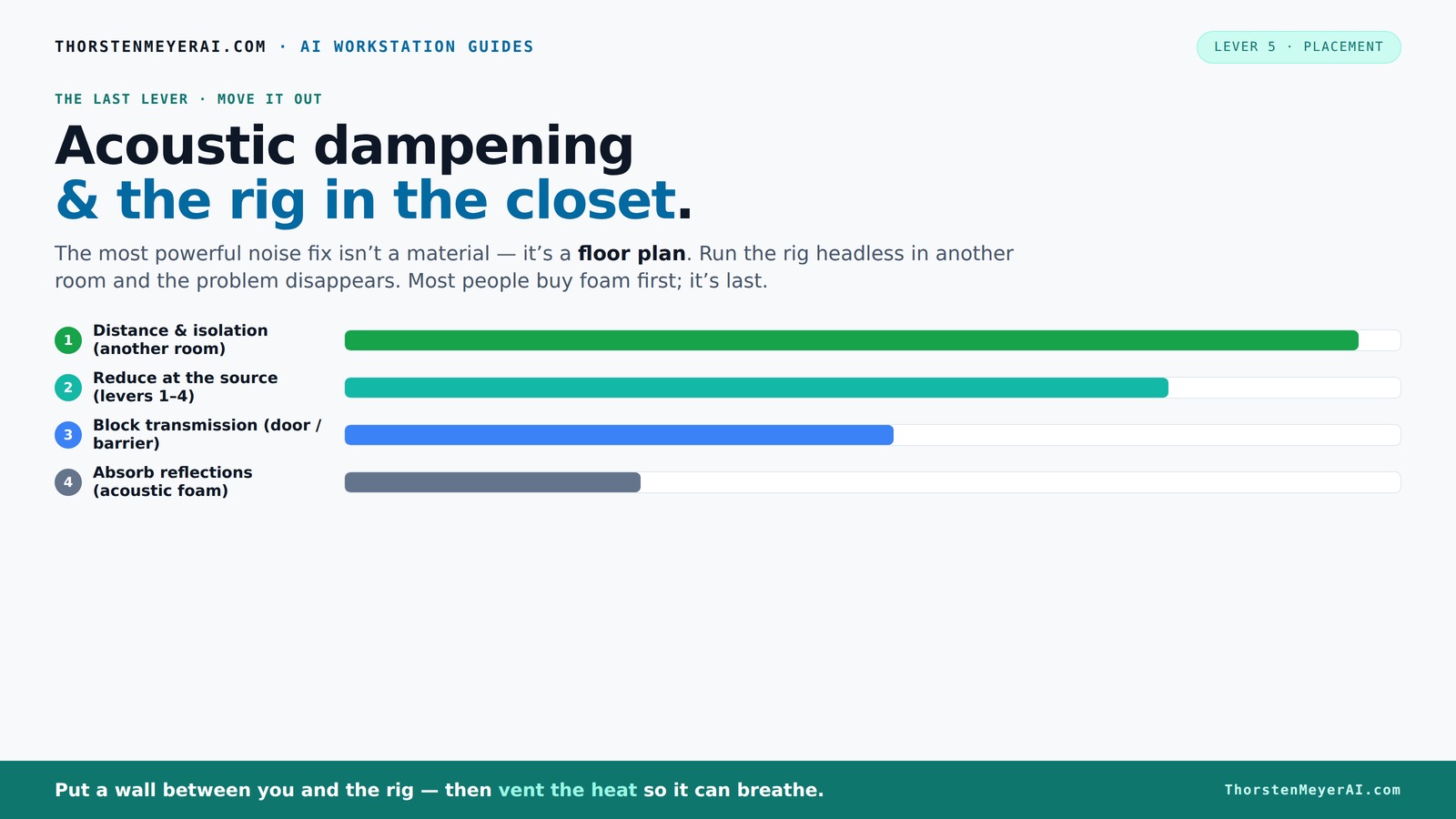
Acoustic dampening
& the rig in the closet.
The most powerful noise fix isn’t a material — it’s a floor plan. A rig you can’t hear because it’s in another room beats any amount of foam. Tap the approaches in Part 1 to see what actually works.
(another room)
(levers 1–4)
(door / barrier)
(acoustic foam)
Contain the noise, not the heat
Key Takeaways
- Treat first reflection points and corners for the biggest impact on sound clarity.
- Use a mix of absorption, barriers, and isolation — foam alone isn’t enough.
- Moving your rig into a separate room or closet can eliminate noise issues entirely.
- Ensure proper ventilation to prevent heat buildup and fan noise from throttling your gear.
- Don’t over-treat: 20-40% coverage and strategic placement usually deliver the best results.
soundproofing foam panels for small rooms
As an affiliate, we earn on qualifying purchases.
As an affiliate, we earn on qualifying purchases.
Why Acoustic Treatment Isn’t Just About Foam — And What Really Matters
Most people think acoustic dampening is about foam panels. But in reality, it’s about reducing reflections, echoes, and unwanted resonances. Foam absorbs sound waves bouncing around inside, making your voice or music clearer. But it doesn’t stop outside noise or low-frequency rumble — that’s soundproofing and isolation.
For example, a foam panel in your closet can soften the echo of your voice, but it won’t block your neighbor’s lawnmower noise. To truly quiet a space, you need a mix of absorption, barriers, and isolation techniques. Think of foam as making your room sound better from within, not as a complete noise barrier from external sources. The tradeoff is that over-reliance on foam can deaden your sound, making it unnatural or overly muffled, so balancing treatment with openness is crucial for maintaining clarity and natural tone.
acoustic isolation pads for recording
As an affiliate, we earn on qualifying purchases.
As an affiliate, we earn on qualifying purchases.
The Power of Placement: Where to Put Acoustic Treatments in a Closet Rig
Proper placement of acoustic panels can make or break your setup. The first step is finding the 'first reflection points' — the spots where sound bounces directly into your ears or mic. Use the mirror trick: sit in your recording spot, and have a friend move panels until you see the reflection from your listening position.
Why does this matter? Because placing panels at these critical points disrupts the direct sound path, reducing slap echoes and flutter echoes that can muddy your recordings. If you miss these spots, reflections bounce around, creating a cluttered, indistinct sound. Conversely, placing panels too far from these points wastes space and money, offering diminishing returns. It's a tradeoff between coverage and effectiveness. Additionally, bass traps in corners help control low-frequency buildup, which can otherwise cause muddiness and boomy sounds, especially in small, enclosed spaces. Proper placement ensures the sound is balanced, with clarity in the highs and control over the lows, ultimately making your recordings more professional and natural-sounding.
soundproof door barrier for home studio
As an affiliate, we earn on qualifying purchases.
As an affiliate, we earn on qualifying purchases.
Treating a Small Closet: Materials That Actually Work
Not all materials are created equal when it comes to acoustic dampening. Foam panels are common, but fiberglass panels and thick blankets often outperform them in small spaces because of their density and ability to absorb a broader frequency range. Heavy moving blankets, for example, absorb sound and block noise effectively, especially when wrapped around the closet doors and walls. They can also serve as a barrier, preventing sound from leaking out or in, which is crucial for maintaining privacy and reducing external noise.
The choice of material impacts the overall sound quality and noise reduction. Foam panels are lightweight and easy to install but tend to focus on mid and high frequencies, leaving low frequencies less controlled. Fiberglass and dense blankets, on the other hand, provide broader absorption, including bass frequencies, which are often problematic in small spaces. Combining these materials—using blankets for containment and fiberglass for internal absorption—creates a more balanced acoustic environment. The tradeoff is that heavier materials may require more effort to install and may take up more space, but the result is a more controlled and natural sound with less external noise intrusion.
As an affiliate, we earn on qualifying purchases.
How Much Treatment Is Enough? Know When You’re Done
In a tiny closet, less isn’t always more — but overdoing it can deaden your sound or make the space impractical. The key is to understand the tradeoffs: more treatment can improve clarity but may also absorb too much of the natural ambiance, leaving your recordings sounding sterile or overly damped. Typically, treating around 20-40% of the surfaces—especially the first reflection points and corners—strikes a good balance between clarity and natural sound. This range prevents over-absorption, which can rob your recordings of liveliness and make mixing more challenging.
For example, covering the side walls at ear level with panels and installing bass traps in the corners often yields a natural, controlled sound without excessive deadness. The goal is to achieve a balanced acoustic environment where reflections are controlled enough to improve clarity, but not so much that your sound becomes unnatural or overly muffled. The tradeoff here is between sound quality and practicality—more treatment can mean more cost, effort, and space consumption, so understanding your specific needs and space limitations is crucial. Use a mirror to identify reflection points, treat those spots, and listen critically to find the right balance for your space.
Ventilation and Heat: Keep Your Closet Rig Cool and Quiet
Placing a hot, high-power rig inside a sealed closet is a recipe for overheating. Trapped heat can cause throttling and fan noise, which defeats your noise reduction efforts. The heat buildup can also accelerate equipment wear and compromise performance. The key is to allow airflow to prevent these issues. Using passive vents or a quiet exhaust fan helps draw hot air out and bring in cooler air, maintaining a stable temperature without introducing noise. For instance, a small, thermostat-controlled vent can automatically regulate airflow based on temperature, preventing overheating without constant manual adjustments. If you’re serious about silence and thermal management, consider a purpose-built soundproof cabinet with ducted airflow and active ventilation. These units combine acoustic treatment with thermal management, ensuring your gear stays cool while minimizing noise leakage. Adequate ventilation not only prolongs your equipment’s lifespan but also preserves the integrity of your recordings by avoiding heat-induced noise and performance dips.
Putting It All Together: Your Step-by-Step Closet Setup
Ready to assemble your perfect closet rig? Here’s a simple step-by-step plan:
- Seal gaps around the door with weatherstripping or acoustic seals to prevent sound leaks.
- Place bass traps in the corners to control low-frequency buildup, which can cause muddiness and boominess.
- Identify first reflection points using a mirror and install panels at these spots to reduce flutter echoes and slapback.
- Wrap the door with heavy blankets or acoustic curtains to further contain sound and prevent leakage.
- Install a quiet exhaust fan or passive vents to ensure proper airflow and prevent heat buildup.
- Set up your gear — mic, headphones, and monitor — in the best position, considering placement tips for optimal sound and minimal noise.
- Test the space with a loud source, then tweak treatment and airflow as needed to fine-tune the environment.
For detailed treatment options, check out [this resource](https://thorstenmeyerai.com/low-noise-pc-cases-airflow/).
Frequently Asked Questions
What’s the difference between acoustic treatment and soundproofing?
Acoustic treatment improves how sound behaves inside a space — reducing echoes and controlling reflections. Soundproofing blocks noise from escaping or entering, usually through barriers, insulation, or sealing gaps. In a closet, treatment makes your recordings clearer, while soundproofing keeps outside noise out.
Where should I put acoustic panels in my closet studio?
Focus on the first reflection points — the side walls at ear level, behind the mic, and the ceiling above. Use a mirror to find these spots. Bass traps should go in the corners for low-end control. Covering about 20-40% of the space with panels usually hits the sweet spot.
Do I need bass traps in a small closet?
Yes. Small spaces tend to trap low frequencies, causing muddiness and boomy sounds. Bass traps in the corners help smooth out these issues, giving your vocals or instruments a cleaner, more natural tone.
How many panels do I need for a tiny vocal booth?
In a small closet, start with 4-6 panels on the side reflection points and bass traps in the corners. You can add more if needed, but remember, coverage of 20-40% of surfaces is usually enough for good results without deadening your sound.
Will foam panels stop outside noise?
Not really. Foam panels absorb internal reflections but don’t block outside noise or vibrations. For better noise reduction, combine foam with sealing gaps, heavy blankets, and barriers.
Conclusion
Turning a closet into a quiet, functional workspace isn’t magic — it’s about smart placement, targeted treatment, and good ventilation. The real power lies in moving noise sources away from your ears, not just muffling them with foam.
Remember, your workspace should serve your workflow, not fight against it. So, set your rig in the closet, treat the right spots, and keep your gear cool. After all, a quiet rig isn’t just about sound — it’s about peace of mind and focus.
Halloween Picks
halloween
As an affiliate, we earn on qualifying purchases.