
📊 Full opportunity report: VigilSAR: The Object That Isn’t Transmitting on ThorstenMeyerAI.com — validation score, market gap, and execution plan.
TL;DR
VigilSAR is a radar-based platform that detects ships with turned-off transponders, crucial for maritime security and safety. Its core capability is built on publicly available SAR data, with ongoing development in fusion technology.
VigilSAR has confirmed its ability to detect vessels that do not broadcast transponder signals, a development that enhances maritime security and safety. The platform fuses radar detections with other signals to identify ‘dark’ ships, addressing a critical gap in maritime domain awareness.
The core detection capability of VigilSAR is based on Sentinel-1 / Copernicus SAR data, which is publicly accessible. This allows verification of its fundamental detection ability. The platform pairs a classical detection pipeline with neural classification to identify objects in radar imagery.
The key innovation is the fusion process: it correlates radar detections with AIS and ADS-B signals to identify vessels that are visible on radar but not broadcasting transponder data. Such vessels are often associated with illegal activities, sanctions evasion, or distress situations. VigilSAR’s approach subtracts explained detections (those with transponder signals) from the total, highlighting anomalies that warrant attention.
VigilSAR — the object that isn’t transmitting
Radar sees through cloud and darkness, when cameras can’t. Fuse it with transponder data and the signal is the one detection no transponder explains.
Independent commentary on public positioning, produced with AI assistance under human editorial oversight. The views are the author’s own and may change. This does not verify or endorse VigilSAR’s capabilities, contracts, or performance. Capabilities on Sentinel-1 / Copernicus reflect a free, public data foundation; commercial-constellation and air-gapped-deployment references reflect stated positioning, not independently demonstrated fact. ISR and related technologies may be subject to export controls and dual-use regulations — lawful, ethical use is solely the operator’s responsibility. Nothing here is an offer, pricing, or operational/safety/legal advice. AI detection and classification can err and require human verification. Product and company names are trademarks of their respective owners; mention does not imply endorsement.
Implications for Maritime Security and Law Enforcement
This capability is significant because it addresses the longstanding challenge of ‘dark’ vessels—ships that operate without broadcasting transponder signals. Detecting these vessels improves maritime safety, supports enforcement of maritime laws, and enhances situational awareness for coast guards, fisheries regulators, and humanitarian agencies. It also offers a strategic advantage in monitoring illegal fishing, smuggling, and sanctions evasion, which often rely on going dark.
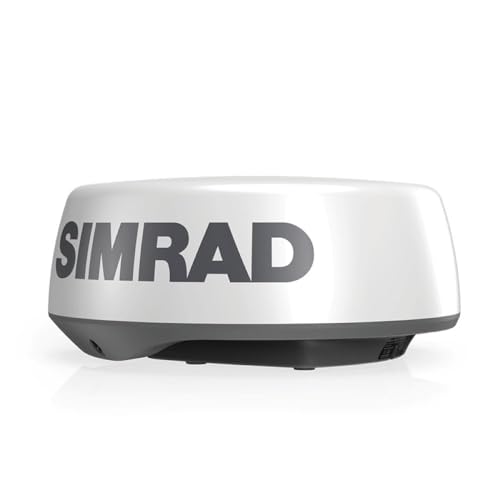
Simrad Marine Electronics, HALO20 Radar System, 24 Nautical Mile Range, Compact 20 Inch Dome, White, 000-14537-001
- Product Name: Simrad HALO20 Radar System
- Range: 24 Nautical Mile Detection Range
- Design: Compact 20 Inch Dome
As an affiliate, we earn on qualifying purchases.
As an affiliate, we earn on qualifying purchases.
Evolution of SAR and Maritime Surveillance Technologies
Synthetic-aperture radar (SAR) has been a critical tool for all-weather, day-and-night surface imaging, especially in maritime environments. Its ability to see through clouds and darkness makes it invaluable for continuous monitoring. VigilSAR builds on this foundation by integrating AI-driven detection and classification, and by fusing radar data with other signals, to improve object identification and anomaly detection. The platform’s use of publicly available Sentinel-1 data underscores its practical, verifiable foundation, although commercial deployment and integration with other sensors are still evolving.
“Detecting vessels that turn off transponders has long been a challenge. VigilSAR’s fusion of radar and other signals represents a meaningful step forward in maritime awareness.”
— Thorsten Meyer, remote sensing expert

AirNav Radar ADS-B AIS Hybrid Receiver
- Dual AIS and ADS-B Receiver: Receives both AIS and ADS-B signals
- Frequency Coverage: Supports 1090 MHz and 162 MHz
- Easy Installation: Plug and play, no software needed
As an affiliate, we earn on qualifying purchases.
As an affiliate, we earn on qualifying purchases.
Capabilities Beyond Demonstration and Commercial Plans
While VigilSAR has demonstrated its core detection ability using publicly available Sentinel-1 data, detailed information about its commercial deployment, pricing, and integration with other sensors remains undisclosed. The extent of its operational use and validation in real-world scenarios is still developing.

Optimus 3.0 GPS Tracker – Over 1 Month Battery – with Heavy Duty Waterproof Case and Powerful Magnets for Vehicles and Assets
- Real-Time GPS Tracking: Accurate and discreet tracking
- Heavy Duty Magnet Case: Secure attachment to vehicles
- Long Battery Life: Up to 2 months on a single charge
As an affiliate, we earn on qualifying purchases.
As an affiliate, we earn on qualifying purchases.
Expected Deployment and Validation in Maritime Operations
Next steps include broader deployment with commercial and governmental partners, further validation in operational environments, and potential integration with existing maritime surveillance systems. Continued development aims to improve AI classification accuracy and fusion robustness, enhancing overall effectiveness in detecting and tracking ‘dark’ vessels.

Detect Kitchen System TB400 Power Blender + Food Processor, 1700W Peak Motor, BlendSense Auto-Detect Technology, 72-oz Pitcher, 64-oz Processor Bowl, Two 24-oz Cups, Silver
- Powerful 1700W Motor: Crushes ice, nuts, tough ingredients
- BlendSense Auto-Detect: Adjusts speed for perfect consistency
- Versatile Vessels: Includes pitcher, processor bowl, and cups
As an affiliate, we earn on qualifying purchases.
As an affiliate, we earn on qualifying purchases.
Key Questions
How does VigilSAR detect vessels without transponder signals?
It uses synthetic-aperture radar to identify objects on the surface, then fuses detections with transponder signals like AIS and ADS-B. Detections without corresponding signals are flagged as ‘dark’ vessels.
Is VigilSAR’s capability proven in real-world operations?
The core detection capability is demonstrated using publicly available Sentinel-1 data, but full operational deployment and validation are still underway.
Who can access VigilSAR’s services?
VigilSAR is currently positioned as a defense and intelligence product, with engagement through briefing requests. Commercial availability details are not publicly disclosed.
What types of vessels can VigilSAR detect?
VigilSAR detects large metallic ships that appear on radar, regardless of whether they broadcast transponder signals. It is particularly aimed at vessels involved in illegal activities or distress situations.
What are the limitations of VigilSAR’s technology?
While detection is proven with public SAR data, full operational capabilities, integration with other sensors, and handling of complex maritime environments are still under development.
Source: ThorstenMeyerAI.com